Quality Assurance in Mold MakingA deburring press from China ensures tool quality
From
Richard Pergler | Translated by AI
11 min Reading Time
When finalizing complex molds, trimming remains essential. HPF chose a trimming press from the Chinese manufacturer SXKH, equipped with European control components. The advantage: European quality at a Chinese price.
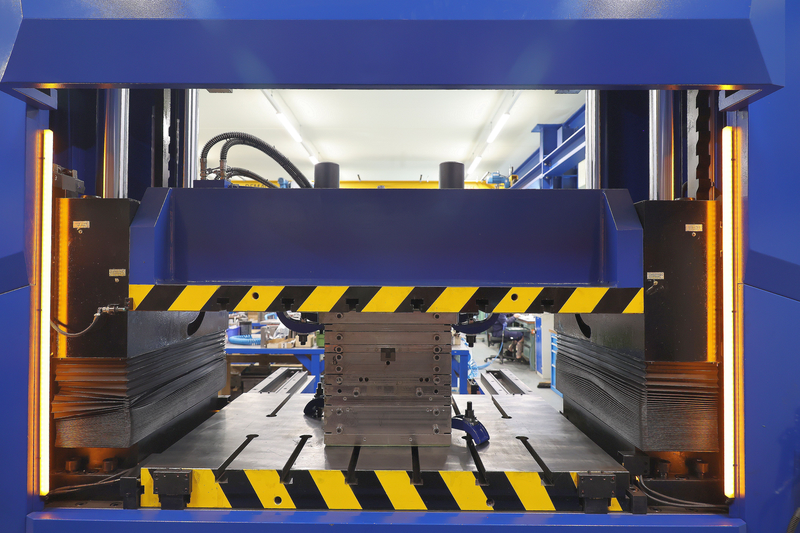
The HMG 70XS1510 trimming press from the Chinese manufacturer SXKH combines all the functions required by toolmakers at HPF in a very compact design. The deciding factors in the purchase were the purchase price—and confidence in the quality of established international key components.
(Bild: Pergler Media)
In the manufacture of high-precision injection molds for the medical, hygiene, and automotive industries, even modern FEM simulations reach their thermal and mechanical limits. In particular, for molds used in high-temperature applications involving PEEK or thermosetting plastics, as well as for multi-cavity molds with hot-runner direct injection, complex slide mechanisms and thermal expansion affect the closing behavior.
Calculating all correction parameters often proves to be time-consuming in day-to-day operations. Iterative touch-up under actual process conditions therefore remains the most reliable method for ensuring the required dimensional accuracy and surface finish before the first inspection.
HPF, a toolmaker and injection molding company based in Großdubrau in eastern Saxony, manufactures tools and products for a wide range of industries—from automotive to medical and hygiene technology. The company has earned a strong reputation as a full-service provider of complex parts and assemblies. When it comes to machinery, those in charge typically procure German or at least European products. This makes it all the more remarkable that, for quality assurance and the final finishing of the molds, they rely on the HMG 70XS1510 trimming press from the Chinese manufacturer SXKH.
Comprehensive Range of Manufacturing Services
HPF, founded in 1990 as a tool grinding shop, is synonymous with high quality. Since its inception, this family-owned business has evolved into a sought-after specialist in small- to medium-sized tools and components. A current example of this is a 32-cavity hot-runner mold with direct hot-runner injection for cylindrical medical and hygiene products.
“We manufacture a wide variety of components,” explains Clemens Menzel, Head of Project Management at HPF. “For our clients, we cover the entire process chain, from development to the finished product. We operate across a range of industries. Our customers come from a wide variety of sectors, including medical technology, the hygiene industry, the automotive industry, and the packaging sector.”
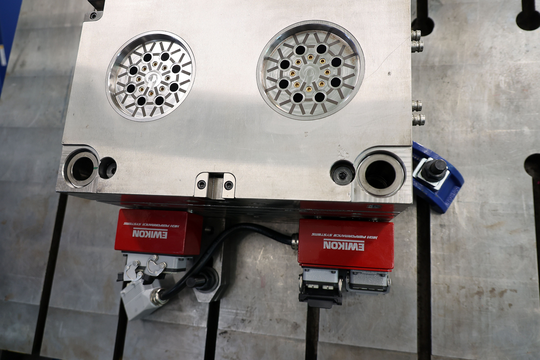
Hot-runner molds—often featuring Ewikon systems—for high-precision cylindrical parts are a specialty of the mold makers in Großdubrau. Here is a 32-cavity mold—HPF can also provide molds with even more cavities.
(Bild: Pergler Media)
The company’s range of services includes the manufacture of everything from single-cavity molds to multi-cavity injection molds, the construction of stamping and forming dies, and component manufacturing. One of the company’s areas of expertise is the manufacture of multi-cavity injection molds with direct hot-runner injection for thin-walled components used in the medical and hygiene industries.
“In addition, we develop and manufacture injection molding and compression molding tools for processing sophisticated high-performance plastics such as PEEK and thermosetting materials,” adds Menzel. “For some time now, we have also been working on mold solutions for processing bio-based and biodegradable plastics.”
Today, as a full-service provider, the family-owned company offers a wide range of services —ranging from the development, design, and manufacture of injection molds and progressive dies to the serial production of plastic parts on what has now grown to 15 injection molding machines with clamping forces ranging from 25 to 180 metric tons.
Profile: HPF GmbH & Co. KG
HPF GmbH & Co. KG was founded in 1990 as a tool grinding shop. Hans-Peter Friedrich, who started out as a sole proprietor (the company name HPF is derived from his initials), applied for a business expansion as early as the following year and thus continuously expanded his range of services. In addition to pressing, stamping, and forming tools, the company began offering injection molding tools for a wide variety of applications. What began as a small technical facility with just two injection molding machines for prototyping has since grown into the company’s own injection molding shop. With a team of motivated employees who have many years of professional experience (23 in tool and mold making, 7 in the injection molding shop), the family-owned business is now able to impress clients from a wide variety of industries as a full-service provider offering everything under one roof. The company manufactures molds for a wide range of products—up to 6 metric tons and up to dimensions of 1000 x 1500 mm². www.fus-werkzeugbau.de
State-of-the-art machinery
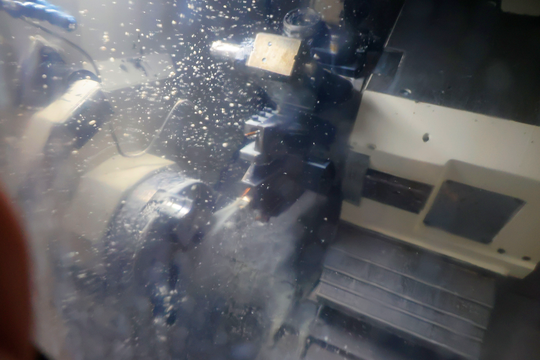
HPF has a high-performance, state-of-the-art machine park at its disposal for manufacturing. From turning to milling and EDM to 3D contour laser cutting, all relevant technologies are available in-house, and many machines are automated. For example, the milling of graphite electrodes and the EDM process are largely unmanned. “The only time we have to send parts off-site is for heat treatment,” explains Menzel. “In toolmaking, at least three to four employees are assigned to each technology—this ensures that we remain operational.”
Date: 08.12.2025
Naturally, we always handle your personal data responsibly. Any personal data we receive from you is processed in accordance with applicable data protection legislation. For detailed information please see our privacy policy.
Consent to the use of data for promotional purposes
I hereby consent to Vogel Communications Group GmbH & Co. KG, Max-Planck-Str. 7-9, 97082 Würzburg including any affiliated companies according to §§ 15 et seq. AktG (hereafter: Vogel Communications Group) using my e-mail address to send editorial newsletters. A list of all affiliated companies can be found here
Newsletter content may include all products and services of any companies mentioned above, including for example specialist journals and books, events and fairs as well as event-related products and services, print and digital media offers and services such as additional (editorial) newsletters, raffles, lead campaigns, market research both online and offline, specialist webportals and e-learning offers. In case my personal telephone number has also been collected, it may be used for offers of aforementioned products, for services of the companies mentioned above, and market research purposes.
Additionally, my consent also includes the processing of my email address and telephone number for data matching for marketing purposes with select advertising partners such as LinkedIn, Google, and Meta. For this, Vogel Communications Group may transmit said data in hashed form to the advertising partners who then use said data to determine whether I am also a member of the mentioned advertising partner portals. Vogel Communications Group uses this feature for the purposes of re-targeting (up-selling, cross-selling, and customer loyalty), generating so-called look-alike audiences for acquisition of new customers, and as basis for exclusion for on-going advertising campaigns. Further information can be found in section “data matching for marketing purposes”.
In case I access protected data on Internet portals of Vogel Communications Group including any affiliated companies according to §§ 15 et seq. AktG, I need to provide further data in order to register for the access to such content. In return for this free access to editorial content, my data may be used in accordance with this consent for the purposes stated here. This does not apply to data matching for marketing purposes.
Right of revocation
I understand that I can revoke my consent at will. My revocation does not change the lawfulness of data processing that was conducted based on my consent leading up to my revocation. One option to declare my revocation is to use the contact form found at https://contact.vogel.de. In case I no longer wish to receive certain newsletters, I have subscribed to, I can also click on the unsubscribe link included at the end of a newsletter. Further information regarding my right of revocation and the implementation of it as well as the consequences of my revocation can be found in the data protection declaration, section editorial newsletter.
The individual tool components are machined on high-precision machines. However, this high precision does not make assembly presses obsolete—they demonstrate how the individual parts work together in the finished tool.
(Bild: Pergler Media)
Those in charge are continuously upgrading their machinery and constantly adapting it to the latest technical developments. When purchasing new or replacement machinery, the Upper Lusatian company generally relies on manufacturers from Germany—or at the very least, from Europe. “This ensures that, in the event of service needs, distances are short and replacement parts are available locally,” Menzel emphasizes. “This approach has always served us very well in the past.”
First Machine for HPF from China
Against this backdrop, the choice of the new laminating press is all the more surprising: “We opted for an HMG 70XS1510 laminating press from the Chinese manufacturer SXKH,” explains Menzel. “We have good reasons for relying on a Chinese press for this key position.”
After all, even at HPF, they have to respond to economic challenges. “Some clients are now even requiring us to have part of the order manufactured in China,” reports Menzel. “We can make that happen—we’ve known our partners in China very well for many years and know exactly what they’re capable of and what level of quality we can reliably expect from them. They are all partners we’ve known personally for years and who have the technical expertise and knowledge to deliver the required quality.”
A simulation is only as good as its data
From a business perspective, the decision to invest in a trimming press is often very difficult to justify. It is needed to prepare tools for production and to ensure quality, but it does not produce any parts itself. In many companies, trimming presses are far from operating at full capacity and sit virtually unused most of the time. Furthermore, much of the correction work can now be replaced by intelligent simulations.
“A lot—but not everything,” Menzel emphasizes. “Among other things, we also build tools for high-temperature applications. Anyone who wants to simulate how the tools behave under large thermal differences would first have to identify, collect, or calculate all relevant production parameters in order to perform a valid simulation. This is especially true when, for example, sliders increase the complexity of the tools.”
Laborious Data Collection
Sure, with enough effort, you could record all the relevant parameters. Even though the machining of a tool’s individual components—as is the case at HPF—takes place under controlled, climate-controlled conditions, and the geometries are therefore precisely known, new insights often emerge when these components interact. Collecting the relevant data for this is often a challenge.
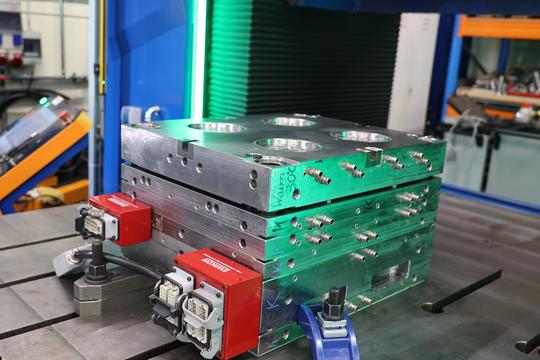
Faster to production: Thanks to the trimming press, toolmakers can finalize the tools with just a few rounds of corrections and inspections, ensuring they are fully ready for series production when they are loaded onto the injection molding machine.
(Bild: Pergler Media)
In many cases, this is far too time-consuming and tedious in day-to-day work—especially when there are high demands on dimensional accuracy and surface quality, but also for molds with sliders and other moving components, hand-finishing with iterative correction cycles is often the significantly faster and more efficient path to precision. This is because, in many cases, there is simply no substitute for the mold maker’s experience in assessing and making manual corrections during the final phase before the mold is sent to the injection molding machine.
Touch-up work is quick and precise
The finalization of a mold is a cost factor that is reflected in the prices charged to the client. The effort involved must therefore be in the right proportion to the benefits. Particularly for molds that exhibit complex behavior during the injection molding process, test runs under near-real operating conditions—such as heating the molds to the actual processing temperature for high-temperature plastics—can quickly and easily provide valuable insights for later use in mass production.
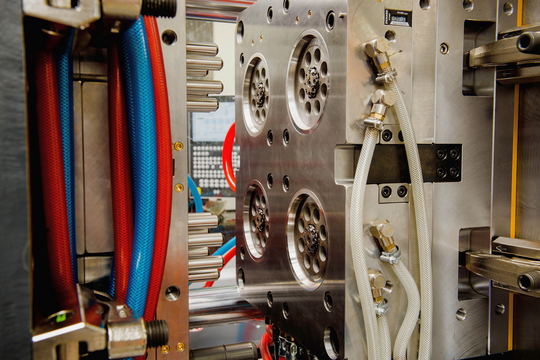
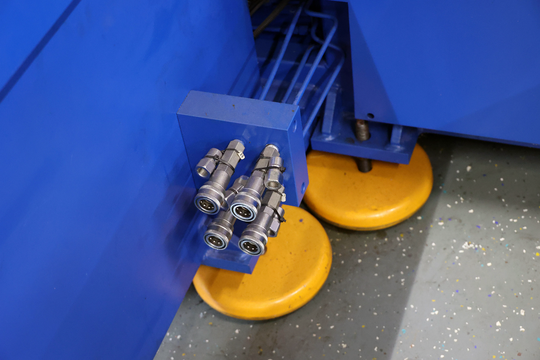
The trimming press has two of these connections on each side for moving the core pulls—for a total of four. This makes it possible to test moving components in the mold “in operation.”
(Bild: Pergler Media)
“We already had a small core-setting press on site, but we were looking for a larger machine that, in addition to simple open-close operations, is also capable of performing tasks such as core pulling without an auxiliary unit,” explains Menzel. “It also needed to be up to date in terms of safety features. It goes without saying that it must maintain parallelism with a high degree of precision.”
Ergonomic design and compact construction
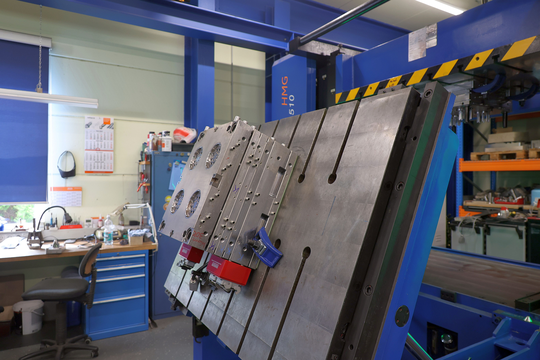
The toolmakers decided against using a rotary table, such as one used for coating multi-component tools. If necessary, they plan to reposition the tools by hand. “In addition to the functional and safety features, what was particularly important to us was ergonomic work at the press,” explains Menzel. “This means that the lower table must be able to extend out of the press and tilt, and the upper table should also be adjustable so that the toolmaker can perform his tasks comfortably and in a natural working posture.”
The under-table of the HMG 70XS1510 trimming press can be moved in front of the machine and tilted. This allows the toolmaker to easily reach all parts of the tool and work without fatigue.
(Bild: Pergler Media)
Added to this—as is the case in many organically grown tool and mold-making companies—was the low ceiling height at HPF. “This ruled out most manufacturers, since they had mounted the press’s drive cylinders at the top, which significantly exceeded our available headroom,” Menzel emphasizes. “We need a press with a very compact design that allows the overhead crane to still pass over it and load the dies onto the press, and that combines all the functions we require.”
Components from international manufacturers
To procure a new ink-coating press, Menzel’s team conducted research with numerous partners and other companies. “Not just in Germany—but also abroad, such as with our partners in China,” explains the project manager. “They rely on laminating presses from SXKH—a manufacturer that has continuously developed itself and its technologies—and we found a model in their portfolio that perfectly meets our requirements.”
The HMG 70XS1510 stamping press can accommodate tools with dimensions of up to 1500 x 1000 mm². To ensure accurate results, the machine delivers a clamping force of up to 70 metric tons.
(Bild: Pergler Media)
The system’s capabilities, which the toolmakers examined closely, were impressive, and the mechanical construction appeared very solid. And a detailed look “under the hood” also dispelled concerns regarding service availability: “We were able to confirm that all relevant key components of the SXKH trimming presses come from established international manufacturers,” reports Menzel. “For example, the supplier for the drives and control system is Siemens. The photoelectric sensors are from Sick, the encoders from Kübler (all in Germany), the servo drive from Phase (Italy), and the contactors from Schneider (France). And the valves are from Vickers (U.S.); here, too, rapid availability and expert service are guaranteed. With this configuration, we can be confident that, if necessary, we can obtain competent on-site support without any complications.”
The machine of choice is an HMG 70XS1510 die-setting press—the model designation indicates a maximum clamping force of 70 metric tons with a usable table area of 1,500 x 1,000 mm². The upper table can support a load of 2.5 metric tons, while the lower table can accommodate tool halves weighing up to 8 metric tons. Both tables can be tilted and moved into positions that allow for ergonomic and comfortable tool machining.
In addition, the machine is equipped with a complete closed-loop servo system. Its very compact design also makes the press ideal for use in low-ceilinged facilities.
Two connections for core pullers on each side—four in total—complete the system. With this setup and external peripherals, toolmakers at HPF can put molds weighing up to 6 metric tons through their paces under realistic operating conditions. This enables rational, efficient, and cost-effective finalization of the molds.
In Focus: Tipping presses from the HMG-XS series by SXKH
The HMG-XS series presses from SXKH stand out for their very low machine height of 2,750 mm—a major advantage given the low ceiling heights in many companies’ facilities. Depending on the model, the presses are suitable for small precision molds with maximum dimensions ranging from 700 x 600 to 1,500 x 1,000 mm². Furthermore, the machines can be equipped with an electropermanent magnetic chuck. They also feature a complete closed-loop servo system. An additional mold clamping reinforcement device (patented product) provides an extra level of safety. The ergonomic design makes work easier. In addition, machine parallelism can be displayed and adjusted in real time. www.sxkh.de
European quality at a Chinese price
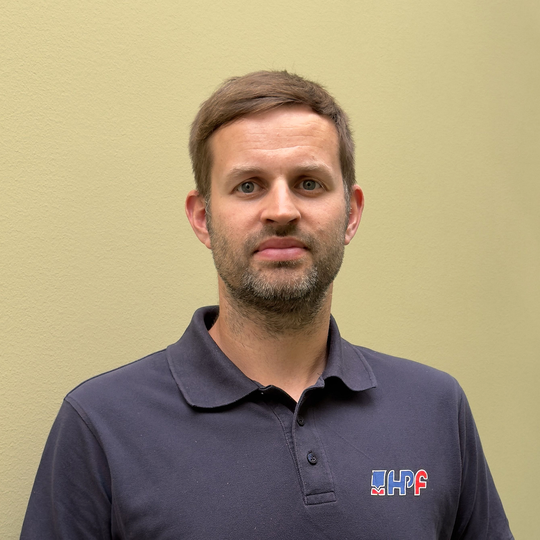
Clemens Menzel, Head of Project Management at HPF: “Thanks to this press’s attractive price-performance ratio, we can offer our clients the high quality they demand at competitive rates.”
(Bild: HPF)
“The Chinese manufacturer was very open to our requests—from a German-language user interface to a color scheme in our corporate colors,” recalls Menzel. “Ultimately, however, one of the most important factors was the attractive price-performance ratio. For a comparable scope of delivery, the purchase price was about half that of the competitors we had inquired with. The press can do everything we need. It uses components from established international manufacturers and is easy to maintain thanks to its straightforward design. And since all of that was covered, the cost was the deciding factor. Because in the end, it all comes down to what the client is willing to pay. Thanks to this press’s attractive price-performance ratio, we can offer our clients the high quality they demand at competitive terms. And that, after all, is what counts.”
Opinion: Costs Must Be Competitive
Of course, you can simulate parts if you have all the relevant data. And the results today are far more meaningful than they were a few years ago. In many cases, however, they aren’t meaningful enough—for example, because important parameters are not taken into account or are not even known. You can put a lot of effort into finalizing tools. However, it’s also clear that the client has to pay for all the work. The question is always how willing they are to do so. In addition to simulation, which can significantly shorten the finalization process, using a trimming press is a rational and efficient way to identify any remaining areas for optimization and correct them right on the spot. The range of functions offered by a trimming press can vary greatly—depending on the mold maker’s requirements. If all safety standards are met, service is guaranteed, and the press offers all desired functions, price becomes a significant factor. HPF in Großdubrau has chosen the HMG 70XS1510 trimming press from the Chinese manufacturer SXKH as the most efficient solution from the company’s perspective.
Richard Pergler Freier Fachjournalist bei Pergler Media, Augsburg



:quality(80)/p7i.vogel.de/wcms/78/ce/78ce24a7ba8343ef49bc3dbb49016443/pasja1000-the-bottle-5128607v1.jpeg "The new plastic tax would amount to 0.28 cents for a yogurt cup and 1.93 cents for a large PET bottle. (Bild: pasja1000)")
:quality(80)/p7i.vogel.de/wcms/cc/db/ccdb09d1d9b3fcabf147abba7fd9e3c5/pasja1000-the-bottle-5128607v1.jpeg "The new plastic tax would amount to 0.28 cents for a yogurt cup and 1.93 cents for a large PET bottle. (Bild: pasja1000)")
:quality(80)/p7i.vogel.de/wcms/be/0a/be0a2864a5f59b0c9bca685dd23bdf79/pasja1000-the-bottle-5128607v1.jpeg "The new plastic tax would amount to 0.28 cents for a yogurt cup and 1.93 cents for a large PET bottle. (Bild: pasja1000)")
:quality(80)/p7i.vogel.de/wcms/b6/fe/b6fe83997fc68192cf8cd8a89b0bab5f/pasja1000-the-bottle-5128607v1.jpeg "The new plastic tax would amount to 0.28 cents for a yogurt cup and 1.93 cents for a large PET bottle. (Bild: pasja1000)")
:quality(80)/p7i.vogel.de/wcms/ce/ee/ceeeef086bfb174ebdda31c0dfccaf9a/2-weiss-blick-in-produktion-dji-0095-kopiev1.jpeg "A look inside the injection molding shop at Weiss Kunststoffverarbeitung in Illertissen, Bavaria. (Bild: White)")
:quality(80)/p7i.vogel.de/wcms/33/08/3308710c85715e917ec1baf9767fe4a7/2026-ewikon-wago-hei-kanalv1.png "Ewikon's 48-cavity hot runner as a production mold. (Bild: Ewikon)")
:quality(80)/p7i.vogel.de/wcms/a2/a5/a2a516dc69b4c8f8ad6f475ae6746a08/sxkh-bei-hpf-gesamtwerkzeugv1.png "The HMG 70XS1510 trimming press from the Chinese manufacturer SXKH combines all the functions required by toolmakers at HPF in a very compact design. The deciding factors in the purchase were the purchase price—and confidence in the quality of established international key components. (Bild: Pergler Media)")
:quality(80)/p7i.vogel.de/wcms/19/5f/195fdb6e09629994f1d6e3cf94dac8d8/bild-1-exam510-ultem9085v1.jpeg "Granular printing (FGF) makes it cost-effective to produce large-format functional parts from high-performance polymers such as Ultem 9085. (Bild: NEW AIM3D)")
:quality(80)/p7i.vogel.de/wcms/d5/c4/d5c46d40e1ae062370d058e2c006c376/dimitrisvetsikas1969-belgium-3595351v1.jpeg "European Plastics Industry Calls for Immediate Action to Address the Industry Crisis (Bild: dimitrisvetsikas1969)")
:quality(80)/p7i.vogel.de/wcms/e6/63/e663f0e1dd8818fc501c6fb5c5d33712/19-5689-circular-economy-of-resourcesv1.jpeg "Plastic waste from the average household is very heterogeneous. Only the right mix of technologies can turn all types of plastic waste into a new source of raw materials. (Bild: BASF)")
:quality(80)/p7i.vogel.de/wcms/31/5b/315b714f653484179232fbc4d6d79543/sesotec-img-andreas-hanus-25-20-281-29v1.jpeg "Andreas Hanus, Head of AI Development at Sesotec: “AI will not replace traditional sorting technology, but will intelligently enhance it.” (Bild: Sesotec)")
:quality(80)/p7i.vogel.de/wcms/74/5f/745f512239689819275af39a82f59860/b-brenkenv1.jpeg "Dr. Benedikt Brenken, Director of R-Cycle: \"The digital product passport will fundamentally change plastic recycling.\" (Bild: R-Cycle)")
:quality(80)/p7i.vogel.de/wcms/40/6d/406d05534ab4d28194bd29699e023e67/2026-09-09-uni-kiel-aufmacherv1.jpeg "These self-polarizing polymer coatings could be used in a wide variety of electronic components in the future. (Bild: University of Kiel/C. Anders)")
:quality(80)/p7i.vogel.de/wcms/5d/46/5d46e098a7cfaebdd9643df47153c5af/aufmacherv1.png "The PPWR imposes new requirements on packaging: What impact does this have on mechanical engineering? (Bild: KI-generiert / Dall-E)")
:quality(80)/p7i.vogel.de/wcms/70/13/7013fe202fb4790708f62f69cd0c83d4/aufmacher-st-c3-a4rkeschaumfoliev1.png "Using thermoplastic starch as a base, researchers at the IKV successfully produced a flexible foam film using physical blowing agents. (Bild: IKV)")
:quality(80)/p7i.vogel.de/wcms/d1/2b/d12b536ba3b382d0d138e342ac1038e6/03--20pm-imm-mgsv1.jpeg "MGS Richfield Site (Bild: MGS)")
:quality(80)/p7i.vogel.de/wcms/90/9c/909cf6eb1b91a9a84ff535033ea9b048/honeycombv1.jpeg "The composite material made of epoxy and glass fibers not only protects against flames but is also fully recyclable. (Bild: Empa)")
:quality(80)/p7i.vogel.de/wcms/6a/d5/6ad5980b0c965409c71582fc59145e13/1920-covestro-new-covestro-headquartersv1.jpeg "Covestro's corporate headquarters in Leverkusen (Bild: Covestro)")
:quality(80)/p7i.vogel.de/wcms/db/74/db741079d26ad9e7a69278fde45e79c7/aufmacherv1.png "(Bild: KI-generiert / Dall-E)")
:quality(80)/p7i.vogel.de/wcms/b3/65/b3654df434f4d31e1fda3c79bc7bb4b0/nakura-20kunstrasenteppich-20ohne-20verf-c3-bcllungv1.jpeg "Tecnaro has developed synthetic turf fibers using a specially formulated Arboblend blend that offers high resistance to heat, UV rays, and weathering, and, because it is niobium-based, sequesters CO₂ over the long term. (Bild: Tecnaro)")
:quality(80)/p7i.vogel.de/wcms/d7/d5/d7d580bbf8d28086f9303892ec1b7d6b/2602010013-6256e8c8-4590-4845-963f-64av1.jpeg "Design Drawing: 3-mm Folded Core—Side View (Bild: Leonhardt)")
:quality(80)/p7i.vogel.de/wcms/ce/ee/ceeeef086bfb174ebdda31c0dfccaf9a/2-weiss-blick-in-produktion-dji-0095-kopiev1.jpeg "A look inside the injection molding shop at Weiss Kunststoffverarbeitung in Illertissen, Bavaria. (Bild: White)")