What does it take to transform used plastic into new, high-quality products? Alpla sets its own standards by integrating production and recycling. Georg Lässer, Director of Business Development, Procurement, and Sales Recycling, provides insight into the company’s quality standards.
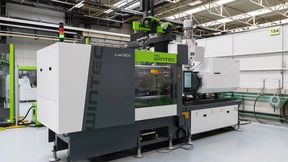
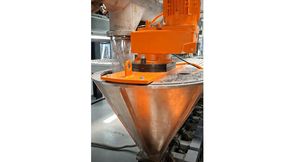
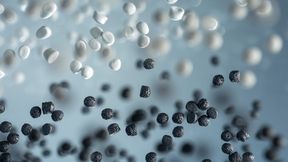
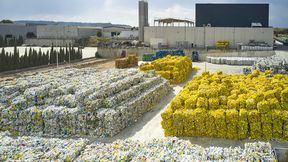
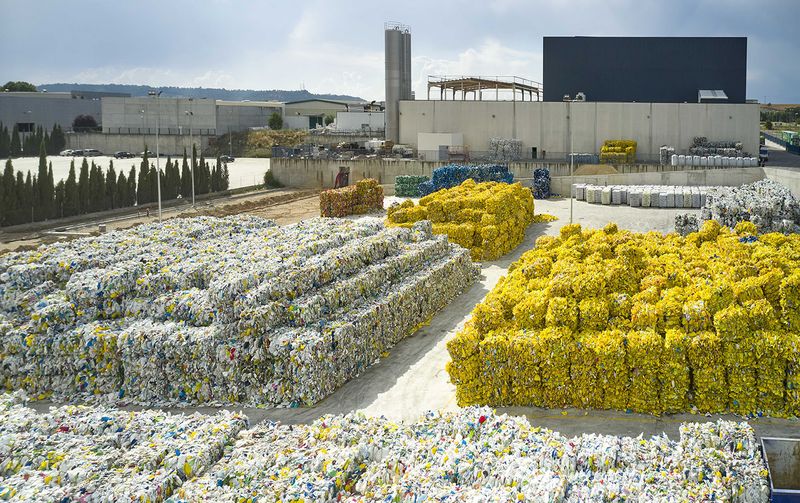
One of the 13 Alpla recycling plants worldwide that, through mechanical recycling, lays the foundation for the recyclable packaging of tomorrow.
(Bild: Alpla)
Recycling has been firmly established at Alpla for over 25 years. The goal: Every piece of used packaging is transformed into an equivalent follow-on product—similar to the “bottle-to-bottle” principle used for polyethylene terephthalate (PET).
Worldwide, the 13 recycling plants produce 300,000 metric tons of recycled PET (rPET) and 100,000 metric tons of rHDPE (HDPE = high-density polyethylene) annually for use in cosmetics, household cleaners, and oil bottles. “Anyone who plastic packaging should also take responsibility for its next life,” sums up Georg Lässer, Director of Business Development, Procurement, and Sales Recycling at Alpla.
Benchmark for Recycling Quality
The combination of production and recycling gives Alpla a unique selling point: The company has firsthand knowledge of the requirements of bottlers and brand manufacturers and thinks in terms of raw materials rather than waste. “We want to set a benchmark for recycling quality in the market. Customers come to us because they know they’ll get good service, top quality, a global presence, and a competitive edge in development,” says Lässer.
The purity of the recycled material is verified based on criteria such as color, impact strength, and viscosity through controlled processes and strict certification standards. According to the recycling expert, “every step of the process is also traceable down to the individual batch and the supplier.”
In addition, Alpla aims to avoid downcycling. The company sells plastic recyclates back to the packaging industry to maintain the bottle-to-bottle cycle. Unlike in the fiber industry, where plastic is often processed into textiles that can no longer be recycled and have no further life cycle, even by-products that don’t match in color remain in the technical cycle: they are processed into robust applications such as strapping bands. Here, at least, the mechanical properties are maintained at the same level as those of a recycled bottle.
Balancing Material Purity and Challenging Market Conditions
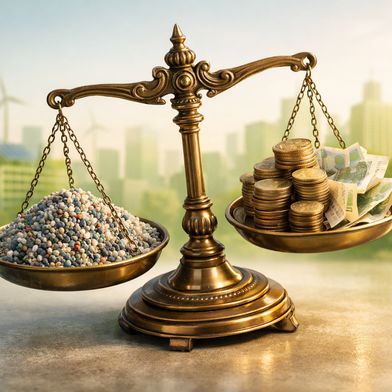
In Europe, recycled plastic currently costs 20 to 50 percent more than virgin plastic. Lässer makes it clear that “the market often compares apples to oranges.” Recycled plastic must meet the highest standards, but it is much more costly to produce. This is offset by its environmental benefits, which is why virgin and recycled plastic cannot be treated as equivalent. “However, when prices for virgin plastic are higher, recycling becomes a bit more economically viable,” Lässer notes.
Furthermore, EU regulations are extremely complicated, and there is a lack of enforcement mechanisms against violations. One has to “ask the lawyers” at every step. Alpla has invested heavily and is now waiting “for consistent enforcement.” Because brand manufacturers are speculating on the 2028 PPWR review, they are lowering their recycled content targets for cost reasons—in some cases from 50 to 30 percent or even to zero.
This removes thousands of metric tons of demand from the market. “That’s the current situation,” explains Lässer. But investments require certainty: “Of course, you only start investing when you have planning certainty.”
Chemical recycling remains a complementary option
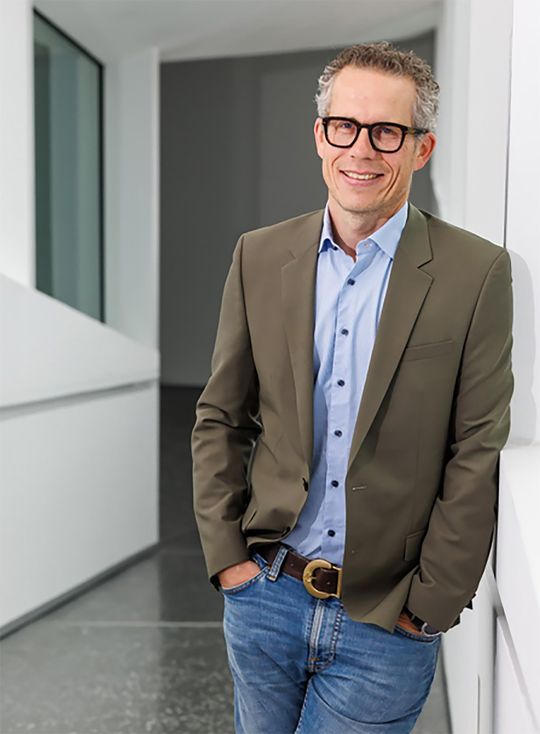
Georg Lässer, Director of Business Development, Procurement, and Sales Recycling at Alpla: “Anyone who manufactures packaging should also take responsibility for its next life.”
(Bild: Alpla)
Despite these uncertainties, the Group continues to invest in sorting technologies, AI-based quality control, decontamination, and digitalization. The share of PCR is expected to rise to 30 percent by 2030; the strategic focus through 2028 is on high-quality food-grade recyclates.
Mechanical recycling—jokingly referred to internally as “wash, blow-dry, and style”—remains the top choice, with payback periods ranging from five to ten years. Chemical recycling plays only a supplementary role, as the company deliberately does not want to “go back a step in the polymer chain,” especially since it generates significantly more CO₂.
Date: 08.12.2025
Naturally, we always handle your personal data responsibly. Any personal data we receive from you is processed in accordance with applicable data protection legislation. For detailed information please see our privacy policy.
Consent to the use of data for promotional purposes
I hereby consent to Vogel Communications Group GmbH & Co. KG, Max-Planck-Str. 7-9, 97082 Würzburg including any affiliated companies according to §§ 15 et seq. AktG (hereafter: Vogel Communications Group) using my e-mail address to send editorial newsletters. A list of all affiliated companies can be found here
Newsletter content may include all products and services of any companies mentioned above, including for example specialist journals and books, events and fairs as well as event-related products and services, print and digital media offers and services such as additional (editorial) newsletters, raffles, lead campaigns, market research both online and offline, specialist webportals and e-learning offers. In case my personal telephone number has also been collected, it may be used for offers of aforementioned products, for services of the companies mentioned above, and market research purposes.
Additionally, my consent also includes the processing of my email address and telephone number for data matching for marketing purposes with select advertising partners such as LinkedIn, Google, and Meta. For this, Vogel Communications Group may transmit said data in hashed form to the advertising partners who then use said data to determine whether I am also a member of the mentioned advertising partner portals. Vogel Communications Group uses this feature for the purposes of re-targeting (up-selling, cross-selling, and customer loyalty), generating so-called look-alike audiences for acquisition of new customers, and as basis for exclusion for on-going advertising campaigns. Further information can be found in section “data matching for marketing purposes”.
In case I access protected data on Internet portals of Vogel Communications Group including any affiliated companies according to §§ 15 et seq. AktG, I need to provide further data in order to register for the access to such content. In return for this free access to editorial content, my data may be used in accordance with this consent for the purposes stated here. This does not apply to data matching for marketing purposes.
Right of revocation
I understand that I can revoke my consent at will. My revocation does not change the lawfulness of data processing that was conducted based on my consent leading up to my revocation. One option to declare my revocation is to use the contact form found at https://contact.vogel.de. In case I no longer wish to receive certain newsletters, I have subscribed to, I can also click on the unsubscribe link included at the end of a newsletter. Further information regarding my right of revocation and the implementation of it as well as the consequences of my revocation can be found in the data protection declaration, section editorial newsletter.
According to Lässer, initiatives such as “HolyGrail 2.0” (digital watermarks) lack market relevance. While a “Recycled in Europe” logo could build trust, the recycling manager cautions that it must “not lead to new bureaucracy.”
Where does the gap in recycling occur?
One of the biggest hurdles remains the volume of raw materials. Georg Lässer concludes that the real gap lies in collection: “What isn’t collected can’t be recycled.” While PET performs more consistently, polyolefins such as polypropylene (PP) face price pressure due to more complex sorting and cheaper virgin material.
Given the current weakness in demand, the mandatory recycled content quotas under the PPWR threaten to bring about the opposite effect starting in 2030. Alpla is therefore expanding its capacity, focusing on Design for Recycling and is forming long-term partnerships along the value chain.
Pilot Project for Food-Grade rHDPE
A key to the future is the expansion of Polymac technology: With this new, solvent-based process, the company aims to fill a gap in the market and produce food-grade rHDPE to meet PPWR quotas starting in 2030. The project will be tested over a four-year period at a pilot plant in collaboration with the NTCP technology institute.
“This will significantly strengthen our technological independence,” Lässer emphasizes. The goal is to leverage our in-house plant expertise to provide high-quality recycled materials in a timely manner for sophisticated packaging applications.
The task now is to harmonize regulatory frameworks, review legislative requirements, and design packaging to be recyclable. A prerequisite for this is that waste is sorted correctly. “The circular economy is not a standalone project. It only works if policymakers, industry, and consumers all pull together,” the head of recycling concludes.