The economic situation in the European plastics and plastics recycling industry remains tense. As a result, 28 organizations representing the entire value chain are calling on the European Union to implement an emergency program to strengthen domestic production and recycling.
European Plastics Industry Calls for Immediate Action to Address the Industry Crisis
The European plastics industry is warning of further losses in production and recycling capacity. In a joint appeal, organizations from the plastics manufacturing, processing, waste management, and recycling sectors have called on European policymakers to take immediate action to stabilize the value chain.
The trigger is the industry’s ongoing economic weakness. Plastic production in Europe fell by 8.3 percent in 2023. At the same time, Europe has lost significant ground on the global market in recent years. Europe’s share of global plastics production has declined from 22 percent in 2006 to about 12 percent.
bvse Supports Joint Call for Recycling
The situation is particularly dire in the plastics recycling sector. According to the data and estimates presented at the time of the industry’s appeal, Europe was at risk of losing a total of nearly one million metric tons of recycling capacity from the beginning of 2023 through the end of 2025 due to plant closures. The relevant industry associations see this as a threat not only to the industrial base but also to Europe’s goals for the circular economy and climate protection.
In light of these developments, 28 organizations in the European plastics and recycling industry are calling for more effective support from the EU. bvse Recycling Germany is among the supporters. The focus is on better protection against imports of inferior quality, lower energy costs, investment incentives, and stronger demand for European recycled materials.
Industry Calls for Fair Competition for Recycled Materials
One of the key focuses of the recycling appeal is international competition. According to the associations, European manufacturers and recyclers are coming under increasing pressure from low-cost imports of virgin materials and recycled materials from third countries.
The industry is therefore calling for comparable requirements for imported materials and those manufactured in Europe. For imports of recycled plastics, virgin plastic, and plastic products, the signatories propose that so-called “mirror measures” or equivalent mechanisms be applied. This is intended to prevent materials from entering the European market that do not meet the environmental, quality, or other regulatory requirements that European producers must satisfy.
At the same time, customs inspections and market surveillance are to be improved. The industry sees a key problem in the fact that, to date, it has not always been possible to adequately verify the origin and actual recycled content of imported materials.
Boosting Demand for European Recycled Plastics
However, according to the industry associations, trade policy measures alone are not enough. They say it is crucial to create a reliable market for recycled plastics manufactured in Europe.
To this end, greater use should be made of extended producer responsibility systems, among other measures. Eco-modulated fees could be structured in such a way that products that are easily recyclable and the use of recycled materials are rewarded more generously from an economic perspective.
The Recycling Appeal thus addresses a key problem in the recycling industry: Investments in sorting and recycling facilities are only profitable in the long term if there is sufficient and, as far as possible, stable demand for the secondary raw materials produced.
The signatories are also calling for targeted investment incentives for the collection, sorting, and recycling of plastic waste. Tax measures and other financial incentives should also be explored.
High energy costs are hurting competitiveness
Another key issue is energy costs. European plastics and recycling companies sometimes face significantly higher production costs compared to competitors from other regions of the world.
The industry is therefore calling for better access to competitively priced energy. Recycling, compounding, and plastics processing should be given greater consideration in industrial policy support measures.
Date: 08.12.2025
Naturally, we always handle your personal data responsibly. Any personal data we receive from you is processed in accordance with applicable data protection legislation. For detailed information please see our privacy policy.
Consent to the use of data for promotional purposes
I hereby consent to Vogel Communications Group GmbH & Co. KG, Max-Planck-Str. 7-9, 97082 Würzburg including any affiliated companies according to §§ 15 et seq. AktG (hereafter: Vogel Communications Group) using my e-mail address to send editorial newsletters. A list of all affiliated companies can be found here
Newsletter content may include all products and services of any companies mentioned above, including for example specialist journals and books, events and fairs as well as event-related products and services, print and digital media offers and services such as additional (editorial) newsletters, raffles, lead campaigns, market research both online and offline, specialist webportals and e-learning offers. In case my personal telephone number has also been collected, it may be used for offers of aforementioned products, for services of the companies mentioned above, and market research purposes.
Additionally, my consent also includes the processing of my email address and telephone number for data matching for marketing purposes with select advertising partners such as LinkedIn, Google, and Meta. For this, Vogel Communications Group may transmit said data in hashed form to the advertising partners who then use said data to determine whether I am also a member of the mentioned advertising partner portals. Vogel Communications Group uses this feature for the purposes of re-targeting (up-selling, cross-selling, and customer loyalty), generating so-called look-alike audiences for acquisition of new customers, and as basis for exclusion for on-going advertising campaigns. Further information can be found in section “data matching for marketing purposes”.
In case I access protected data on Internet portals of Vogel Communications Group including any affiliated companies according to §§ 15 et seq. AktG, I need to provide further data in order to register for the access to such content. In return for this free access to editorial content, my data may be used in accordance with this consent for the purposes stated here. This does not apply to data matching for marketing purposes.
Right of revocation
I understand that I can revoke my consent at will. My revocation does not change the lawfulness of data processing that was conducted based on my consent leading up to my revocation. One option to declare my revocation is to use the contact form found at https://contact.vogel.de. In case I no longer wish to receive certain newsletters, I have subscribed to, I can also click on the unsubscribe link included at the end of a newsletter. Further information regarding my right of revocation and the implementation of it as well as the consequences of my revocation can be found in the data protection declaration, section editorial newsletter.
At the same time, the organizations criticize regulatory uncertainties, bureaucratic burdens, and the fact that existing regulations are sometimes implemented differently across the EU. Approval procedures and administrative requirements should be simplified, and EU regulations should be implemented and enforced more uniformly across member states.
Six Areas of Action for Brussels
Essentially, the demands can be summarized into six areas of action:
A level playing field with imports
Competitive Energy Costs
Better monitoring and enforcement of existing rules
Less regulatory fragmentation within Europe
Better Conditions for Investment and Innovation
Further Development of Extended Producer Responsibility
According to their own statements, the associations involved are not only concerned with protecting existing companies. They warn that if European recycling capacity continues to decline, it could also make it more difficult to implement European circular economy policy.
This is because increasing requirements for the use of recycled materials and higher recycling rates necessitate corresponding sorting and processing capacities. If these capacities disappear from Europe for economic reasons, dependence on imports could continue to grow.
Recycling Is Becoming an Industrial Policy Issue
The joint call for recycling thus makes it clear that plastic recycling is increasingly viewed not only as an environmental policy issue but also as an industrial policy issue. The industry links the circular economy to issues of European competitiveness, raw material supply, and strategic independence.
The signatories warn that without immediate countermeasures, further business closures and job losses could result. At the same time, investments already made in recycling technologies and the circular economy would be jeopardized.
For the EU, this creates a conflict of objectives: On the one hand, with Packaging Ordinance (+) and other regulations, the requirements for recycling and the use of recycled materials are increasing. On the other hand, the companies tasked with producing the necessary secondary raw materials are under considerable economic pressure.
From the perspective of the associations involved, European circular economy policy must therefore be more closely integrated with industrial and competition policy. A functioning plastics cycle therefore requires not only ambitious recycling targets, but also economically viable markets for the recycled materials produced in Europe.



:quality(80)/p7i.vogel.de/wcms/78/ce/78ce24a7ba8343ef49bc3dbb49016443/pasja1000-the-bottle-5128607v1.jpeg "The new plastic tax would amount to 0.28 cents for a yogurt cup and 1.93 cents for a large PET bottle. (Bild: pasja1000)")
:quality(80)/p7i.vogel.de/wcms/cc/db/ccdb09d1d9b3fcabf147abba7fd9e3c5/pasja1000-the-bottle-5128607v1.jpeg "The new plastic tax would amount to 0.28 cents for a yogurt cup and 1.93 cents for a large PET bottle. (Bild: pasja1000)")
:quality(80)/p7i.vogel.de/wcms/be/0a/be0a2864a5f59b0c9bca685dd23bdf79/pasja1000-the-bottle-5128607v1.jpeg "The new plastic tax would amount to 0.28 cents for a yogurt cup and 1.93 cents for a large PET bottle. (Bild: pasja1000)")
:quality(80)/p7i.vogel.de/wcms/b6/fe/b6fe83997fc68192cf8cd8a89b0bab5f/pasja1000-the-bottle-5128607v1.jpeg "The new plastic tax would amount to 0.28 cents for a yogurt cup and 1.93 cents for a large PET bottle. (Bild: pasja1000)")
:quality(80)/p7i.vogel.de/wcms/ce/ee/ceeeef086bfb174ebdda31c0dfccaf9a/2-weiss-blick-in-produktion-dji-0095-kopiev1.jpeg "A look inside the injection molding shop at Weiss Kunststoffverarbeitung in Illertissen, Bavaria. (Bild: White)")
:quality(80)/p7i.vogel.de/wcms/33/08/3308710c85715e917ec1baf9767fe4a7/2026-ewikon-wago-hei-kanalv1.png "Ewikon's 48-cavity hot runner as a production mold. (Bild: Ewikon)")
:quality(80)/p7i.vogel.de/wcms/a2/a5/a2a516dc69b4c8f8ad6f475ae6746a08/sxkh-bei-hpf-gesamtwerkzeugv1.png "The HMG 70XS1510 trimming press from the Chinese manufacturer SXKH combines all the functions required by toolmakers at HPF in a very compact design. The deciding factors in the purchase were the purchase price—and confidence in the quality of established international key components. (Bild: Pergler Media)")
:quality(80)/p7i.vogel.de/wcms/19/5f/195fdb6e09629994f1d6e3cf94dac8d8/bild-1-exam510-ultem9085v1.jpeg "Granular printing (FGF) makes it cost-effective to produce large-format functional parts from high-performance polymers such as Ultem 9085. (Bild: NEW AIM3D)")
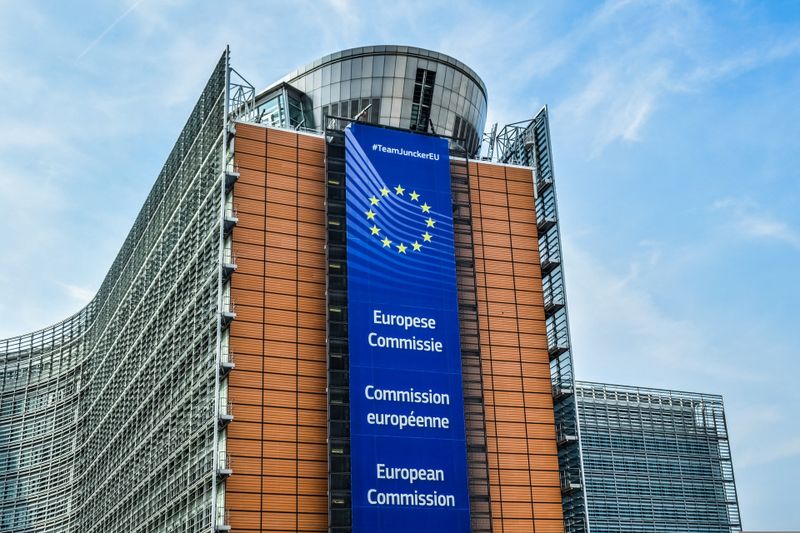
:quality(80)/p7i.vogel.de/wcms/d5/c4/d5c46d40e1ae062370d058e2c006c376/dimitrisvetsikas1969-belgium-3595351v1.jpeg "European Plastics Industry Calls for Immediate Action to Address the Industry Crisis (Bild: dimitrisvetsikas1969)")
:quality(80)/p7i.vogel.de/wcms/e6/63/e663f0e1dd8818fc501c6fb5c5d33712/19-5689-circular-economy-of-resourcesv1.jpeg "Plastic waste from the average household is very heterogeneous. Only the right mix of technologies can turn all types of plastic waste into a new source of raw materials. (Bild: BASF)")
:quality(80)/p7i.vogel.de/wcms/31/5b/315b714f653484179232fbc4d6d79543/sesotec-img-andreas-hanus-25-20-281-29v1.jpeg "Andreas Hanus, Head of AI Development at Sesotec: “AI will not replace traditional sorting technology, but will intelligently enhance it.” (Bild: Sesotec)")
:quality(80)/p7i.vogel.de/wcms/74/5f/745f512239689819275af39a82f59860/b-brenkenv1.jpeg "Dr. Benedikt Brenken, Director of R-Cycle: \"The digital product passport will fundamentally change plastic recycling.\" (Bild: R-Cycle)")
:quality(80)/p7i.vogel.de/wcms/40/6d/406d05534ab4d28194bd29699e023e67/2026-09-09-uni-kiel-aufmacherv1.jpeg "These self-polarizing polymer coatings could be used in a wide variety of electronic components in the future. (Bild: University of Kiel/C. Anders)")
:quality(80)/p7i.vogel.de/wcms/5d/46/5d46e098a7cfaebdd9643df47153c5af/aufmacherv1.png "The PPWR imposes new requirements on packaging: What impact does this have on mechanical engineering? (Bild: KI-generiert / Dall-E)")
:quality(80)/p7i.vogel.de/wcms/70/13/7013fe202fb4790708f62f69cd0c83d4/aufmacher-st-c3-a4rkeschaumfoliev1.png "Using thermoplastic starch as a base, researchers at the IKV successfully produced a flexible foam film using physical blowing agents. (Bild: IKV)")
:quality(80)/p7i.vogel.de/wcms/d1/2b/d12b536ba3b382d0d138e342ac1038e6/03--20pm-imm-mgsv1.jpeg "MGS Richfield Site (Bild: MGS)")
:quality(80)/p7i.vogel.de/wcms/90/9c/909cf6eb1b91a9a84ff535033ea9b048/honeycombv1.jpeg "The composite material made of epoxy and glass fibers not only protects against flames but is also fully recyclable. (Bild: Empa)")
:quality(80)/p7i.vogel.de/wcms/6a/d5/6ad5980b0c965409c71582fc59145e13/1920-covestro-new-covestro-headquartersv1.jpeg "Covestro's corporate headquarters in Leverkusen (Bild: Covestro)")
:quality(80)/p7i.vogel.de/wcms/db/74/db741079d26ad9e7a69278fde45e79c7/aufmacherv1.png "(Bild: KI-generiert / Dall-E)")
:quality(80)/p7i.vogel.de/wcms/b3/65/b3654df434f4d31e1fda3c79bc7bb4b0/nakura-20kunstrasenteppich-20ohne-20verf-c3-bcllungv1.jpeg "Tecnaro has developed synthetic turf fibers using a specially formulated Arboblend blend that offers high resistance to heat, UV rays, and weathering, and, because it is niobium-based, sequesters CO₂ over the long term. (Bild: Tecnaro)")
:quality(80)/p7i.vogel.de/wcms/93/a6/93a632a5834879d7155844abf6cba108/240913-81z9177-renner-manfred-topfav-1-hp-jbv1.jpeg "Prof. Dr.-Ing. Manfred Renner: “To shape the technological future, it is essential to make technologies understandable.” (Bild: geralt)")
:quality(80)/p7i.vogel.de/wcms/35/40/3540d17421ce9822d359401143c058f8/skz-pm-lama-mitarbeiterv1.jpeg "From left: Dr. Lars Helmlinger, Stefan Zuljevic, Dr. Marieluise Lang, and Thomas Wolz (from left) of LaMa Recycling (Bild: LaMa)")