Round Table PPWRBetween Regulatory Requirements and Industrial Reality
The interview was conducted by
Melanie Ehrhardt
| Translated by AI
9 min Reading Time
The PPWR sets ambitious goals for the European circular economy. At the roundtable, representatives from industry, the recycling sector, and trade associations will discuss how regulatory requirements and industrial realities can be reconciled—and what is needed for successful implementation.
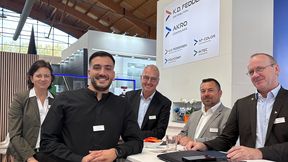
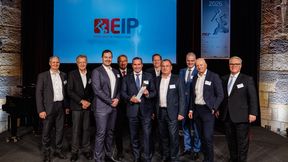
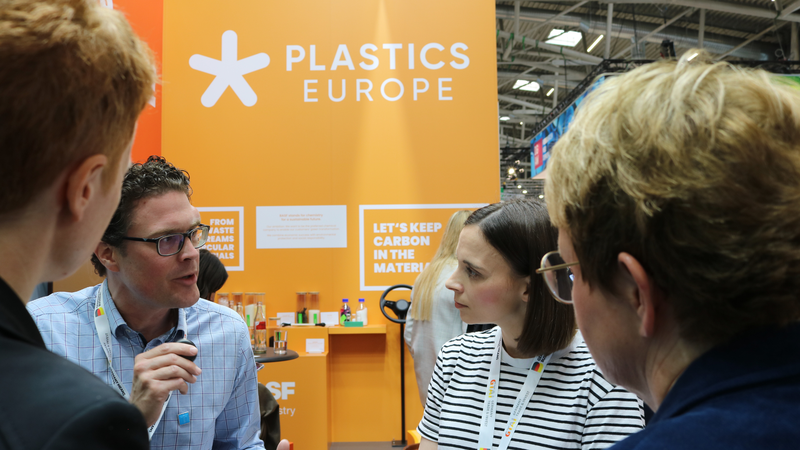
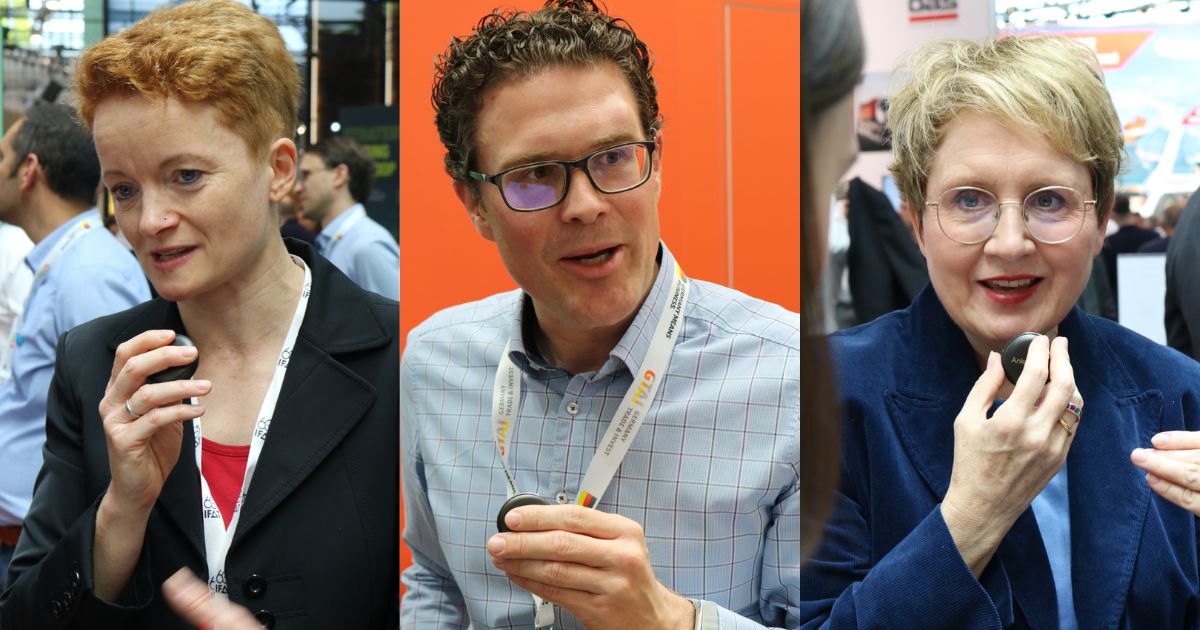
The participants in the PPWR roundtable and PlastXNow editor Melanie Ehrhardt.
(Bild: Jacob Lohring; PED)
The new Packaging and Packaging Waste Regulation (PPWR) is expected to fundamentally transform the European packaging market and set the stage for a functioning circular economy. However, numerous questions remain unresolved between these ambitious goals and their practical implementation in industry and supply chains.
During a roundtable discussion at IFAT 2026 in Munich, representatives from industry, the recycling sector, and trade associations discussed how the PPWR can be effectively implemented in practice, where regulatory uncertainties exist, and what conditions are necessary for investments, innovations, and scaling up to actually succeed.
It became clear that the path toward greater recyclability, circularity, and competitiveness is challenging—and requires close cooperation between the public and private sectors.
(Source: Jacob Lohring; PED)
Seated at the table were:
Left: Dr. Christine Bunte, Executive Director of Plastics Europe Germany (PED)
Center: Daniel Odenthal, founder and CEO of Arcus Greencycling
Right: Gabriele Hässig, Managing Director of Communications and Sustainability for Germany, Austria, and Switzerland (DACH) at Procter & Gamble
PlastXnow: In your opinion, how will the PPWR change packaging design in the coming years?
Dr. Christine Bunte: As is well known, the PPWR aims to ensure that, starting in 2030, all packaging on the EU market must be recyclable by 2030. This clearly puts the issue of recyclability at the top of the agenda for packaging manufacturers. There are two ways to achieve this goal: On the one hand, packaging can be adapted to existing recycling processes. On the other hand, new processes can be developed to recycle even those types of packaging that could not previously be incorporated into the recycling loop. I expect that both approaches—driven in part by the PPWR—will continue to evolve significantly in the coming years.
Gabriele Hässig: There are now clear guidelines on recyclability as well as PCR content requirements. Of course, the PPWR contains much more than that. However, there are also many important aspects that are not yet included. For example, it is still unclear how the PCR quota should be calculated. Should it actually apply to every small component of a package? It would certainly make more sense to have a PCR quota for the entire package.
Daniel Odenthal: Furthermore, in our view, it is important that this issue not be considered exclusively from the perspective of mechanical recycling. chemical recycling should be given greater consideration so that manufacturers can design their packaging accordingly and utilize different technologies. This requires legal certainty so that the necessary investments in these technologies can be made.
The mandatory use of recycled materials is considered a key driver of the PPWR. Is the current supply of high-quality recycled materials sufficient to meet regulatory requirements and market demand?
Hässig: The current offerings in terms of quality and quantity—and all of this at competitive prices—are not sufficient. Let me go through all three issues one by one, because all three are important:
The first point is quality. From a materials science perspective, not all polymers are the same. For demanding applications, you need recycled materials with a quality as close as possible to that of virgin material. The mechanical recycling processes commonly used today often cannot yet fully meet these requirements.
The second point concerns “substances of interest”—that is, undesirable residues that can be carried over through recycling processes. Such substances must not be present, especially in sensitive applications. For this reason, the permissible recycled content levels are often lower in those cases.
The third point concerns price. This is a key factor because costs are passed along the entire supply chain and ultimately reach consumers. We are all currently seeing rising prices in the consumer goods sector. That is why we must focus on promoting approaches that become economically viable through economies of scale.
Odenthal: At the same time, however, we cannot expect this scale to be achieved overnight. In my view, the goal must still be to create competitive solutions—both in terms of quality and in sufficient quantity. However, these capacities do not materialize overnight.
What would need to change?
Odenthal: The petrochemical, fossil-fuel-based value chain has grown over many decades. As a result, the processes involved are highly optimized today. In the field of new recycling and circular economy technologies, however, we’re talking about many innovative processes that first need to be brought to market and scaled up. This requires investment certainty and the development of corresponding demand. After all, competitive prices can only be achieved through sufficient volume.
Hässig: To take advantage of the opportunities offered by the circular economy, we need, above all, legal certainty—that is, clear rules on what can be credited and how. At the same time, we must begin to actively develop these markets. Only by working together can we make progress. Legal certainty means investment certainty.
In your opinion, what measures are necessary to systematically develop the relevant industries and technologies in Europe?
Bunte: Let me take a moment to explain my answer. We are currently seeing that China is investing heavily in recycling technologies. The largest increases in mechanical recycling in recent years have come from there. And there is also significant investment in the field of chemical recycling. Against this backdrop, we in Europe must seriously ask ourselves the following question: What incentives are needed to further strengthen the circular economy here—in a way that allows us to recycle our own waste to a high standard on our own continent or within our own country?
What kinds of incentives might those be?
Bunte: There is currently a lot of discussion about “Made in Europe” and a possible preference for European products—an approach that is, by its very nature, complex in an era of global value chains. In my view, a minimum requirement is that imports entering Germany must meet the standards applicable here. Above all, this requires greater transparency. Only when it is clear which recycled materials and other materials are actually entering the supply chains can a reliable understanding of the current situation be established. Greater transparency regarding imports is therefore a crucial first step.
Are there any others?
Bunte: The second aspect, which is currently being tested in various countries, concerns the management of a country’s own waste generation. The goal must be to keep waste within the country’s own system to a greater extent as a resource and, accordingly, to recycle it within the country’s own territory.
Hässig: I agree in principle, but I’d like to add one more thought: Isolationism won’t get us anywhere. What we need is a globally competitive recycling industry. Especially in times of volatile and increasingly uncertain supply chains, it is crucial to remain flexible and be able to source materials from different regions—as well as to have different suppliers for the same requirements. These are essential factors for maintaining stable supply chains, even when bottlenecks or crises arise.
What does that mean?
Hässig: Against this backdrop, I caution against overly restrictive regional or European measures that ignore global developments. Instead, I believe we will achieve much more if we focus on innovation and make targeted investments—so that effective technologies and processes can be scaled up and gain international acceptance.
Bunte: We at Plastics Europe have sat down with converters and the recycling industry to discuss how we can move this issue forward together. In doing so, we see very clearly that the need to stimulate investment is particularly significant in the circular economy. Currently, we are losing established recycling capacity rather than building new capacity.
How can this trend be stopped?
Bunte: When we talk about special funds in the budget, it should also be clear that a portion of these funds must be directed specifically toward the circular economy. This should be combined with a return to framework conditions in which domestic competition and economic efficiency can function again. After all, that is ultimately the fundamental prerequisite for any industrial value creation.
Let's return specifically to the PPWR. What role do consumers play in its success?
Hässig: Consumers want better solutions for their everyday lives. The key here is to build a connection and let them experience the benefits—not to lecture them. And for these better solutions, people expect a fair price. Based on these expectations, our primary goal must be to provide recycled materials of the right quality at the right cost. Anything else does not advance the circular economy. At the same time, when we, as brand-name manufacturers, use PCR, consumers rightly expect that packaging will continue to be just as easy to open and dispense, and that it will remain stable during use. In addition, logistical requirements must be met.
When do things get difficult for you as a company?
Hässig: Simplified depictions, such as the well-known imagery of plastic in the ocean, create uncertainty that hinders the circular economy. Such depictions attract attention and are emotionally impactful, but they do not accurately reflect reality. When I put my packaging in the yellow bag in Germany or Europe, it doesn’t simply end up in the ocean in Asia. Such oversimplifications do not help advance the circular economy. That is why we must continue to communicate consistently on this issue and carry out very concrete educational efforts.
Odenthal: The only real contribution consumers can make is to sort their waste more effectively. This isn’t just about reducing the amount of trash that ends up in the oceans—it’s also a very practical cost consideration. The better waste is sorted at home, the less effort is required in downstream sorting. And the higher the likelihood that we’ll ultimately be able to offer recycled packaging at a price that’s reasonably competitive in the market.
Where do you see the greatest risks in implementing the PPWR?
Odenthal: We currently see the greatest risks in the possibility that the established goals will ultimately not be implemented. From our perspective, this raises the question of how we can ensure the effective implementation of the regulations. After all, if companies find ways to circumvent the requirements, the regulations ultimately lose their effectiveness. The direction is fundamentally correct, but what matters most is the concrete implementation and enforcement.
Bunte: At this point, I’d also like to address the responsibility of the legislature. We’ve already mentioned that many questions surrounding the PPWR have not yet been definitively answered or are still pending from a regulatory standpoint. What we’re currently observing is that the development of the regulatory framework needed to achieve the 2030 goals has so far been progressing far too slowly—not even close to the pace required.
In closing: Similar regulations are expected for other industries as well. What can these industries learn from the PPWR?
Bunte: I think we’ve already touched on quite a few things that should be avoided. From my perspective, it starts with a carefully defined scope. You should avoid unnecessarily or unintentionally expanding the scope, only to then have to painstakingly deal with the resulting side effects. It’s better to focus from the very beginning on what actually needs to be changed.
Odenthal: A second key point is this: When goals are set, the regulatory framework must also be designed in such a way that these goals are actually achievable. This includes, for example, quickly establishing clarity regarding calculation methods, recognition rules, and the integration of new technologies and their contribution to achieving the goals.
Hässig: It is also important to avoid misguided policies that, while well-intentioned, are ultimately counterproductive. The best way to achieve this is through dialogue. In other words, involve the industry early on and ask, without bias, what practical consequences certain regulations have—and then take this feedback seriously. Ultimately, this would not only facilitate implementation but also strengthen the quality of regulation and, with it, people’s trust in the circular economy as a whole.
Thank you very much for the interview!
Date: 08.12.2025
Naturally, we always handle your personal data responsibly. Any personal data we receive from you is processed in accordance with applicable data protection legislation. For detailed information please see our privacy policy.
Consent to the use of data for promotional purposes
I hereby consent to Vogel Communications Group GmbH & Co. KG, Max-Planck-Str. 7-9, 97082 Würzburg including any affiliated companies according to §§ 15 et seq. AktG (hereafter: Vogel Communications Group) using my e-mail address to send editorial newsletters. A list of all affiliated companies can be found here
Newsletter content may include all products and services of any companies mentioned above, including for example specialist journals and books, events and fairs as well as event-related products and services, print and digital media offers and services such as additional (editorial) newsletters, raffles, lead campaigns, market research both online and offline, specialist webportals and e-learning offers. In case my personal telephone number has also been collected, it may be used for offers of aforementioned products, for services of the companies mentioned above, and market research purposes.
Additionally, my consent also includes the processing of my email address and telephone number for data matching for marketing purposes with select advertising partners such as LinkedIn, Google, and Meta. For this, Vogel Communications Group may transmit said data in hashed form to the advertising partners who then use said data to determine whether I am also a member of the mentioned advertising partner portals. Vogel Communications Group uses this feature for the purposes of re-targeting (up-selling, cross-selling, and customer loyalty), generating so-called look-alike audiences for acquisition of new customers, and as basis for exclusion for on-going advertising campaigns. Further information can be found in section “data matching for marketing purposes”.
In case I access protected data on Internet portals of Vogel Communications Group including any affiliated companies according to §§ 15 et seq. AktG, I need to provide further data in order to register for the access to such content. In return for this free access to editorial content, my data may be used in accordance with this consent for the purposes stated here. This does not apply to data matching for marketing purposes.
Right of revocation
I understand that I can revoke my consent at will. My revocation does not change the lawfulness of data processing that was conducted based on my consent leading up to my revocation. One option to declare my revocation is to use the contact form found at https://contact.vogel.de. In case I no longer wish to receive certain newsletters, I have subscribed to, I can also click on the unsubscribe link included at the end of a newsletter. Further information regarding my right of revocation and the implementation of it as well as the consequences of my revocation can be found in the data protection declaration, section editorial newsletter.