Steady market growth and groundbreaking technologies: The automotive interior offers attractive prospects for plastics processors. However, the rapid pace of innovation poses a challenge for the industry. What is needed now is a clear understanding of the market, a smart strategy, and collaboration with partners from other technology fields.
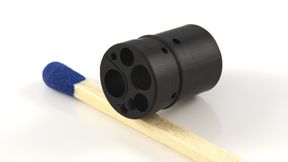
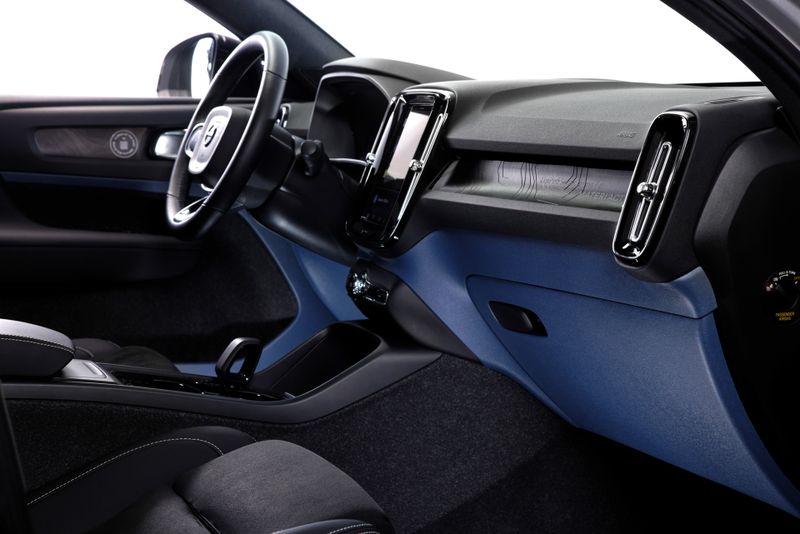
It's the interior that makes the difference—reeds, pruned grapevines, and oyster shells make up the organic component of a new plastic material—and create an interesting surface texture.
(Bild: InSuM)
Plastics processors that manufacture components for automotive interiors are optimistic about the future. According to forecasts, the market is growing by 4–6% per year. Equally important: For car buyers, the interior is becoming an increasingly key factor in their purchasing decisions. Drivers and passengers expect “wow factors” and demand genuine innovations—and the industry is delivering. Sustainability is also gaining importance, as evidenced by the increasing use of recycled materials and bio-based materials, which will even be required by law in the future.
Interior suppliers must now adapt to these developments and develop their own strategies. In this way, they can secure their share of the projected growth—and provide OEMs as well as Tier 1 and Tier 2 suppliers not only with highly functional components but also with forward-looking ideas. Five key trends in vehicle interiors—all of which are changing the demands placed on plastics technology—serve as a roadmap for such new developments.
1. A Greater Focus on Design and Personalization
Interior design is becoming increasingly diverse: the spectrum ranges from understated and elegant to futuristic, opulent, and “technoid.” In the future, customizable and modular components will also shape the interior—including trim pieces for production models that end customers can produce themselves using 3D printing. Some automakers are already making initial print files available today through their own platforms.
Even today, interior modules adapt flexibly to the needs of the occupants: seats, consoles, and mounts can be rotated, moved, or completely retracted. Autonomous driving—the concept of a “second home”—and steer-by-wire systems, which create new design freedoms by eliminating the steering column, are further driving this development. But the trend toward transformable spaces is also gaining momentum independently of these developments.
2. New Features for the User Interface
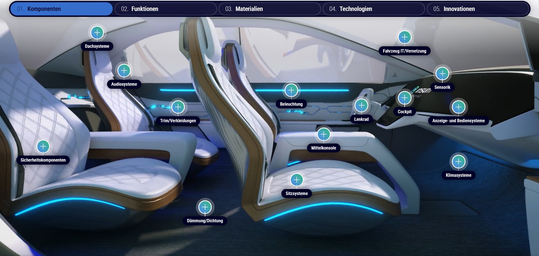
The home screen of a new web app from the Interior Hub for Sustainable Mobility, featuring buttons for individual topic areas.
(Bild: InSuM)
Traditional air vents and speakers will soon be a thing of the past: In future vehicle models, whole-cabin climate control will become standard, and the first suppliers have already developed immersive sound systems without separate or visible speakers. Manufacturers are also already integrating lighting functions, actuators such as vibration feedback, and “invisible” controls directly into the components. Antimicrobial coatings are already proving their worth in practice, and self-healing surfaces are within reach. E-paper technology also opens up entirely new design possibilities: With it, trim strips and decorative elements can change their appearance at the touch of a button.
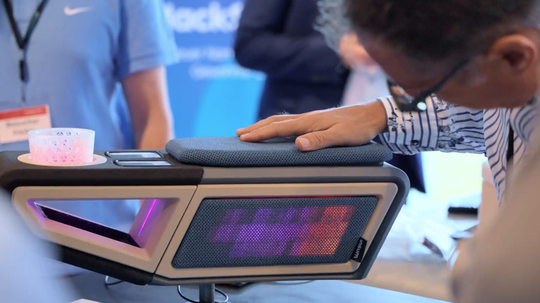
Surfaces—such as those on center consoles—can be equipped with touch-sensitive controls and sensors that remain invisible when inactive (Shy Tech). In the so-called “hidden-until-lit” principle, electronics and light sources are located directly beneath the surface and only become visible when activated.
3. Glowing Textiles
Developers are increasingly integrating light sources—mostly as ambient lighting—directly into door panels, headliners, and, more recently, seats. This trend is bringing smart textiles—that is, functional fiber materials and fabrics—into the spotlight. Conductive or backlit textiles create dynamic lighting effects, fostering a pleasant atmosphere—and delivering the desired “wow factor.”
4. Plastics in the Circular Economy
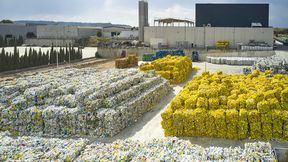
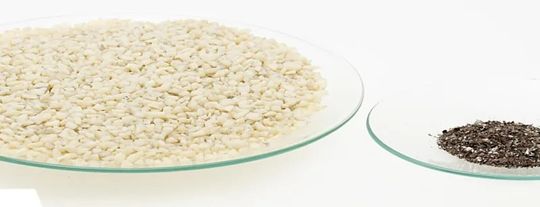
Thanks to highly efficient separation, both the metal and the plastic can be returned to the production cycle of new components as valuable raw materials.
(Bild: remap / BIA Group)
The EU End-of-Life Vehicles Directive alone is driving the proportion of recycled plastics in vehicle interiors even higher. Starting from a still-low baseline, manufacturers are increasingly processing not only production residues (PIR) but also post-consumer recycled materials (PCR). This poses a challenge for the industry, as OEMs require precise qualification and consistently high material properties. However, once suppliers have mastered these processes, they must also reliably deliver the required qualities in sufficient quantities over long periods—even though high-quality recyclates are in short supply on the market. Design engineers must therefore factor this availability into their plans from the very beginning.
In practice, unconventional recycled materials are already being used, such as those derived from old beverage crates or cartons. However, experts are engaged in a heated debate over how sensible it is to open up closed—that is, product-specific—material cycles for applications outside the industry. In the leather sector, meanwhile, innovative recycling projects are transforming old leather goods into new yarns.
Date: 08.12.2025
Naturally, we always handle your personal data responsibly. Any personal data we receive from you is processed in accordance with applicable data protection legislation. For detailed information please see our privacy policy.
Consent to the use of data for promotional purposes
I hereby consent to Vogel Communications Group GmbH & Co. KG, Max-Planck-Str. 7-9, 97082 Würzburg including any affiliated companies according to §§ 15 et seq. AktG (hereafter: Vogel Communications Group) using my e-mail address to send editorial newsletters. A list of all affiliated companies can be found here
Newsletter content may include all products and services of any companies mentioned above, including for example specialist journals and books, events and fairs as well as event-related products and services, print and digital media offers and services such as additional (editorial) newsletters, raffles, lead campaigns, market research both online and offline, specialist webportals and e-learning offers. In case my personal telephone number has also been collected, it may be used for offers of aforementioned products, for services of the companies mentioned above, and market research purposes.
Additionally, my consent also includes the processing of my email address and telephone number for data matching for marketing purposes with select advertising partners such as LinkedIn, Google, and Meta. For this, Vogel Communications Group may transmit said data in hashed form to the advertising partners who then use said data to determine whether I am also a member of the mentioned advertising partner portals. Vogel Communications Group uses this feature for the purposes of re-targeting (up-selling, cross-selling, and customer loyalty), generating so-called look-alike audiences for acquisition of new customers, and as basis for exclusion for on-going advertising campaigns. Further information can be found in section “data matching for marketing purposes”.
In case I access protected data on Internet portals of Vogel Communications Group including any affiliated companies according to §§ 15 et seq. AktG, I need to provide further data in order to register for the access to such content. In return for this free access to editorial content, my data may be used in accordance with this consent for the purposes stated here. This does not apply to data matching for marketing purposes.
Right of revocation
I understand that I can revoke my consent at will. My revocation does not change the lawfulness of data processing that was conducted based on my consent leading up to my revocation. One option to declare my revocation is to use the contact form found at https://contact.vogel.de. In case I no longer wish to receive certain newsletters, I have subscribed to, I can also click on the unsubscribe link included at the end of a newsletter. Further information regarding my right of revocation and the implementation of it as well as the consequences of my revocation can be found in the data protection declaration, section editorial newsletter.
5. Bamboo, kenaf, and paper instead of fossil-based raw materials
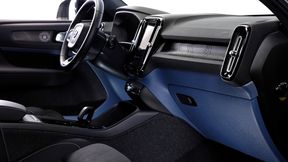
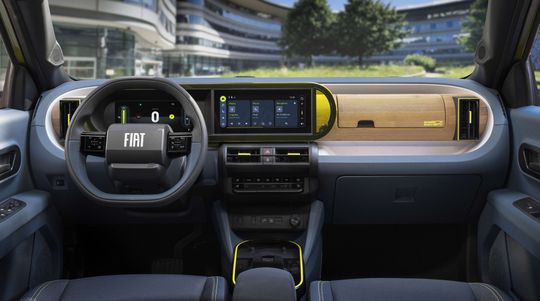
Bamboo fiber instead of plastic: the dashboard trim in the Fiat Grande Panda.
(Bild: Fiat)
In addition, natural and vegan raw materials are increasingly replacing fossil-based materials. The situation here is similar to that with recycled materials: Switching materials is challenging, but the range of raw materials—from reeds and pruned grapevines to oyster shells—and processing methods is vast. A welcome side effect: These materials enable spectacular surfaces with a natural look. Marketing benefits as well: A dashboard made of bamboo fiber fabric in the Fiat Grande Panda emphasizes the model name and comes across to customers as both sustainable and appealing.
Tapping into Potential—Ideally with Partners
This raises a key question for plastics processors: How can they actually tap into this growth potential? Tasks such as integrating sensor technology or lighting systems are too much for a traditional injection molding company to handle on its own. It is therefore worthwhile to bring technology partners from the fields of electronics, lighting, sensor technology, or surface treatment on board early in the process.
This center console, designed to showcase innovations, was developed as part of an InSuM project involving 13 partner companies.
(Bild: InSuM)
To bring the right partners together, the InSuM initiative has developed a web app: It specifically connects manufacturers with experienced automotive specialists from all relevant technology fields. At the same time, the app serves as a tool for trend scouting, as it consolidates in-depth knowledge about new technologies and describes their specific impacts on vehicle interiors.
In addition, the interior design hub InSuM has produced a comprehensive 50-page study titled “Interiors of the Future,” which provides an in-depth analysis of these trends. The study is available for free download after registration on the InSuM website.
Marius Hertzsch Experte Automotive Interieur beim Interieur-Hub for Sustainable Mobility (InSuM)
Bildquelle: InSuM
InSuM: Information Sharing for Interior Suppliers
As a consortium funded by the Federal Ministry for Economic Affairs, the “Interieur-Hub for Sustainable Mobility,” or InSuM for short, specializes in innovations in automotive interiors. It supports small and medium-sized suppliers and brings together industry and research partners. The consortium is backed by Automotive Thüringen, AMZ Sachsen, Bayern Innovativ, and Chemnitz University of Technology (TU Chemnitz), with CATI serving as an affiliated institute. Together, they pursue, among other goals, the objective of identifying concrete opportunities for suppliers in the growth sector of future vehicle interiors.