Since March, Wittmann’s order intake has been at a level the machine manufacturer last saw about four years ago. Managing Director Michael Wittmann, however, believes it is still too early to speak of a turnaround. In this interview, he discusses orders from the U.S., China’s role, and competition from imported machines. He explains why AI is not yet scalable in injection molding, what was showcased at Fakuma, and why legislation from Brussels is his biggest concern.
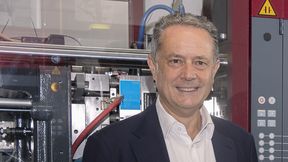
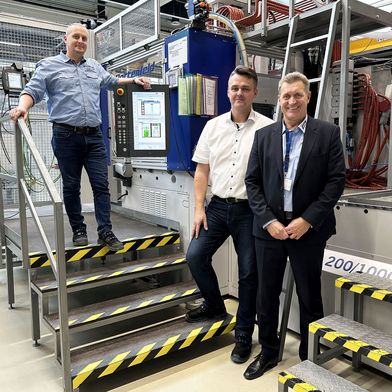
In an interview, Michael Wittmann, CEO of the Wittmann Group, explains why integration is becoming a competitive advantage and why efficiency is the answer to cost pressures.
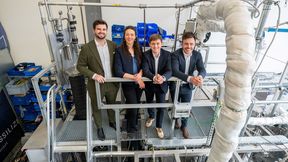
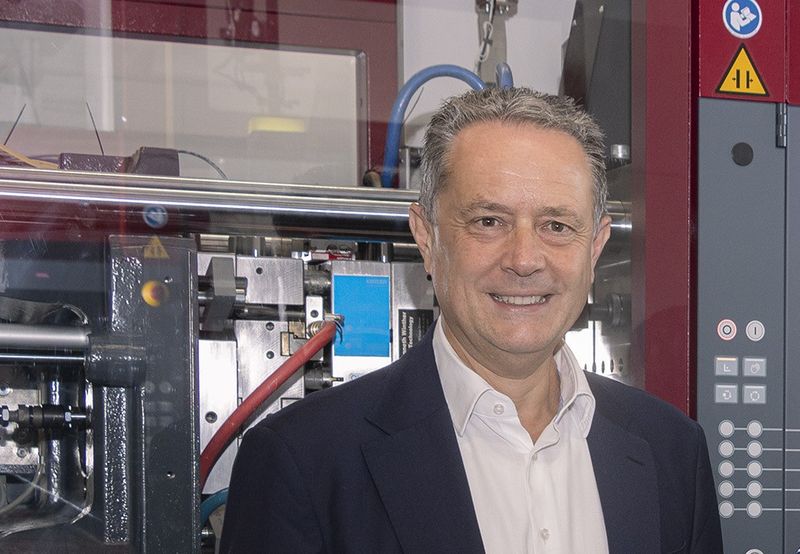
(Bild: Wittmann)
Since March, the Wittmann Group’s order intake has been at its highest level in about four years. Michael Wittmann, the company’s managing director—who, since May, has shared leadership of all business divisions with his father, Dr. Werner Wittmann—believes it is still too early to speak of a turnaround. In an interview with PlastXnow, he explains where the demand is coming from and why Europe is losing ground as a business location as innovation increasingly takes place elsewhere. He discusses the role of China and India, the “It’s all Wittmann” strategy, and the Eco Primus as a response to imported machines from China. On the topic of AI, he clarifies where the technology currently stands in injection molding.
How do you assess the situation in the plastics machinery manufacturing industry? Are you seeing a pickup in investment activity, or is the market situation still too fragile?
Michael Wittmann: Since March, we’ve been delighted to see a real uptick in business activity, even though the overall economic conditions haven’t actually changed. Given the war in Iran, one might even have expected things to get worse, but that hasn’t been the case. Projects that had been discussed and postponed for many months or years are now taking shape, and some have recently been finalized and completed. Is this the long-awaited turnaround? In my opinion, it’s still too early to say. However, our international presence is working to our advantage. The North American market is currently very active. Investments are being made there—for example, in the expansion of data centers, but also in medical technology. In Europe, the picture is more challenging.
You mention Europe. What is the situation in Germany and the rest of Europe? And is this a sustainable upswing or just a brief spike?
Wittmann: We’re pleased to see that Germany has also been taking action in recent months, even among automotive suppliers. However, this is largely due to consolidation. Many suppliers are being phased out of the supply chains, and their tooling is being transferred to the remaining companies. These companies do not always have the appropriate machinery and peripheral equipment and are therefore investing in new equipment, either partially or entirely. This is a short-term spike and not a long-term trend. Things are picking up again in Eastern Europe as well, especially in the Czech Republic and Slovakia. In China, the domestic market is somewhat subdued. However, thanks to exports to neighboring countries and, in some cases, to India, we are operating at full capacity there.
If innovation no longer takes place here, production won't return to Europe either.
Michael Wittmann
But let's stay in Europe for a moment. How competitive is Europe as a business location, given its high energy and labor costs?
Wittmann: In principle, Europe is competitive. We can build on a wealth of expertise and a highly qualified, dedicated workforce that has developed this expertise over decades. Added to this is a solid installed base of machinery with a high degree of automation. But this is just a snapshot. Location costs are high, though one cannot lump all European countries together. I’m referring to Central and Western Europe. What we lack here are innovations in future, economically significant business areas. We used to be at the center of innovation. The automotive industry has always been a key driver. Currently, however, it is primarily focused on cutting costs and relies heavily on Chinese supply chains. At the same time, while it is catching up in battery technology, much of the innovation is moving elsewhere. But innovation means future production. If innovation no longer takes place here, production won’t return to Europe either. Added to this is the fact that a great deal of investment capital is flowing into other markets, primarily the U.S., where, among other things, the expansion of data centers is driving growth. China is yet another matter entirely. There, we are dealing with a very business-friendly industrial policy that is centrally controlled. That is why it is essential that we once again market our strengths more effectively. This is currently a challenge for the entire industry.
China is a sales market, a production site, and a competitor all at once. What role will the country play for Wittmann in the long term?
Wittmann: China is an immensely important market for us. We have two production sites there. We have expanded our main plant in Kunshan. The opening ceremony took place in December 2025, and the production area was doubled to 15,000 square meters. In the south, in Dongguan, we’ve had our own branch for a long time and have now also started production there, specifically of robots. China is also becoming increasingly important as a development hub, allowing us to adapt to local supply chains and the requirements of local customers. We are addressing this demand with our latest investments in China.
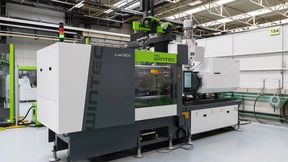
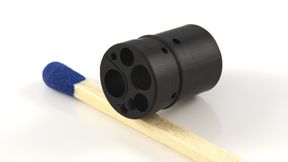
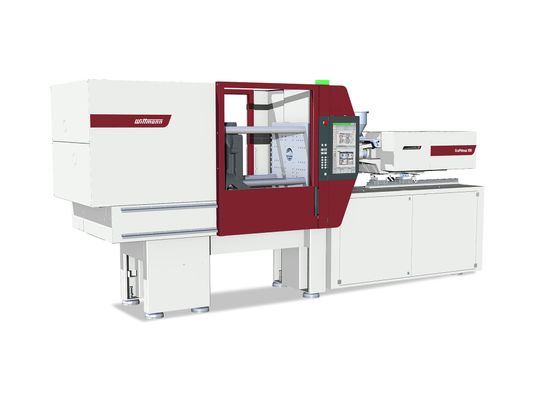
A fully electric Eco Primus injection molding machine produced protective caps for insulin pens at Fakuma 2026.
(Bild: Wittmann)
During our last conversation, you highlighted India as a growth market. How has that developed?
Wittmann: We have a development and production facility in India, which we are also continuing to strengthen. India is a distinct market; customers there demand customized products. For example, we develop IML automation systems there and offer hot-air dryers and oil temperature control units that can be used even at lower process temperatures—a necessity because the water in India is often not clean enough. We wouldn’t sell these units in Europe because our customers here can work with water. India is very cost-sensitive and relies on proven technology. This is a major difference from China, where a great deal of innovation is involved, such as in highly complex parts for cell phones and electronics. A market as cost-sensitive as India’s cannot be served exclusively from Europe.
Let’s briefly touch on the topic of organizational structure. Since May 2026, you have been co-leading the injection molding machine division alongside your father, Dr. Werner Wittmann, as co-heads. The goal is to integrate the injection molding machine, automation, and peripheral equipment divisions even more closely. What specific changes will this bring for customers and for the company’s strategic direction?
Wittmann: We want to offer the complete package—consisting of the machine, robot, and peripheral equipment—as an integrated solution in an even more consistent manner. For the customer, this reduces the number of interfaces, and it allows us to better leverage potential gains in efficiency and quality. From material preparation and feeding, through the injection molding process—including temperature control and automation—to inline recycling and digital solutions, we at the Wittmann Group offer all the components needed for competitive injection molding production, developed and manufactured in-house. In all areas—injection molding machines, peripheral equipment, and automation—we draw on decades of experience, which we use to develop solutions for our customers’ very specific and individual challenges. This deep understanding of processes, cultivated over decades, is a clear advantage of the Wittmann Group.
The “It’s all Wittmann” strategy, which was launched back in 2022, focuses on closely integrating all business units into a single, integrated system. Are customers still willing to invest in this given the current situation, or is there greater demand for individual components?
Wittmann: That’s up to the customer—and, in the end, often depends on the application. Some want a machine and a robot; others want temperature control units as well; still others want the entire package. The advantage of integration is easy to explain: Every interface between different suppliers means coordination effort that can be avoided. There aren’t many companies that offer this level of depth. We can look beyond the scope of a single product and always keep the entire process in view.
Will this merger result in new products?
Wittmann: To some extent. In principle, every product must be able to hold its own on the market. New products are emerging, for example, in the field of digitalization—such as Wittmann 4.0 with its digital tool data set and Plug&Produce function. The digital tool data set centrally manages the parameters and suggests the appropriate peripheral devices for a given tool. The system checks whether the connected device meets the requirements—for example, regarding temperature or the number of components—and then transfers the parameter sets, which reduces the risk of errors. Another example is Smart Recycling. Here, we put together customized peripheral packages for our customers. Consulting—including grinding tests and simulations—plays a central role in this process.
At Fakuma, you showcased the Eco Primus, a fully electric machine for standard applications. Is efficiency currently more important than maximum performance?
Wittmann: A standard application does not mean reduced performance; rather, it requires a defined range of specifications. The selection of options is limited, and no custom solutions are provided. We make no compromises when it comes to quality, performance, and spare parts availability. It’s about customization without overengineering. In the past, options were purchased in bulk; today, the focus is on the specific application. That’s why we offer both: machines with a wide range of options and a high degree of flexibility, and an efficient, more cost-effective machine for applications that don’t require those features. This is our response to machines from Asian suppliers, which are delivered quickly from large inventories but cannot be customized. With the Eco Primus, we combine cost-efficiency with short delivery times and proven technologies developed in Europe.
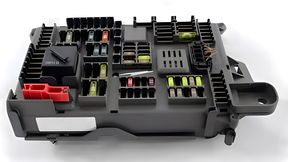
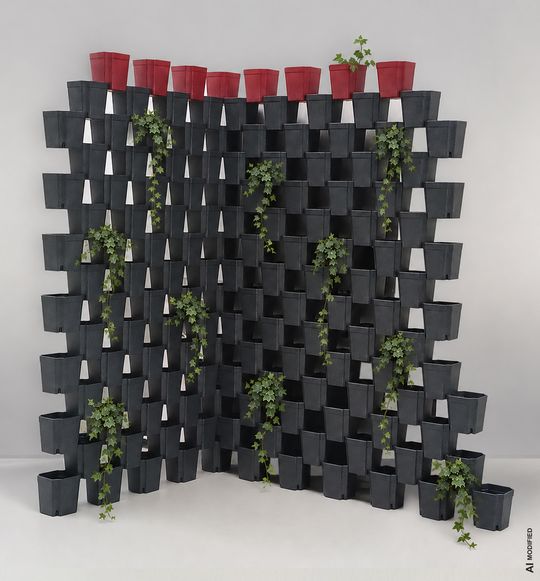
To ensure that the planters can be stacked safely, they must be molded with a high degree of precision using injection molding. Wittmann uses Cellmould foam injection molding technology for this purpose.
(Bild: Wittmann)
What other innovations did you showcase at Fakuma?
Wittmann: For the first time, we showcased the complete Primus product line at a trade show, ranging from Primus peripheral devices to the Primus robot and the Eco Primus injection molding machine. On the Eco Primus, we produced insulin pen caps using an eight-cavity mold. Mass production in the medical technology sector, in particular, benefits from the fully electric and cost-efficient Eco Primus concept. The two applications using gas-assisted processes on two Smart Power machines—Cellmould foam injection molding and Airmould internal gas pressure technology—also attracted a great deal of attention. Both processing technologies are once again coming into sharper focus for users because they save material and—by adjusting processing parameters—energy as well. Our development goal is always economic sustainability. Just because something is environmentally friendly doesn’t mean anyone will use it. Sustainability has to make financial sense.
Just because something is environmentally friendly doesn't mean anyone will use it. Sustainability has to be cost-effective.
Michael Wittmann
You once said in a previous interview that digitalization and AI are essential for competitive manufacturing. Where do you currently see the greatest concrete benefits of AI in injection molding—beyond just the marketing hype?
Wittmann: Theoretically, in process monitoring and process optimization. A great deal of data is generated in these areas, and AI can analyze it better than a human. There is still a wide gap between what is theoretically possible and what is available on the market. Data is the foundation of AI, and access to it is limited not only for machine manufacturers but also for every other market participant. For certain part families, opportunities arise to collect data and train a system. The question is how well the trained AI model can be scaled to parts with completely different geometries. Applications that go beyond customized trade show demonstrations and the academic sector could only be realized at a very high cost—one that no one would be willing to pay. The industry has not yet made the leap to universal applicability. This would require massive investments in data sets, and the industry is highly fragmented—knowledge is held locally. The data is not publicly accessible because companies do not want to release it for training AI models. Autonomous injection molding is the goal and is feasible for some parts, but scaling it up is a whole different story. This will take more time.
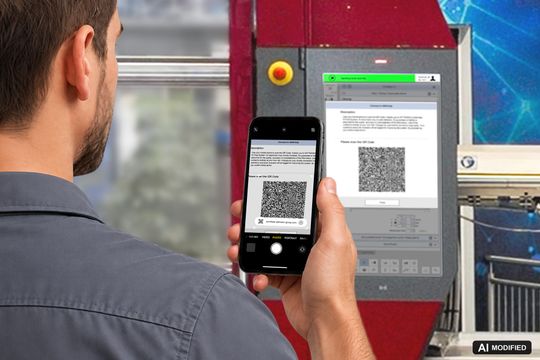
AIM4Help is the Wittmann Group's interactive assistant for all technical questions regarding Wittmann injection molding machines, robots, and peripheral equipment.
(Bild: Wittmann)
And where are you already using AI today?
Wittmann: With AIM4Help, our chatbot for first-level support. AIM4Help goes far beyond the user manual and includes technical documentation even for earlier controller generations. Because many devices aren’t connected to the Internet, access is via a cell phone using a QR code. Questions can also be asked verbally in any language, and the system responds in the language in which the question was asked. Visitors to the Fakuma trade show were able to try this out for themselves at our booth on the injection molding machines, robots, and temperature control units. The major advantage is the time saved during research and troubleshooting. In addition to AIM4Help, Wittmann’s focus at Fakuma was on our MES. TEMI+ is becoming TEMI Next, which we presented for the first time at Fakuma. We have developed the MES from the ground up to optimally meet the requirements of current and future AI applications. There are many applications we can’t even imagine today. One possibility is load management, in which AI ramps up the machinery in such a way that no energy spikes occur. It’s important that we design our systems to be open so that we’re prepared for future AI applications.
Automation is a central component of Wittmann's strategy. Where do you see the greatest potential for automation in injection molding today?
Wittmann: Not so much in robotics, which is already widely used in injection molding and was adopted there early on. The greatest potential lies in areas that have tended to remain in the background until now. It starts with operator support—keyword: skills shortage—and extends to the determination and adjustment of mold data and optimal process parameters, all the way to autonomous injection molding machines. This also includes Wittmann 4.0 with seamless communication between the machine and peripheral equipment—that is, automated mold change and Plug&Produce. I also see a lot of potential in automated quality control, within the process itself—for example, through our HiQ software algorithms—or in downstream inspection stations with camera systems. Humanoid robots will also offer immense potential in the future, though we’re still a ways off from that.Another key topic is inline thermography. Thanks to end-of-arm tooling, this is now also possible inline, as was demonstrated by Wittmann at Fakuma. The parts were inspected directly during the running process—a 100 percent quality control.We must capitalize on this potential, especially in Europe, to increase productivity. Perhaps high-wage locations here will even become a competitive advantage. After all, companies in Central Europe have always been particularly efficiency-driven. This challenges our development efforts, and we can then offer these solutions worldwide.
Recyclability, the use of recycled materials, and energy efficiency are becoming increasingly important to processors. To what extent are these requirements changing the development of injection molding machines and peripheral equipment?
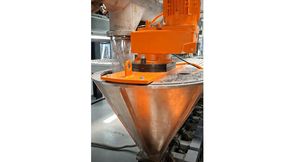
Wittmann: Not necessarily to the extent one might expect when it comes to the injection molding machine itself. With peripheral equipment, however, it certainly is—especially when it comes to material conveyance and metering. In mechanical recycling, high dust content poses a real challenge for the circular economy, since the goal is to avoid downcycling. This led us to develop a new product, the Feedmax Clean—a conveyor with integrated dust extraction that is an integral part of our Smart Recycling solutions. Smart Recycling combines a grinder, a dryer (if needed), a conveyor, and a dosing unit into a package that we put together in close consultation with the customer. This ensures consistently high regrind and recycled material quality. Last year, we opened a new technical center in Nuremberg. Our customers can bring their materials—and, if necessary, their molds—there. Together, we conduct grinding trials and process the ground material directly on the injection molding machine. At Fakuma, we showcased the Feedmax Clean in the new size 300 for processes with high material throughput.
Let's briefly return to the topic of regional development. As regions like Turkey and China grow, will research and development remain in Europe?
Wittmann: Europe remains a very important development hub for the Wittmann Group. Expertise in machinery and equipment cannot simply be transferred—nor do we want it to be. We have long-standing, highly qualified employees in Austria and Germany, and we continue to benefit greatly from their expertise and experience in our development work.
Finally, we'd be interested to know which causes you more concern: the economic conditions or technological change?
Wittmann: We are very concerned about Europe, especially the legislation coming out of Brussels, which has a massive impact on us. While there is talk of reducing bureaucracy, in reality it feels like something new comes our way every month that involves an absurd amount of effort. We have to assign staff to deal with matters that don’t benefit us, but often serve only to pad the statistics. I don’t think there’s yet an understanding in Brussels of what this means for individual companies. As a result, we continue to lose time and competitiveness.
Date: 08.12.2025
Naturally, we always handle your personal data responsibly. Any personal data we receive from you is processed in accordance with applicable data protection legislation. For detailed information please see our privacy policy.
Consent to the use of data for promotional purposes
I hereby consent to Vogel Communications Group GmbH & Co. KG, Max-Planck-Str. 7-9, 97082 Würzburg including any affiliated companies according to §§ 15 et seq. AktG (hereafter: Vogel Communications Group) using my e-mail address to send editorial newsletters. A list of all affiliated companies can be found here
Newsletter content may include all products and services of any companies mentioned above, including for example specialist journals and books, events and fairs as well as event-related products and services, print and digital media offers and services such as additional (editorial) newsletters, raffles, lead campaigns, market research both online and offline, specialist webportals and e-learning offers. In case my personal telephone number has also been collected, it may be used for offers of aforementioned products, for services of the companies mentioned above, and market research purposes.
Additionally, my consent also includes the processing of my email address and telephone number for data matching for marketing purposes with select advertising partners such as LinkedIn, Google, and Meta. For this, Vogel Communications Group may transmit said data in hashed form to the advertising partners who then use said data to determine whether I am also a member of the mentioned advertising partner portals. Vogel Communications Group uses this feature for the purposes of re-targeting (up-selling, cross-selling, and customer loyalty), generating so-called look-alike audiences for acquisition of new customers, and as basis for exclusion for on-going advertising campaigns. Further information can be found in section “data matching for marketing purposes”.
In case I access protected data on Internet portals of Vogel Communications Group including any affiliated companies according to §§ 15 et seq. AktG, I need to provide further data in order to register for the access to such content. In return for this free access to editorial content, my data may be used in accordance with this consent for the purposes stated here. This does not apply to data matching for marketing purposes.
Right of revocation
I understand that I can revoke my consent at will. My revocation does not change the lawfulness of data processing that was conducted based on my consent leading up to my revocation. One option to declare my revocation is to use the contact form found at https://contact.vogel.de. In case I no longer wish to receive certain newsletters, I have subscribed to, I can also click on the unsubscribe link included at the end of a newsletter. Further information regarding my right of revocation and the implementation of it as well as the consequences of my revocation can be found in the data protection declaration, section editorial newsletter.