Traditional manufacturing methods often struggle to meet the stringent requirements of modern medical technology applications, which demand microstructures and high biocompatibility. This article shows how micro-precision 3D printing helps medical device developers overcome conventional hurdles, accelerate development cycles, and achieve higher standards of care.
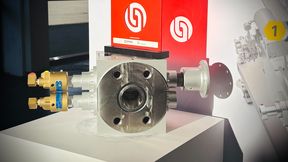
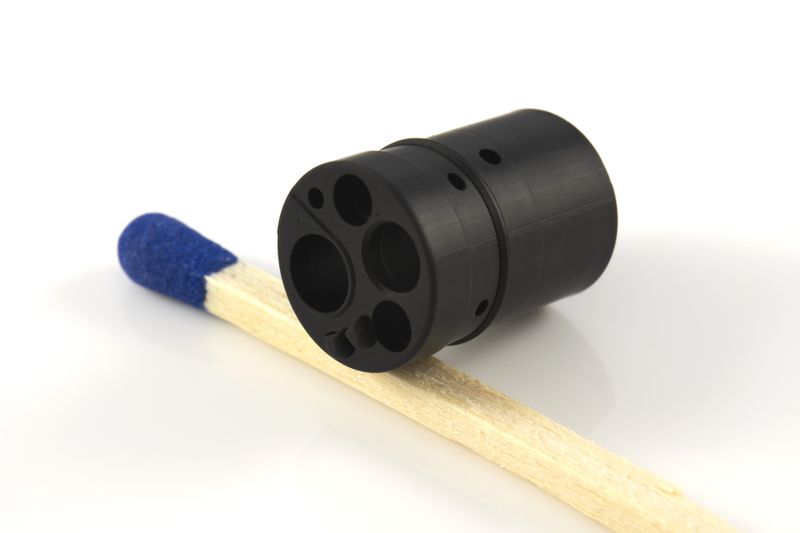
A 3D-printed endoscope housing, such as those used in gastroenterology endoscopes.
(Bild: BMF)
The drive to integrate ever more functionality into increasingly smaller devices is fundamentally changing the medical technology landscape. A clear trend toward miniaturization and personalization is evident across the industry, driven by relentless technological advances. This development is expanding the range of applications for existing devices, advancing technologies for implants and diagnostics, and transforming solutions for drug delivery, surgical instruments, and much more.
Regardless of whether a device is held in a surgeon’s hand or operated by a robotic end-effector, development teams must adhere to extremely tight tolerances, as patients are highly sensitive to the insertion of larger medical instruments. Precision is therefore of critical importance. At the same time, this precision must be balanced with the ability to develop biocompatible products that require fewer assembly steps in order to minimize risks and control production costs.
With the increasing complexity of modern medical devices, healthcare-associated infections (HAIs) remain a key concern in the development process. Single-use instruments effectively reduce the risk of such infections, but many complex medical devices are designed for repeated use and therefore require strict cleaning, sterilization, and disinfection protocols. To meet these competing requirements, the industry needs manufacturing solutions that offer both the highest precision and agile development capabilities. This is precisely where micro-precision 3D printing proves to be a transformative solution, as it offers the ultra-high resolution and design freedom required to develop innovative medical devices where conventional methods reach their limits.
A clear example is the modern endoscope—an indispensable diagnostic tool consisting of a flexible tube with an integrated light source and camera. Endoscopes enable doctors to examine a patient’s gastrointestinal (GI) tract or the ear, nose, and throat (ENT) region, and they highlight the significant challenges of miniaturization. Since these anatomical areas have a high bacterial load, the risk of patient infections is considerable, which increases the need for highly sophisticated, extremely precise components. To navigate safely through the human body, cameras and light sources for endoscopy must be extremely small. Endoscopes used in gastroenterology now have diameters of less than 7 mm, while instruments for cardiovascular applications have diameters of about 1 mm. As these devices continue to shrink in size, the time required and the complexity of assembly increase exponentially. However, by reducing the number of assembly steps, manufacturers can significantly shorten cycle times.
AdditivX | January 26, 2027
Additive Manufacturing as a Tool for Supply Chain, Production, and Service
(Source: Vogel Communications Group / WIN Publishing)
The conference aims to demonstrate how 3D printing with plastics and metals can be used as a strategic tool for spare parts—regardless of the industry. The focus will be on materials, processes, cost-effectiveness, and integration into existing production and maintenance structures, including those from other areas of additive manufacturing.
Traditionally, engineers have relied on micro-injection molding or CNC machining to produce very small, complex components. However, these processes often result in significant bottlenecks. Tooling lead times can take several months, and the associated costs are high, particularly during the iterative prototyping phase.
Although 3D printing eliminates the need for expensive molds, many conventional systems are unable to produce small components with the tight tolerances and high resolution required for medical applications. Fused Deposition Modeling (FDM) produces parts with comparatively low precision, while two-photon polymerization (TPP) achieves very high precision but is too slow for fast and scalable production. Projection Micro Stereolithography (PμSL) technology bridges this gap. Boston Micro Fabrication’s (BMF) PμSL platforms rapidly manufacture microstructured components from biomedical plastics, achieving a resolution of 2 µm and an accuracy of ±10 µm in series production. This capability frees developers from the constraints of traditional manufacturing—such as the need for uniform wall thicknesses and draft angles—and enables them to fully optimize the functionality of components.
Micro-3D Printing in Practice: From Concept to Clinical Reality
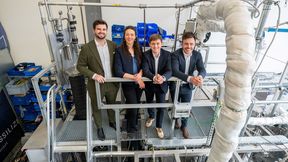
In real-world medical technology environments, the practical value of micro-3D printing lies in its ability to overcome key challenges and limitations faced by companies at the forefront of medical device development. For example, BMF client RNDR Medical—a team specializing in advanced medical devices in the fields of endoscopy, urology, and cardiology—faced strict requirements regarding size, performance, and engineering precision when it sought to bring a novel disposable ureteroscope to market. The device’s microscale distal tip had to accommodate a high-resolution camera, lighting, and irrigation channels—all within a diameter of just 3.30 mm. Traditionally, these features would have required complex and costly micro-molding processes, which would have significantly slowed down the development process. By utilizing BMF’s micro-precision 3D printing, RNDR Medical was able to significantly accelerate its iteration cycles and shorten the path from design to optimized product from months to just a few days. The geometric accuracy and material integrity of the 3D-printed components enabled the distal tips to successfully pass preclinical testing in a simulated application environment and cut the total development time in half.
Date: 08.12.2025
Naturally, we always handle your personal data responsibly. Any personal data we receive from you is processed in accordance with applicable data protection legislation. For detailed information please see our privacy policy.
Consent to the use of data for promotional purposes
I hereby consent to Vogel Communications Group GmbH & Co. KG, Max-Planck-Str. 7-9, 97082 Würzburg including any affiliated companies according to §§ 15 et seq. AktG (hereafter: Vogel Communications Group) using my e-mail address to send editorial newsletters. A list of all affiliated companies can be found here
Newsletter content may include all products and services of any companies mentioned above, including for example specialist journals and books, events and fairs as well as event-related products and services, print and digital media offers and services such as additional (editorial) newsletters, raffles, lead campaigns, market research both online and offline, specialist webportals and e-learning offers. In case my personal telephone number has also been collected, it may be used for offers of aforementioned products, for services of the companies mentioned above, and market research purposes.
Additionally, my consent also includes the processing of my email address and telephone number for data matching for marketing purposes with select advertising partners such as LinkedIn, Google, and Meta. For this, Vogel Communications Group may transmit said data in hashed form to the advertising partners who then use said data to determine whether I am also a member of the mentioned advertising partner portals. Vogel Communications Group uses this feature for the purposes of re-targeting (up-selling, cross-selling, and customer loyalty), generating so-called look-alike audiences for acquisition of new customers, and as basis for exclusion for on-going advertising campaigns. Further information can be found in section “data matching for marketing purposes”.
In case I access protected data on Internet portals of Vogel Communications Group including any affiliated companies according to §§ 15 et seq. AktG, I need to provide further data in order to register for the access to such content. In return for this free access to editorial content, my data may be used in accordance with this consent for the purposes stated here. This does not apply to data matching for marketing purposes.
Right of revocation
I understand that I can revoke my consent at will. My revocation does not change the lawfulness of data processing that was conducted based on my consent leading up to my revocation. One option to declare my revocation is to use the contact form found at https://contact.vogel.de. In case I no longer wish to receive certain newsletters, I have subscribed to, I can also click on the unsubscribe link included at the end of a newsletter. Further information regarding my right of revocation and the implementation of it as well as the consequences of my revocation can be found in the data protection declaration, section editorial newsletter.
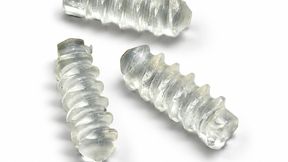
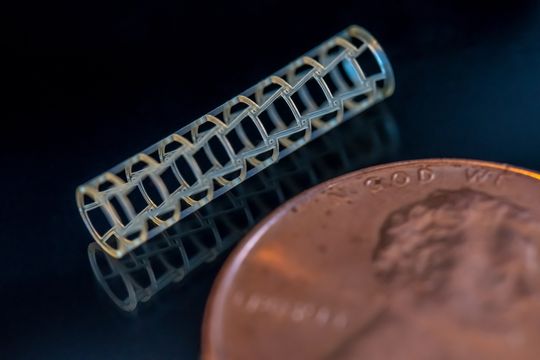
A 3D-printed cardiovascular stent manufactured using BMF's PμSL micro-precision 3D printing technology.
(Bild: BMF)
Similar advances in development speed and product precision are also evident among other innovators in the industry. Another example is Sutrue, a company that specializes in minimally invasive surgical instruments. Given the high costs and time required to machine critical components of its automated suturing system, Sutrue opted for micro-3D printing as a more efficient solution. BMF’s micro-precision technology enabled the team to quickly produce multiple design variations and experiment with fine details and tolerances until they found the optimal solution for their device. According to the Sutrue team, this rapid prototyping was crucial for transforming their design ideas into fully functional prototypes and, ultimately, into a novel surgical instrument that could be brought to market significantly more efficiently than with conventional manufacturing methods. Ultimately, it was the micro-scale precision achieved by BMF that made the decisive difference and enabled the transformation from initial concept to clinical reality.
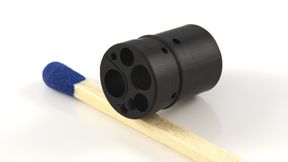
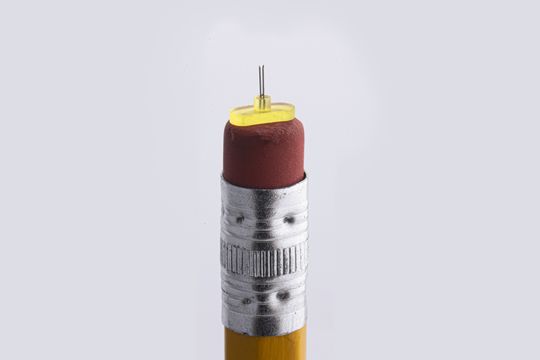
Using BMF technology, IMcoMET, a biotech startup specializing in cancer immunotherapy, has developed a new approach that utilizes microfluidics and microneedles to influence the tumor microenvironment.
(Bild: BMF)
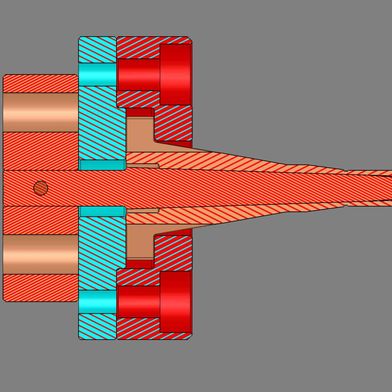
Beyond instrumentation, the broad versatility of micro-precision 3D printing also enables transformative advances in the field of therapeutic devices. IMcoMET, an emerging biotech company specializing in cancer immunotherapy, has developed a new approach that uses microfluidics and microneedles to specifically target the tumor microenvironment. The effectiveness of their system depends largely on the ability to manufacture caps and covers that precisely hold and align needles at a distance of just 20–40 µm—requirements that cannot be met using conventional SLA or mass production methods. Microprecision 3D printing closes this critical gap and provides IMcoMET not only with the required miniaturization but also with the necessary materials and tolerances for a commercially viable product.
High-Precision Manufacturing for the Next Generation of Medical Devices
Since medical device engineers are constantly challenged to integrate more and more functions into the smallest possible space, the ongoing demand for highly functional disposable catheters, advanced diagnostics, and minimally invasive delivery systems requires scalable, high-precision manufacturing solutions. By enabling highly customized and feature-rich products that go beyond the limits of traditional methods—as exemplified by technologies such as PµSL—microprecision 3D printing is increasingly establishing itself as a key technology for the next generation of medical technology.