













Material Flow Map 2025 The Plastics Industry Under Pressure 

Source: Press release Melanie Ehrhardt | Translated by AI 3 min Reading Time

The new “Material Flow Map: Plastics in Germany 2025” shows that production, processing, consumption, and waste generation have declined compared to 2023. At the same time, the transition to a circular economy is progressing only slowly.

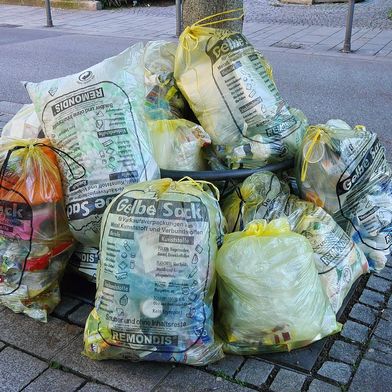
Material Flow Map 2025: Plastic Industry Under Pressure; Regulatory Conditions Hinder the Circular Economy(Bild:  celebrate1 /  Pixabay)
Material Flow Map 2025: Plastic Industry Under Pressure; Regulatory Conditions Hinder the Circular Economy
(Bild: celebrate1 / Pixabay)

About two-thirds (8 million metric tons) of the processed plastics are used in durable applications such as automotive and mechanical engineering, electrical applications, household and sporting goods, as well as in building construction and civil engineering. Another third of the processed plastics (approximately 4 million metric tons) goes into short-lived applications that are significant for the use of recycled materials, such as packaging and certain agricultural applications. This is according to the BKV study “Material Flow Map for Plastics in Germany 2025.”

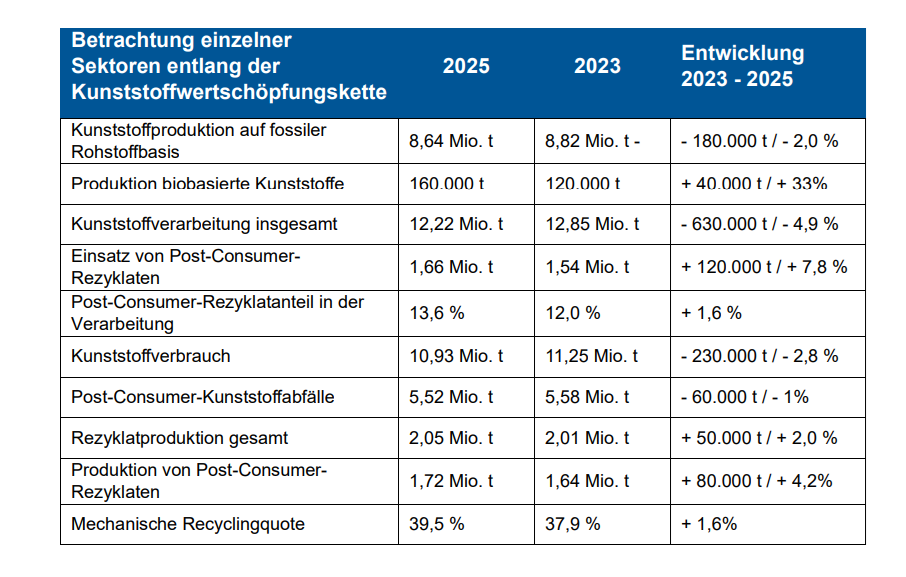
The survey also shows that plastic production based on fossil raw materials fell from 8.82 million metric tons in 2023 to 8.64 million metric tons in 2025. The volume of processed materials, including the use of recycled materials and the reuse of byproducts, fell from 12.85 to 12.22 million metric tons. Plastics consumption in Germany decreased from 11.25 to 10.93 million metric tons. For the first time since records began, the volume of post-consumer plastic waste also fell slightly, from 5.58 to 5.52 million metric tons.

Circular Economy: Progress at a Significantly Slower Pace

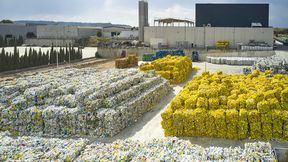
The production of recycled materials from post-consumer and post-industrial waste rose from 2.01 million metric tons in 2023 to 2.05 million metric tons in 2025. Of this total, 1.72 million metric tons were post-consumer recycled materials. (PCR) The use of post-consumer recycled materials increased from 1.54 to 1.66 million metric tons. Their share of plastic processing rose from 12.0 to 13.6 percent. Overall, more than one-fifth of the total volume of processed plastic now comes from non-fossil sources such as recycled materials or reused by-products.

However, this trend should not be equated with robust growth. While PCR usage increased by more than 21 percent between 2021 and 2023, growth between 2023 and 2025 was just under eight percent. This corresponds to an average annual growth rate of about 10 percent in the earlier period and just under 4 percent in the current survey period. Total recycled material production grew by only about two percent between 2023 and 2025, or about one percent per year. The figures thus point to stagnation or significantly slower growth momentum.

Recycling Rate Rises, but Structural Pressure Persists

The mechanical recycling rate for plastic waste increased from 37.9 percent in 2023 to 39.5 percent in 2025. Production of bio-based plastics also rose to approximately 160,000 metric tons. These developments broaden the raw material base but do not change the overall picture: The transition to a competitive circular economy is losing momentum and falling short of the necessary pace.

This structural pressure is particularly evident in the recycled materials market. The use of post-consumer recycled materials is growing faster than their production in Germany. However, recycled materials are increasingly being supplied by cheaper imports, which is undermining sales of more expensive domestic recycled materials. 

Factors contributing to price pressure include cumbersome bureaucratic regulations, as well as high production, energy, and location costs in Germany and Europe. As a result, imported recyclates—which are not always reliably verifiable—can be more price-competitive than domestically produced materials, partly because they were not necessarily produced under comparable environmental conditions. For domestic recyclers, this makes it more difficult to utilize existing facilities to full capacity and to invest in urgently needed additional capacity and infrastructure.

Competitiveness is a prerequisite for closed-loop systems

The material flow diagram makes it clear that progress in recycling and the use of recycled materials alone is not enough. If production and processing in Germany decline and domestic recycled materials lose their competitive edge against imports, investments in sorting, recycling, and industrial cycles will also come under pressure. Reliable framework conditions, competitive energy and production costs, and incentives for investment and innovation are therefore crucial to further advancing the circular economy in Germany.

Key Findings of the 2025 Material Flow Map
 

Zentrale Ergebnisse des Stoffstrombilds 2025
(Source: BKV)

Assessment of the Dynamics of Recycled Material Development

  • The use of post-consumer recycled materials rose by more than 21% between 2021 and 2023, but by just under 8% between 2023 and 2025. The growth momentum slowed significantly.

  • The average annual growth rate in the use of post-consumer recycled materials was about 10% from 2021 to 2023, but less than 4% from 2023 to 2025.

  • Due to a decline in the volume of plastics processed—by more than 600,000 metric tons—between 2023 and 2025, the production of post-industrial recycled materials fell from approximately 370,000 metric tons in 2023 to approximately 330,000 metric tons in 2025.

Note: Percentages refer to the entire two-year period unless otherwise specified.

Subscribe to the newsletter now

Don't Miss out on Our Best Content

By clicking on „Subscribe to Newsletter“ I agree to the processing and use of my data according to the consent form (please expand for details) and accept the Terms of Use. For more information, please see our Privacy Policy. The consent declaration relates, among other things, to the sending of editorial newsletters by email and to data matching for marketing purposes with selected advertising partners (e.g., LinkedIn, Google, Meta).

Unfold for details of your consent