Management Consulting in the Mechanical Engineering IndustryOpportunities and Challenges in Structural Change
From
Pascal Stumpf
| Translated by AI
6 min Reading Time
The German mechanical engineering industry will reach a turning point in 2026. After a period of stable order volumes, many companies are increasingly finding themselves in financial trouble. As a result, investments are being postponed and staff are being laid off. How can mechanical engineering companies ensure their stability during these challenging times?
In the plastics and rubber machinery manufacturing market, the outlook is one of cautious optimism: Demand from the U.S. and China is picking up again, and EU recycling regulations are opening up new areas of opportunity. To capitalize on this momentum, companies need a business strategy that can respond to changes in customer demands without getting into financial trouble. There are several levers available to help machinery manufacturers position themselves to weather crises.
How can mechanical engineering companies secure fresh capital when traditional financing options dry up? At what point is it advisable to bring in external consultants? Pascal Stumpf, founder and managing director of the restructuring consultancy FinCo Partners, sheds light on these questions.
About the Author
(Source: FinCO)
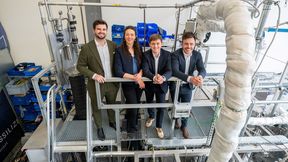
Pascal Stumpf is the founder and managing director of the restructuring consulting firm FinCo Partners in Munich. He supports companies facing challenging situations, with a focus on operational implementation and sustainable value creation. Stumpf has been active in the industry for over ten years. After completing his apprenticeship as a mechatronics technician, he earned a degree in industrial engineering from Weserbergland University of Applied Sciences. He earned his Master of Management (MiM) from WHU – Otto Beisheim School of Management.
Review Business Models
The plastics industry is facing profound upheavals: demand is waning, political regulations are narrowing the product portfolio, and foreign suppliers are driving down prices. The key factor for a sustainable strategy is flexibility.
If manufacturers change their product lines or if certain types of packaging are phased out due to new regulations, machine builders need the flexibility to adapt their offerings. Suppliers who can meet demand from the medical technology, electronics, or construction sectors can tap into new, profitable business areas.
Regular customer surveys help identify trends early on and enable swift course corrections. Customers are increasingly demanding comprehensive solutions: Strong networking trumps vertical integration and keeps fixed costs variable. Additional expertise boosts profitability, while services ensure revenue even after the sale.
Responding to Trends
In the global market, clear added value outweighs concerns about higher costs. Solutions to current problems are a strong selling point. Manufacturers that offer innovative concepts use this to justify their price premium over international competitors.
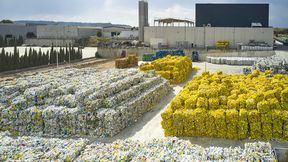
This includes, for example, fluctuations in material quality during the processing of recycled plastics. Investments in the development of robust process control systems and reliable assistance systems enable customers to further process the recycled materials and provide a competitive advantage.
Strong networks with partners who supply peripherals and components open up new opportunities. Instead of chasing past peaks, machine builders are keeping pace with the trend. In addition, niche products in medical technology, cleanroom applications, multi-component systems, and lightweight construction give suppliers pricing power and help them compete more effectively against low-cost imports from abroad.
Can We Get Through the Crisis on a Tight Budget?
Uncertain times can tempt companies to put off investments. However, the hope that austerity measures will allow them to weather the crisis without difficulty is a fallacy. Companies that cling to tried-and-true methods in tight markets instead of investing in modernization will fall behind.
It’s worth taking a look at digitalization regardless of the order situation, because networked machines, remote maintenance, process data analysis, and quality monitoring form the basis for recurring revenue. Periods of low demand offer opportunities to optimize your own productivity and identify areas for improvement—ranging from project and post-project cost calculations to automation and the adoption of modularization. These levers create room for maneuver in various areas. Cost estimates reveal gaps between costs and profits that can be closed by switching suppliers or adjusting prices.
Process automation speeds up workflows and frees up time, allowing a greater number of orders to be completed. Modularization and the expansion of expertise diversify the portfolio and enable the company to respond to market changes. Benefits for customers, such as application consulting in the areas of recycled materials and recyclable resources, further enhance the company’s standing.
Date: 08.12.2025
Naturally, we always handle your personal data responsibly. Any personal data we receive from you is processed in accordance with applicable data protection legislation. For detailed information please see our privacy policy.
Consent to the use of data for promotional purposes
I hereby consent to Vogel Communications Group GmbH & Co. KG, Max-Planck-Str. 7-9, 97082 Würzburg including any affiliated companies according to §§ 15 et seq. AktG (hereafter: Vogel Communications Group) using my e-mail address to send editorial newsletters. A list of all affiliated companies can be found here
Newsletter content may include all products and services of any companies mentioned above, including for example specialist journals and books, events and fairs as well as event-related products and services, print and digital media offers and services such as additional (editorial) newsletters, raffles, lead campaigns, market research both online and offline, specialist webportals and e-learning offers. In case my personal telephone number has also been collected, it may be used for offers of aforementioned products, for services of the companies mentioned above, and market research purposes.
Additionally, my consent also includes the processing of my email address and telephone number for data matching for marketing purposes with select advertising partners such as LinkedIn, Google, and Meta. For this, Vogel Communications Group may transmit said data in hashed form to the advertising partners who then use said data to determine whether I am also a member of the mentioned advertising partner portals. Vogel Communications Group uses this feature for the purposes of re-targeting (up-selling, cross-selling, and customer loyalty), generating so-called look-alike audiences for acquisition of new customers, and as basis for exclusion for on-going advertising campaigns. Further information can be found in section “data matching for marketing purposes”.
In case I access protected data on Internet portals of Vogel Communications Group including any affiliated companies according to §§ 15 et seq. AktG, I need to provide further data in order to register for the access to such content. In return for this free access to editorial content, my data may be used in accordance with this consent for the purposes stated here. This does not apply to data matching for marketing purposes.
Right of revocation
I understand that I can revoke my consent at will. My revocation does not change the lawfulness of data processing that was conducted based on my consent leading up to my revocation. One option to declare my revocation is to use the contact form found at https://contact.vogel.de. In case I no longer wish to receive certain newsletters, I have subscribed to, I can also click on the unsubscribe link included at the end of a newsletter. Further information regarding my right of revocation and the implementation of it as well as the consequences of my revocation can be found in the data protection declaration, section editorial newsletter.
Raise New Capital
To manage such an expansion, entrepreneurs need investors who will support them. However, traditional loans are becoming increasingly scarce. Various types of financing are available for the mechanical engineering sector, including private debt, mezzanine capital, and equity partners.
Private debt is suitable for companies with stable operating cash flow that need funds for investments or refinancing quickly and without lengthy banking processes. Although interest rates are higher than those of traditional loans, terms, repayment schedules, and conditions can be negotiated more flexibly.
Mezzanine capital bridges the gap between debt and equity: As a subordinated form of financing, it strengthens the economic equity ratio and thus creditworthiness without requiring shareholders to give up shares or voting rights. Consequently, growth and modernization projects—whose foreseeable increase in earnings will cover the higher interest rate—benefit the most.
Equity partners are a viable option when major transformation steps are on the horizon, debt levels are already high, or a succession plan needs to be arranged. They receive shares in the company and, in return, contribute not only capital but also industry networks and management experience.
For longer-term payment terms, factoring is one suitable option. When it comes to the key factors of down payment and warranty guarantees, Aval Management provides the best foundation. Professional administrators—such as lenders or specialized surety providers—create flexibility by taking over the management and monitoring of the guarantees and providing an additional assurance of trust for customers.
Short-term capital increases can be achieved through asset-based lending or sale-and-lease-back. The former refers to financing arrangements in which investors receive inventory, accounts receivable, and machinery as collateral. Sale and Lease Back, on the other hand, involves the sale of larger assets such as real estate or manufacturing facilities, which remain in the company’s use on a lease basis. In this way, businesses can raise capital with minimal effort while simultaneously creating more flexibility in their operations.
Don't hold on too long
Solid financing and a broad portfolio can only stabilize a business to a certain extent. Sustainability requires the courage to wind down unprofitable business units. If a product or product line fails to generate sufficient revenue, if a location falls short of the critical mass, or if necessary cross-subsidies jeopardize the liquidity of the company as a whole, divestiture and liquidation—as difficult as that may sometimes be—are the only appropriate response.
Furthermore, a change in ownership requires careful consideration and time. Are there synergies within the acquiring company, such as complementary technologies and higher capacity utilization? If so, an acquisition becomes an attractive growth opportunity, and the advantage lies with the seller. Planning the handover early on also creates the necessary time and organizational flexibility for an orderly carve-out. Clearly defining key business metrics, human resources, and IT structures, as well as establishing fair transition agreements, requires careful planning and coordination.
Accepting Help from Others
In many circles, seeking outside help is also viewed with a sense of shame. Yet, just as with the divestiture of underperforming business units, this demonstrates entrepreneurial foresight.
Within one’s own company, it is often difficult to objectively identify weaknesses as such. At the first signs that internal processes may be missing the mark in terms of corporate goals and that attempts to optimize existing structures are failing, executives bring in external consultants with expertise in the mechanical engineering industry. Their unbiased perspective makes it easier to make unpopular decisions. An interim manager or CRO with the appropriate qualifications helps restore confidence among banks and insurance companies.