Between Everyday Hospital Life and CriticismWhy PVC Remains Important in Medicine
From
Melanie Ehrhardt (in charge)
| Translated by AI
5 min Reading Time
Whether it's IV bags, tubing, or blood bags, it's hard to imagine the medical field without PVC. It's highly adaptable and meets important requirements in everyday hospital care. At the same time, plasticizers, potential health risks, and disposal practices have come under criticism.
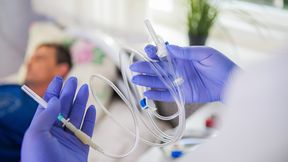
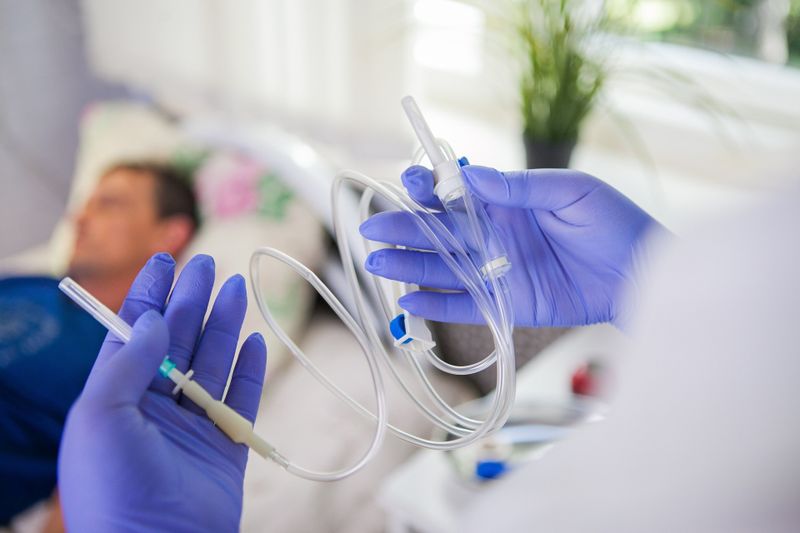
PVC is frequently used in the medical field for IV tubing.
Polyvinyl chloride (PVC) is one of the oldest and, in terms of volume, most significant plastics used in medicine. It can be found everywhere in everyday hospital life, for example in IV tubing, blood bags, catheters, and IV bags. This is primarily because PVC is versatile, cost-effective, and—depending on its composition—both flexible and stable.
Despite its many advantages, however, PVC is also the subject of debate, particularly because of the plasticizers used and their potential effects on health and the environment. Is this criticism justified? And what alternatives to PVC are there in the medical field? The following article provides the answers.
What is polyvinyl chloride?
Polyvinyl chloride is a plastic produced by the polymerization of vinyl chloride monomers. It is one of the thermoplastics and, after polyethylene and polypropylene among the most commonly produced plastics worldwide.
Species
Rigid PVC (PVC-U) is unplasticized and is used, for example, in window profiles, pipes, and sheets.
Soft PVC (PVC-P) contains plasticizers and is used for flooring, cable insulation, hoses, seals, and synthetic leather.
Properties and Applications
PVC is naturally hard and brittle. Adding plasticizers makes it flexible.
It is weather-resistant, chemical-resistant, and relatively inexpensive.
It is flame-retardant because it contains chlorine. However, in the event of a fire, toxic and corrosive gases such as hydrogen chloride may be released.
Most PVC is used in the construction industry, for example in pipes, windows, roofing membranes, and flooring. It is also found in medical technology (IV bags, tubing), packaging, and electrical cables.
Why is PVC used so frequently in the medical field?
PVC is used so frequently in the medical field because it is versatile, cost-effective, and easy to process. It is also flexible, sturdy, and durable.
By adding plasticizers, PVC can be made soft and flexible, making it suitable for use in items such as tubing, IV bags, and blood bags. It is also easy to clean and sterilize.
Another advantage is that PVC is compatible with many medical fluids. This makes the plastic well-suited for contact with medications and blood.
Why is there criticism of the medical use of PVC?
“You have to make a clear distinction here,” explains Dr. Ralf Ziembinski, head of the Tubing Division at Raumedic. In the field of medical technology and medical devices, criticism usually centers on the plasticizers in PVC.
It is well known that DEHP and DOP exhibit reproductive toxicity and can be leached out relatively easily. To eliminate this risk, manufacturers have been using DEHP-free and phthalate-free plasticizers, such as noDOP (TEHTM), for several years now. “With these, the likelihood of migration is 100 times lower,” explains Ziembinski.
How is medical-grade PVC sterilized?
Polyvinyl chloride parts and components can be sterilized very effectively before use. This is particularly important in clinical settings, as no one wants to risk infection from germs.
Medical-grade PVC is primarily sterilized using steam sterilization, ethylene oxide (EO), or gamma radiation. The method used depends on the specific medical device.
Steam sterilization: In this process, the products are sterilized using hot steam under pressure. However, this method is not suitable for all PVC products, as high temperatures can cause the material to warp.
Ethylene oxide (EO): This process uses a gas that kills bacteria, viruses, and fungi. It is particularly suitable for heat-sensitive PVC products.
Gamma radiation: In this process, the products are sterilized using high-energy radiation. This method is also suitable for many medical PVC products, but excessive radiation doses can alter the material.
Which medical devices are made of PVC?
PVC is particularly commonly used for products that come into contact with blood, medications, or other bodily fluids.
Examples of medical devices made of PVC include:
Infusion tubing: It delivers fluids and medications into the body.
Infusion bags: They are used to store and administer infusion solutions.
Blood bags: They are used to collect and store blood.
Catheters: They allow fluids to be introduced into or drained from the body.
Ventilation tubes: They deliver breathing air to patients.
Dialysis tubing: It carries blood and dialysis fluid during dialysis.
Oxygen masks: They are used to provide patients with supplemental oxygen.
Disposable gloves: Certain types of medical gloves are made of PVC and are also known as vinyl gloves.
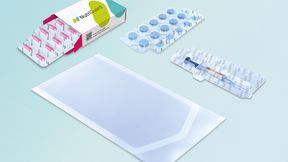
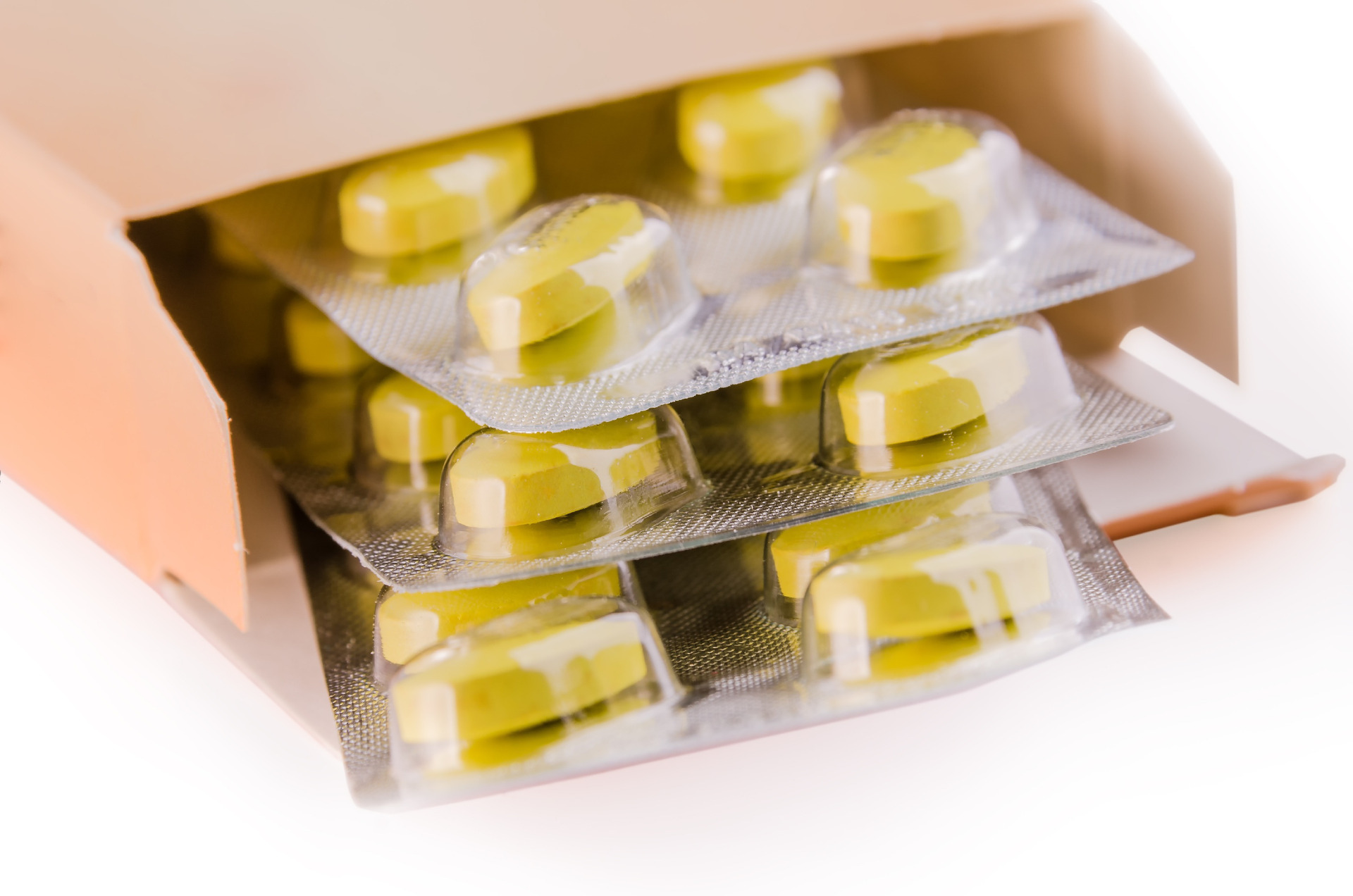
Also in the section plastic packaging for medical devices, PVC plays an important role. Blister packs for tablets are cost-effective and reliably protect medications from dirt and moisture. They are manufactured using composite materials consisting of aluminum and PVC.
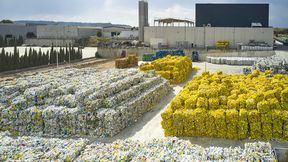
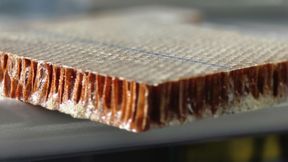
As part of industry- and government-funded research projects, Fraunhofer IVV developed and tested processes for producing high-quality secondary aluminum and PVC recyclates from tablet blister packs. The process developed for this purpose is expected to be industrially viable, provided its economic feasibility can be demonstrated.
The technological concept of composite separation is based on an extractive, solvent-based recycling process developed at Fraunhofer IVV for recycling polystyrene . It aims to completely separate PVC from aluminum using selective “green solvents,” which are kept in the cycle through subsequent complete recovery.
This process produces high-purity secondary aluminum as well as recycled PVC for the plastics processing industry. Applications for the recycled PVC include window profiles, credit cards, and, above all, film applications (including blister packaging).
Source: www.ivv.fraunhofer.de
Which active ingredients are incompatible with PVC?
If PVC comes into direct contact with medications, potential interactions must be carefully evaluated in advance. For example, Taxol, nitroglycerin, diazepam, and insulin are incompatible with PVC.
What alternatives to PVC are available in medical technology?
Thermoplastic elastomers (TPE) are among the most important alternatives to PVC. They combine the rubber-like elasticity of elastomers with the good processability of thermoplastics. Typical applications include tubing and infusion systems, drip chambers, and respiratory and face masks.
Soft PP is also a suitable choice for medical tubing, especially when optimal compatibility with medications is required. This is because polypropylene does not require plasticizers. Furthermore, its material properties are very similar to those of PVC.
Date: 08.12.2025
Naturally, we always handle your personal data responsibly. Any personal data we receive from you is processed in accordance with applicable data protection legislation. For detailed information please see our privacy policy.
Consent to the use of data for promotional purposes
I hereby consent to Vogel Communications Group GmbH & Co. KG, Max-Planck-Str. 7-9, 97082 Würzburg including any affiliated companies according to §§ 15 et seq. AktG (hereafter: Vogel Communications Group) using my e-mail address to send editorial newsletters. A list of all affiliated companies can be found here
Newsletter content may include all products and services of any companies mentioned above, including for example specialist journals and books, events and fairs as well as event-related products and services, print and digital media offers and services such as additional (editorial) newsletters, raffles, lead campaigns, market research both online and offline, specialist webportals and e-learning offers. In case my personal telephone number has also been collected, it may be used for offers of aforementioned products, for services of the companies mentioned above, and market research purposes.
Additionally, my consent also includes the processing of my email address and telephone number for data matching for marketing purposes with select advertising partners such as LinkedIn, Google, and Meta. For this, Vogel Communications Group may transmit said data in hashed form to the advertising partners who then use said data to determine whether I am also a member of the mentioned advertising partner portals. Vogel Communications Group uses this feature for the purposes of re-targeting (up-selling, cross-selling, and customer loyalty), generating so-called look-alike audiences for acquisition of new customers, and as basis for exclusion for on-going advertising campaigns. Further information can be found in section “data matching for marketing purposes”.
In case I access protected data on Internet portals of Vogel Communications Group including any affiliated companies according to §§ 15 et seq. AktG, I need to provide further data in order to register for the access to such content. In return for this free access to editorial content, my data may be used in accordance with this consent for the purposes stated here. This does not apply to data matching for marketing purposes.
Right of revocation
I understand that I can revoke my consent at will. My revocation does not change the lawfulness of data processing that was conducted based on my consent leading up to my revocation. One option to declare my revocation is to use the contact form found at https://contact.vogel.de. In case I no longer wish to receive certain newsletters, I have subscribed to, I can also click on the unsubscribe link included at the end of a newsletter. Further information regarding my right of revocation and the implementation of it as well as the consequences of my revocation can be found in the data protection declaration, section editorial newsletter.
If you are looking for a more cost-effective alternative to PVC, coextrusion may be the solution. Raumedic has developed a medical-grade two-layer tube made of EVA and styrene-butadiene rubber (SBR) for this application. “Since the outer layer can be formulated with UV-absorbing additives, it is also ideal for the administration of light-sensitive medications, such as chemotherapy drugs,” explains Ziembinski.
The Future of PVC in Modern Medicine
The future of PVC in the medical field depends on economic factors. If alternative materials with similar properties and comparable costs come to dominate the market, polyvinyl chloride could be replaced in the long term. Otherwise, PVC will continue to play an important role due to its beneficial properties.