Rising power densities in data centers and electric vehicles are pushing traditional plastics to their thermal limits. By utilizing the graded viscosities of the PAES grades PSU, PESU, and PPSU, developers can design thin-walled connectors and oil-resistant cables more cost-effectively.
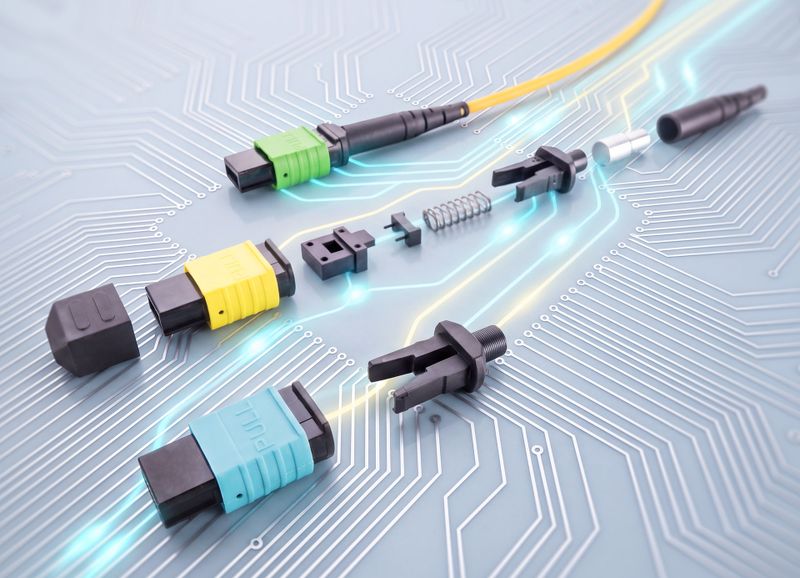
Thanks to its unique set of properties, Ultrason (PSU, PESU, PPSU) is suitable for electrical and electronic components in AI infrastructure, such as connectors for fiber-optic cables (FOC).
(Bild: BASF)
Artificial intelligence, cloud applications, and the expansion of high-speed data networks are driving up power density in electronics. At the same time, installation spaces in servers, transformers, and electric vehicles are shrinking, while more and more functions are being packed into increasingly tight spaces. As a result, the thermal, mechanical, and electrical stresses on connectors, cable insulation, and cooling components are increasing significantly.
To manufacture these components reliably and cost-effectively over the long term, BASF is placing greater emphasis on its polyarylethersulfones (PAES) from the Ultrason series into the spotlight of the electrical and electronics industry.
A Cost-Effective Alternative to PEEK, PEI, and PAI
Transparent thermoplastics include the three polymer classes: polysulfone (PSU, Ultrason S), polyethersulfone (PESU, Ultrason E), and polyphenylsulfone (PPSU, Ultrason P). They combine high heat resistance over a wide temperature range with good electrical insulation, high dimensional stability, and inherent flame retardancy.
In addition, these materials offer excellent chemical resistance, allowing them to be used in aggressive media. As a result, these materials are positioned as a cost-effective and easy-to-process alternative to polyetherimide (PEI), polyetheretherketone (PEEK), and polyamideimide (PAI) in demanding electrical and electronic applications.
Graduated Viscosities for Injection Molding and Extrusion
Depending on the manufacturing process and part geometry, BASF offers grades with precisely graded viscosities. High-flow grades reliably fill even complex, thin-walled cavities in injection molding, while higher-viscosity grades provide the melt strength required for demanding extrusion processes. In addition, the plastics can be colored from translucent to opaque, which simplifies the labeling and design of compact assemblies.
“AI infrastructure, high-speed internet, and electrification are driving the development of new E&E components with demanding performance requirements,” explains Kazuhiro Kida from BASF’s Ultrason Business Management team. In addition to material selection, the chemical company supports processors in component design as well as in injection molding and extrusion testing, thereby shortening development cycles.
Thin-walled Fiber-Optic Connectors for Data Centers
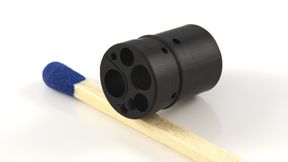
Fiber optic connectors (FOC) play a key role in AI data centers. As the packing density in data nodes continues to increase, connector systems such as Lucent Connectors (LC) and Multifiber Push-On (MPO) connectors must accommodate increasingly thin wall thicknesses with tight tolerances.
This is where Ultrason E really shines with its combination of stiffness, toughness, and long-term temperature resistance. Thanks to its high flowability, the PESU reliably fills intricate mold geometries and enables color-coded, mechanically robust connectors.
Oil-resistant cable insulation up to 200 °C, PFAS-free
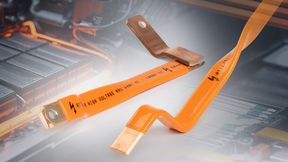
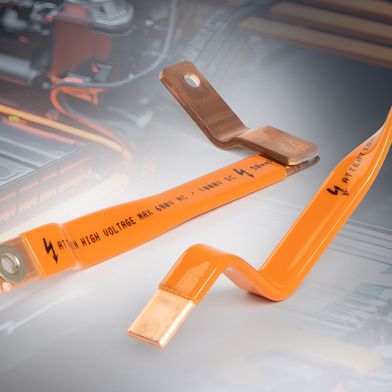
Significantly higher thermal and chemical stresses are present in data center transformers and in the drive systems of electric vehicles. Polyphenylsulfone Ultrason P is well-suited for these environments; it can be processed via extrusion into cable jackets and insulation for aluminum and copper wires.
The material can withstand hot oil continuously at temperatures up to 200 °C while maintaining its mechanical flexibility and electrical insulation properties. At the same time, the chemical-resistant PPSU replaces polymers based on per- and polyfluorinated alkyl substances (PFAS) that have been used to date in cable jackets and conductor insulation.
Continuous Load in Server and Vehicle Cooling Circuits
As computing and drive power increase, so does the need for high-performance cooling systems. In data centers, electric vehicles, and industrial facilities, water- or fluid-carrying components must withstand high temperatures, chemicals, and mechanical stresses over many years of operation. BASF’s polyarylethersulfones ensure the long-term functionality of fans, pipe fittings, and manifolds in these systems. Because these materials combine temperature and chemical resistance with high dimensional stability, manufacturers can reduce the risk of failure for critical cooling components during continuous operation. (mg)
Date: 08.12.2025
Naturally, we always handle your personal data responsibly. Any personal data we receive from you is processed in accordance with applicable data protection legislation. For detailed information please see our privacy policy.
Consent to the use of data for promotional purposes
I hereby consent to Vogel Communications Group GmbH & Co. KG, Max-Planck-Str. 7-9, 97082 Würzburg including any affiliated companies according to §§ 15 et seq. AktG (hereafter: Vogel Communications Group) using my e-mail address to send editorial newsletters. A list of all affiliated companies can be found here
Newsletter content may include all products and services of any companies mentioned above, including for example specialist journals and books, events and fairs as well as event-related products and services, print and digital media offers and services such as additional (editorial) newsletters, raffles, lead campaigns, market research both online and offline, specialist webportals and e-learning offers. In case my personal telephone number has also been collected, it may be used for offers of aforementioned products, for services of the companies mentioned above, and market research purposes.
Additionally, my consent also includes the processing of my email address and telephone number for data matching for marketing purposes with select advertising partners such as LinkedIn, Google, and Meta. For this, Vogel Communications Group may transmit said data in hashed form to the advertising partners who then use said data to determine whether I am also a member of the mentioned advertising partner portals. Vogel Communications Group uses this feature for the purposes of re-targeting (up-selling, cross-selling, and customer loyalty), generating so-called look-alike audiences for acquisition of new customers, and as basis for exclusion for on-going advertising campaigns. Further information can be found in section “data matching for marketing purposes”.
In case I access protected data on Internet portals of Vogel Communications Group including any affiliated companies according to §§ 15 et seq. AktG, I need to provide further data in order to register for the access to such content. In return for this free access to editorial content, my data may be used in accordance with this consent for the purposes stated here. This does not apply to data matching for marketing purposes.
Right of revocation
I understand that I can revoke my consent at will. My revocation does not change the lawfulness of data processing that was conducted based on my consent leading up to my revocation. One option to declare my revocation is to use the contact form found at https://contact.vogel.de. In case I no longer wish to receive certain newsletters, I have subscribed to, I can also click on the unsubscribe link included at the end of a newsletter. Further information regarding my right of revocation and the implementation of it as well as the consequences of my revocation can be found in the data protection declaration, section editorial newsletter.