The PPWR aims to drastically reduce packaging waste and establish a functioning circular economy. André Koring of the VDMA does not believe it will be as easy as Brussels would like. The mechanical engineering sector, in particular, needs clear, reliable, and technology-neutral framework conditions.
The PPWR imposes new requirements on packaging: What impact does this have on mechanical engineering?
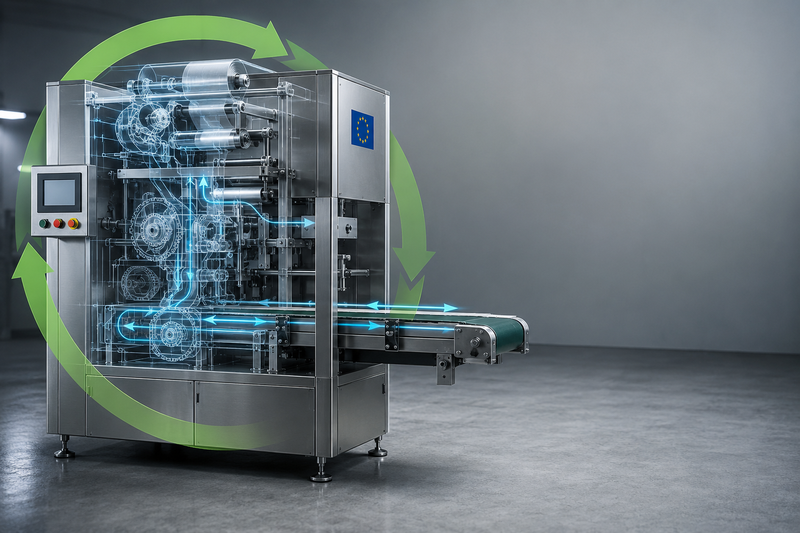
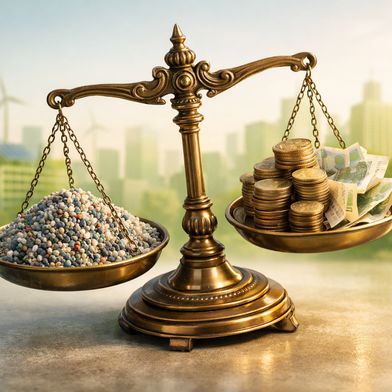
(Bild: KI-generiert / Dall-E)
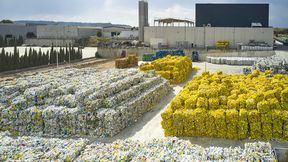
Effective August 12, 2026, the new EU Packaging Regulation will apply directly in all countries of the European Union. Its primary goal is to reduce packaging waste. Starting in 2030, all packaging must be designed to minimize its weight and volume while maintaining its functionality. Plastic packaging must be recyclable and contain a specified minimum percentage of recycled material derived from post-consumer waste.
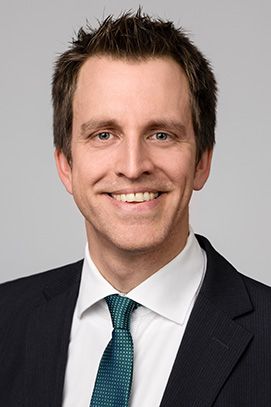
Specialist in Industrial Environmental Protection and Resource Efficiency at the VDMA
(Bild: VDMA)
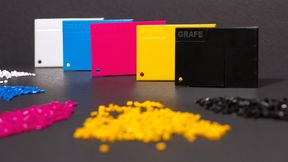
The rule is: The more homogeneous a recycled material is, the easier it is to recycle. The trend is therefore toward plastic packaging made from a single material. Compared to conventional material combinations, single-material plastics have a narrower process window during manufacturing; recycled materials often vary in terms of quality, viscosity, flow behavior, and particle size.
Nevertheless, plastics machinery must be able to manufacture and process these materials efficiently without compromising the quality or performance of the materials or packaging. What does this mean for the machinery and plant engineering industry? We spoke with André Koring, advisor on industrial environmental protection and resource efficiency at the VDMA, about this.
PlastXnow: The PPWR imposes new requirements on packaging—what specific impact does this have on the plastics and packaging machinery industry in Germany?
André Koring: In packaging machines, the new materials differ from those used previously in terms of their processability. They have different physical properties with regard to stiffness, formability, and sealability.
For example, single-material plastics are thicker, and plastics containing recycled material exhibit greater variations in material quality and thickness. In the future, machines and systems will not only have to ensure stable processes but also respond flexibly to fluctuating material properties and compensate for them in order to continue ensuring consistently high product quality.
What does that mean?
For the plastics and packaging machinery industry, this entails a significant amount of development and adaptation work. At the same time, new business opportunities are emerging, both through the retrofitting of existing equipment and through the development of new generations of machines.
Where do you see the greatest pressure to innovate: in recycling technologies, the processing of recycled materials, or in entirely new machine and plant designs?
There is pressure to innovate throughout the entire value chain. High-quality recycled materials can only be obtained using modern recycling technology. This technology ensures material purity, the removal of contaminants, and consistent material properties.
This requires modern processing concepts in which all processes—from sorting to shredding to cleaning—are optimally coordinated. Sorting technology plays a key role here, as sorting that is as pure and clean as possible is a prerequisite for high-quality recycled materials that meet even the most stringent requirements.
Can you give an example?
Recycled plastics derived from post-consumer food packaging waste may contain unpleasant and pungent odors despite extensive processing. Existing methods have so far been insufficient to remove these odors. Innovative technologies are needed here.
What does this mean in terms of the PPWR?
The continued development of recycling technologies remains essential, as the PPWR’s goals can only be achieved if high-quality recycled materials are available in sufficient quantities and of consistent quality. The interplay between material development, recycling, processing, and packaging technologies is therefore crucial. This is the only way to economically implement a functioning circular economy.
The regulation is intended to strengthen the circular economy. In your view, will it become a driver of innovation for the German mechanical engineering industry—or do the regulatory challenges currently outweigh the benefits?
The PPWR has the potential to become a driver of innovation in mechanical engineering. Achieving the regulation’s goals requires new technologies and thus creates demand for innovative machinery and equipment. It is precisely in these areas that the mechanical engineering sector possesses a high level of technological expertise.
But …
… However, to realize this potential, the regulatory framework must be reliable and practical. Many companies across the entire value chain are currently facing the challenge of having to make investment decisions even though important detailed regulations and technical specifications have not yet been fully established. Planning certainty, however, is an essential prerequisite for investment.
Regulation alone does not create a circular economy. However, it can spur forward-looking developments—provided it establishes clear, reliable, and technology-neutral framework conditions. Only then can the mechanical engineering industry fully harness its innovative potential.
Looking ahead to 2030: What technological developments will have the greatest impact on mechanical engineering to ensure that the PPWR’s goals can be achieved?
Digitalization is central to the implementation of the PPWR. Digital technologies offer new ways to design production processes, generate data to optimize and adapt existing processes, and detect material fluctuations in real time. They play a key role in optimizing resource use to promote sustainability and making machine utilization more flexible.
Increasingly complex supply chains make it difficult to track the origin and quality of materials. Blockchain technology enables materials to be traced transparently. Recycling companies receive information about the exact material composition of the packaging, which significantly simplifies the process of assigning it to a material stream and thus facilitates recycling, ultimately ensuring the certification of recycled materials.
What role does artificial intelligence play?
Artificial intelligence is playing an increasingly important role. Sensors, data analysis, and intelligent control systems make it possible to sort and separate packaging based on its contents more quickly and efficiently. Material variations can be detected in real time, and processes can be adjusted automatically.
This improves quality, reduces waste, and enhances resource efficiency. Packaging can be designed more quickly and sustainably. Machines and systems regulate and optimize themselves and communicate with the entire value chain.
What does the packaging of the future look like to you?
The packaging of the future will not only be more sustainable; it will also be produced in a smarter way. The key to this lies in flexible machinery, digital processes, and technologies. These are what make a circular economy possible on an industrial scale.
Date: 08.12.2025
Naturally, we always handle your personal data responsibly. Any personal data we receive from you is processed in accordance with applicable data protection legislation. For detailed information please see our privacy policy.
Consent to the use of data for promotional purposes
I hereby consent to Vogel Communications Group GmbH & Co. KG, Max-Planck-Str. 7-9, 97082 Würzburg including any affiliated companies according to §§ 15 et seq. AktG (hereafter: Vogel Communications Group) using my e-mail address to send editorial newsletters. A list of all affiliated companies can be found here
Newsletter content may include all products and services of any companies mentioned above, including for example specialist journals and books, events and fairs as well as event-related products and services, print and digital media offers and services such as additional (editorial) newsletters, raffles, lead campaigns, market research both online and offline, specialist webportals and e-learning offers. In case my personal telephone number has also been collected, it may be used for offers of aforementioned products, for services of the companies mentioned above, and market research purposes.
Additionally, my consent also includes the processing of my email address and telephone number for data matching for marketing purposes with select advertising partners such as LinkedIn, Google, and Meta. For this, Vogel Communications Group may transmit said data in hashed form to the advertising partners who then use said data to determine whether I am also a member of the mentioned advertising partner portals. Vogel Communications Group uses this feature for the purposes of re-targeting (up-selling, cross-selling, and customer loyalty), generating so-called look-alike audiences for acquisition of new customers, and as basis for exclusion for on-going advertising campaigns. Further information can be found in section “data matching for marketing purposes”.
In case I access protected data on Internet portals of Vogel Communications Group including any affiliated companies according to §§ 15 et seq. AktG, I need to provide further data in order to register for the access to such content. In return for this free access to editorial content, my data may be used in accordance with this consent for the purposes stated here. This does not apply to data matching for marketing purposes.
Right of revocation
I understand that I can revoke my consent at will. My revocation does not change the lawfulness of data processing that was conducted based on my consent leading up to my revocation. One option to declare my revocation is to use the contact form found at https://contact.vogel.de. In case I no longer wish to receive certain newsletters, I have subscribed to, I can also click on the unsubscribe link included at the end of a newsletter. Further information regarding my right of revocation and the implementation of it as well as the consequences of my revocation can be found in the data protection declaration, section editorial newsletter.