Applications in FocusHow Plastics Are Redefining the Automobile
From
Melanie Ehrhardt
5 min Reading Time
Lightweight, high-performance, and increasingly sustainable: Plastics enable innovative vehicle concepts and support OEMs and suppliers in their transition to climate-friendly mobility. The PlastXnow Mobility e-magazine highlights the materials and solutions that are already making a difference today.
Plastics are used in automobiles in various applications, including the center console.
Plastics in the automotive industry are at the heart of the mobility transition: lightweight construction, CO₂ reduction, electrification, and increasing sustainability requirements are fundamentally changing material choices. Whether structural parts, interior components, battery housings, or functionalized surfaces—modern polymer materials enable weight reduction, functional integration, and new design freedoms while maintaining high cost-effectiveness.
With the rise of electric mobility and stricter regulatory requirements, recycled materials, the circular economy, and resource-efficient material concepts are also becoming a greater focus for OEMs and suppliers. High-performance plastics are increasingly taking on safety-critical and structural roles in automotive manufacturing.
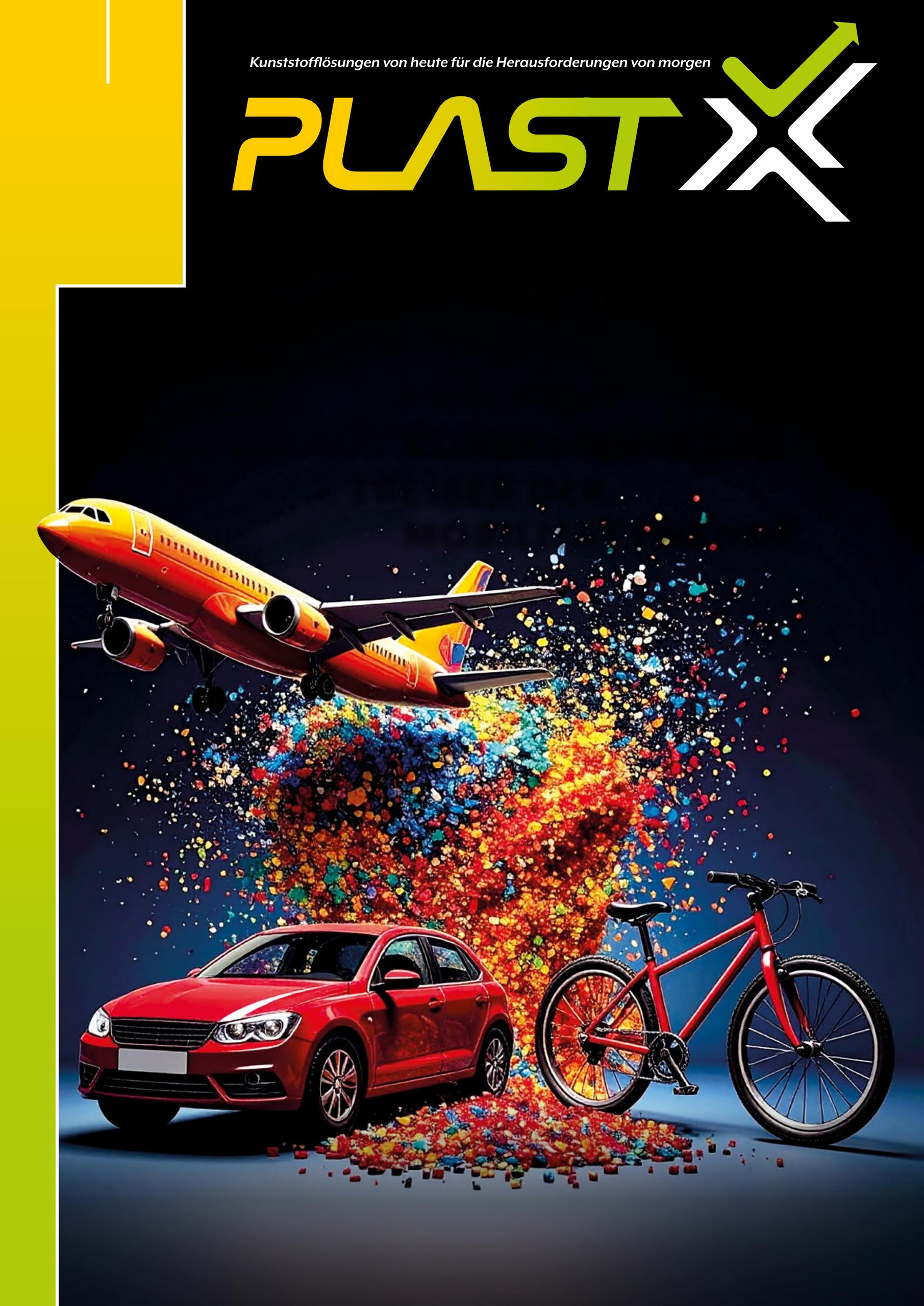
The new e-magazine PlastXnow Mobility (Box) highlights the latest developments in the automotive sector: from innovative material solutions and sustainable strategies to technological trends in processing and application. Industry experts, market analyses, and best practices demonstrate how plastics are playing a key role in shaping the future of the automotive industry.
Here's where plastics are used in automobiles
Plastics are widely used in automotive manufacturing and are incorporated into various components, including:
Interior: Dashboards, center consoles, door panels, seat shells, trim components, air vents, and surfaces that combine tactile quality with functionality
Exterior: bumpers, mirror housings, lighting components, wheel wells, underbody panels, and, increasingly, structurally critical parts made of fiber-reinforced plastic.
Technical components: Cable jackets and connectors, housings for sensors and control units, as well as fuel lines, reservoirs, and tanks.
The use of plastics reduces the weight of vehicles, leading to better fuel efficiency and lower CO2 emissions.
Commonly used plastics include:
Polypropylene (PP): widely used in bumpers and interior components
Polyurethane (PUR): used for seats and insulation materials
Polyvinyl chloride (PVC): Used in cable jackets and door panels
Acrylonitrile Butadiene Styrene (ABS): a durable material for handles and brackets
Polyetheretherketone (PEEK): High-performance plastic for engine components and electrical parts
Plastics used in the automotive industry must meet these requirements
In the automotive industry, plastics must meet a wide range of requirements in order to withstand demanding operating conditions.
Here are some of the most important requirements:
Mechanical Strength: The plastics must be strong enough to withstand the mechanical stresses that may occur during vehicle operation. This includes tensile and compressive strength, as well as resistance to abrasion and scratches.
Temperature Resistance: The materials must be able to withstand extreme temperature conditions—both high temperatures in the engine compartment and low temperatures outdoors.
Chemical Resistance: Plastics used in cars must be resistant to chemicals such as oil, fuel, brake fluid, and windshield washer fluid, which may come into contact with various components.
Resistance to aging: The materials must remain durable throughout the vehicle's entire service life without significant deformation or deterioration of their properties. This applies in particular to UV resistance, in order to prevent damage caused by sunlight.
Noise insulation: Plastics used in the interior are designed to provide sound insulation and reduce vibrations, thereby enhancing ride comfort.
Safety Requirements: The materials must also meet safety requirements. In the event of an accident, they should deform in such a way that they do not cause any additional damage.
Fire Safety: Many plastic components must be flame-retardant to prevent the spread of fire inside the vehicle in the event of a fire.
Recyclability: Increasing attention is being paid to the recyclability of plastics in order to minimize environmental impact and comply with legal requirements for the vehicle recycling.
These requirements are essential for ensuring the functionality, safety, and efficiency of vehicles. The development of new materials and technologies aims to meet these requirements even more effectively and to further optimize the use of plastics in automotive manufacturing.
Benefits: Why Plastics Are Used in Cars
Plastics are used in automotive manufacturing for a variety of reasons that improve both the performance and fuel efficiency of vehicles.
Here are the main advantages of plastics:
Weight reduction: Plastics are lighter than metal, which helps reduce the vehicle's overall weight. Lighter vehicles have better fuel economy and lower CO2 emissions.
Cost-effectiveness: The manufacture and processing of plastics can be more cost-effective than those of metals. Plastics also allow for easy mass production of parts, which further reduces costs.
Design flexibility: Plastics offer tremendous design freedom and enable the creation of complex shapes and functional designs that would be difficult to achieve with traditional materials.
Corrosion resistance: Plastic parts are resistant to corrosion and rust, which is particularly valuable in high-humidity environments or when exposed to salts.
Damping Properties: Plastics offer excellent damping properties that help reduce vibrations and noise, resulting in a quieter and more comfortable ride.
Insulating properties: They serve as both thermal and electrical insulators, which enhances safety and efficiency in various automotive applications, such as battery and cable jackets.
Sustainability: Thanks to advanced technologies, plastics from vehicles can increasingly be recycled. This reduces the environmental footprint and promotes sustainable practices.
Safety benefits: In the event of an accident, plastics can absorb energy and thereby cushion the impact. This increases occupant safety.
Aesthetics and Comfort: Plastics are available in a wide range of colors and textures, creating an attractive look and high-quality surfaces in the interior. They also contribute to a pleasant feel.
In summary, plastics offer a versatile and cost-effective solution that contributes to the modernization and improvement of automobiles in many ways.
E-Magazine: PlastXnow Mobility
From lightweight construction to electromobility and closed-loop material cycles—the PlastXnow Mobility e-magazine showcases the many ways plastics are supporting the transformation of the automotive industry. Articles covering all areas of the value chain illustrate how cars are becoming lighter, more efficient, and more sustainable.
Preview: Excerpt from the Table of Contents
(Source: WIN)
Recycling in the Automotive Industry: A Closer Look at LFT Recyclates
Overmolding of inserts: Producing products with high-quality covers on a “turnkey” basis
Tooling for the Automotive Industry: How Pfaff Ensures the Quality of Complex Injection Molding Tools
E-Mobility: How Overmolding Improves Battery Thermal Management
SLM Relys on Sumitomo: “More Than Just a Business Relationship”
Additive Manufacturing in Vehicle Interiors: Headrests Made from Printed Monomaterial
Service
You can find the PlastXnow Mobility e-magazine here (+).
Conclusion & Outlook
Plastics have become indispensable in today's automotive industry. Their light weight, high strength, and design flexibility make them the ideal material for a wide variety of applications.
And also the future looks promising. Ongoing research and development are focused on creating new, higher-performance plastics, some of which are bio-based or more easily recyclable. These innovations support the circular economy and reduce the automotive industry’s environmental footprint.
In addition, the versatility of plastics enables the integration of new technologies, such as sensors and displays, into vehicles, which is of great importance for autonomous and connected driving. Plastics also play a crucial role in the production of hydrogen tanks for fuel cell vehicles.
Date: 08.12.2025
Naturally, we always handle your personal data responsibly. Any personal data we receive from you is processed in accordance with applicable data protection legislation. For detailed information please see our privacy policy.
Consent to the use of data for promotional purposes
I hereby consent to Vogel Communications Group GmbH & Co. KG, Max-Planck-Str. 7-9, 97082 Würzburg including any affiliated companies according to §§ 15 et seq. AktG (hereafter: Vogel Communications Group) using my e-mail address to send editorial newsletters. A list of all affiliated companies can be found here
Newsletter content may include all products and services of any companies mentioned above, including for example specialist journals and books, events and fairs as well as event-related products and services, print and digital media offers and services such as additional (editorial) newsletters, raffles, lead campaigns, market research both online and offline, specialist webportals and e-learning offers. In case my personal telephone number has also been collected, it may be used for offers of aforementioned products, for services of the companies mentioned above, and market research purposes.
Additionally, my consent also includes the processing of my email address and telephone number for data matching for marketing purposes with select advertising partners such as LinkedIn, Google, and Meta. For this, Vogel Communications Group may transmit said data in hashed form to the advertising partners who then use said data to determine whether I am also a member of the mentioned advertising partner portals. Vogel Communications Group uses this feature for the purposes of re-targeting (up-selling, cross-selling, and customer loyalty), generating so-called look-alike audiences for acquisition of new customers, and as basis for exclusion for on-going advertising campaigns. Further information can be found in section “data matching for marketing purposes”.
In case I access protected data on Internet portals of Vogel Communications Group including any affiliated companies according to §§ 15 et seq. AktG, I need to provide further data in order to register for the access to such content. In return for this free access to editorial content, my data may be used in accordance with this consent for the purposes stated here. This does not apply to data matching for marketing purposes.
Right of revocation
I understand that I can revoke my consent at will. My revocation does not change the lawfulness of data processing that was conducted based on my consent leading up to my revocation. One option to declare my revocation is to use the contact form found at https://contact.vogel.de. In case I no longer wish to receive certain newsletters, I have subscribed to, I can also click on the unsubscribe link included at the end of a newsletter. Further information regarding my right of revocation and the implementation of it as well as the consequences of my revocation can be found in the data protection declaration, section editorial newsletter.



:quality(80)/p7i.vogel.de/wcms/8d/fd/8dfdc63153cce5816e7a371257b6bdff/nexofoam-epla-schaumv1.png "From compact EPLA granules to fully foamed insulation boards: This bio-based particle foam material can be processed as a drop-in solution on existing EPS molding machines. (Bild: Nexofoam)")
:quality(80)/p7i.vogel.de/wcms/91/39/91397ac53b2ca4d65d65f563ebdc12ea/nexofoam-epla-schaumv1.png "From compact EPLA granules to fully foamed insulation boards: This bio-based particle foam material can be processed as a drop-in solution on existing EPS molding machines. (Bild: Nexofoam)")
:quality(80)/p7i.vogel.de/wcms/2b/37/2b37601930b643d709629fa8005aade0/nexofoam-epla-schaumv1.png "From compact EPLA granules to finished foam insulation boards: This bio-based particle foam material can be processed as a drop-in solution on existing EPS molding machines. (Bild: Nexofoam)")
:quality(80)/p7i.vogel.de/wcms/97/0c/970c52fd142e10a3c4566168037ca637/materialloesungen-pressefoto-1890x1329v1.jpeg "rPET pellets: At Fraunhofer IAP, terephthalic acid is recovered from PET to produce new polymers for bottles, fibers, and films. The yellowish to grayish hues are due to the recycled raw material. Through the targeted addition of additives, the color can be adjusted to produce even colorless material. (Bild: Fraunhofer IAP / Romina Schönefeld)")
:quality(80)/p7i.vogel.de/wcms/ce/ee/ceeeef086bfb174ebdda31c0dfccaf9a/2-weiss-blick-in-produktion-dji-0095-kopiev1.jpeg "A look inside the injection molding shop at Weiss Kunststoffverarbeitung in Illertissen, Bavaria. (Bild: White)")
:quality(80)/p7i.vogel.de/wcms/33/08/3308710c85715e917ec1baf9767fe4a7/2026-ewikon-wago-hei-kanalv1.png "Ewikon's 48-cavity hot runner as a production mold. (Bild: Ewikon)")
:quality(80)/p7i.vogel.de/wcms/a2/a5/a2a516dc69b4c8f8ad6f475ae6746a08/sxkh-bei-hpf-gesamtwerkzeugv1.png "The HMG 70XS1510 trimming press from the Chinese manufacturer SXKH combines all the functions required by toolmakers at HPF in a very compact design. The deciding factors in the purchase were the purchase price—and confidence in the quality of established international key components. (Bild: Pergler Media)")
:quality(80)/p7i.vogel.de/wcms/19/5f/195fdb6e09629994f1d6e3cf94dac8d8/bild-1-exam510-ultem9085v1.jpeg "Granular printing (FGF) makes it cost-effective to produce large-format functional parts from high-performance polymers such as Ultem 9085. (Bild: NEW AIM3D)")
:quality(80)/p7i.vogel.de/wcms/d5/c4/d5c46d40e1ae062370d058e2c006c376/dimitrisvetsikas1969-belgium-3595351v1.jpeg "European Plastics Industry Calls for Immediate Action to Address the Industry Crisis (Bild: dimitrisvetsikas1969)")
:quality(80)/p7i.vogel.de/wcms/e6/63/e663f0e1dd8818fc501c6fb5c5d33712/19-5689-circular-economy-of-resourcesv1.jpeg "Plastic waste from the average household is very heterogeneous. Only the right mix of technologies can turn all types of plastic waste into a new source of raw materials. (Bild: BASF)")
:quality(80)/p7i.vogel.de/wcms/31/5b/315b714f653484179232fbc4d6d79543/sesotec-img-andreas-hanus-25-20-281-29v1.jpeg "Andreas Hanus, Head of AI Development at Sesotec: “AI will not replace traditional sorting technology, but will intelligently enhance it.” (Bild: Sesotec)")
:quality(80)/p7i.vogel.de/wcms/74/5f/745f512239689819275af39a82f59860/b-brenkenv1.jpeg "Dr. Benedikt Brenken, Director of R-Cycle: \"The digital product passport will fundamentally change plastic recycling.\" (Bild: R-Cycle)")
:quality(80)/p7i.vogel.de/wcms/40/6d/406d05534ab4d28194bd29699e023e67/2026-09-09-uni-kiel-aufmacherv1.jpeg "These self-polarizing polymer coatings could be used in a wide variety of electronic components in the future. (Bild: University of Kiel/C. Anders)")
:quality(80)/p7i.vogel.de/wcms/5d/46/5d46e098a7cfaebdd9643df47153c5af/aufmacherv1.png "The PPWR imposes new requirements on packaging: What impact does this have on mechanical engineering? (Bild: KI-generiert / Dall-E)")
:quality(80)/p7i.vogel.de/wcms/70/13/7013fe202fb4790708f62f69cd0c83d4/aufmacher-st-c3-a4rkeschaumfoliev1.png "Using thermoplastic starch as a base, researchers at the IKV successfully produced a flexible foam film using physical blowing agents. (Bild: IKV)")
:quality(80)/p7i.vogel.de/wcms/d1/2b/d12b536ba3b382d0d138e342ac1038e6/03--20pm-imm-mgsv1.jpeg "MGS Richfield Site (Bild: MGS)")
:quality(80)/p7i.vogel.de/wcms/90/9c/909cf6eb1b91a9a84ff535033ea9b048/honeycombv1.jpeg "The composite material made of epoxy and glass fibers not only protects against flames but is also fully recyclable. (Bild: Empa)")
:quality(80)/p7i.vogel.de/wcms/6a/d5/6ad5980b0c965409c71582fc59145e13/1920-covestro-new-covestro-headquartersv1.jpeg "Covestro's corporate headquarters in Leverkusen (Bild: Covestro)")
:quality(80)/p7i.vogel.de/wcms/db/74/db741079d26ad9e7a69278fde45e79c7/aufmacherv1.png "(Bild: KI-generiert / Dall-E)")
:quality(80)/p7i.vogel.de/wcms/b3/65/b3654df434f4d31e1fda3c79bc7bb4b0/nakura-20kunstrasenteppich-20ohne-20verf-c3-bcllungv1.jpeg "Tecnaro has developed synthetic turf fibers using a specially formulated Arboblend blend that offers high resistance to heat, UV rays, and weathering, and, because it is niobium-based, sequesters CO₂ over the long term. (Bild: Tecnaro)")

:quality(80)/p7i.vogel.de/wcms/26/32/26326460cdcf33b363bd3a05c0bff735/adobestock-313602281-6000x3373v1v1.jpeg "High-performance plastics are frequently used in the automotive industry. (Bild: happycreator - stock.adobe.com)")
:quality(80)/p7i.vogel.de/wcms/af/f4/aff4c32a11237145a24be102a1a8b4cf/piae2026-welcomev1.jpeg "PIAE, the leading conference on plastics in automotive engineering, took place on March 18 and 19, 2026, at its new venue in Baden-Baden. (Bild: VDI Knowledge Forum)")