Recent market research analyses forecast a market volume of more than 1.52 trillion U.S. dollars for the global plastics market by 2036. The Asia-Pacific region is experiencing particularly dynamic growth. Packaging remains the largest end-use segment and also the one with the strongest growth. This raises the question for the European plastics industry of how it can maintain its competitive position in an increasingly globalized market.
The global plastics market is projected to grow to over 1.52 trillion U.S. dollars by 2036. The Asia-Pacific region is driving demand, with packaging remaining the largest segment.
According to Fundamental Business Insights, a global market research provider , the global plastics market reached a volume of approximately 1.01 trillion U.S. dollars in 2026. The market research firm already expects revenue of about 1.05 trillion U.S. dollars for 2027. By 2036, the market is projected to grow to more than 1.52 trillion U.S. dollars. This corresponds to a compound annual growth rate (CAGR) of 4.18% over the forecast period from 2027 to 2036.
The forecast thus describes an industry whose economic importance continues to grow despite increasing regulatory requirements and growing debate over resource consumption. The primary drivers are demand from the packaging industry, the construction sector, and the automotive industry. In addition, there are applications in electrical engineering and electronics, consumer goods, and the healthcare sector.
The market study attributes this growth to the versatile properties of plastics. Light weight, durability, chemical resistance, and a high degree of design flexibility make polymers attractive for numerous industrial applications. In the construction industry, for example, they are used in piping systems, insulation materials, roofing materials, and molded parts. In the automotive industry, they support lightweight construction concepts and enable flexible component geometries.
At the same time, demand is changing. Recyclable and bio-based plastics are gaining importance because manufacturers and processors must increasingly take sustainability goals, regulatory requirements, and changing procurement strategies into account. Market growth is therefore not solely a matter of rising plastic volumes. It is also becoming increasingly crucial to consider which materials—with which properties and based on which raw materials—are available for industrial applications.
Packaging Drives Demand
When considering end-use segments, the packaging industry plays a prominent role. According to the surveys, this sector accounted for approximately 38.16% of the global plastics market in 2026. At the same time, packaging is classified as the fastest-growing end-use segment.
The reasons lie in their widespread industrial use. Food and beverage packaging, personal care products, household goods, and packaging for medical applications require materials that protect products, meet hygiene requirements, and can be processed efficiently. Plastics offer a wide range of properties for these purposes. Their light weight and moldability also allow for application-specific designs.
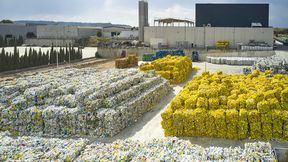
Packaging is the largest end-use segment of the global plastics market. Requirements for material efficiency and recyclability are becoming increasingly important.
However, the requirements profile is changing. In addition to functionality and cost, recyclability, material conservation, and the design of packaging that is suitable for recycling are taking center stage. This creates a dilemma for plastics manufacturers and processors: They must meet their customers’ technical requirements while simultaneously developing materials and packaging concepts that align with the demands of a more circular economy.
In addition to packaging, the construction and automotive industries remain key areas of demand. In the construction industry, piping, insulation materials, roofing materials, and installation components are particularly relevant. In the automotive industry, lightweight construction, functional integration, and the requirements for efficient vehicle designs are driving the use of polymer materials. Electrical engineering, electronics, and medical devices also contribute to demand.
Polyethylene remains the most important product segment
Polyethylene (PE) holds the leading position among plastic products. The study estimates its market share for 2026 at 26.83%. A key factor is its widespread use in packaging, consumer goods, and industrial applications. The various types of PE combine good processability with chemical resistance and mechanical strength.
Date: 08.12.2025
Naturally, we always handle your personal data responsibly. Any personal data we receive from you is processed in accordance with applicable data protection legislation. For detailed information please see our privacy policy.
Consent to the use of data for promotional purposes
I hereby consent to Vogel Communications Group GmbH & Co. KG, Max-Planck-Str. 7-9, 97082 Würzburg including any affiliated companies according to §§ 15 et seq. AktG (hereafter: Vogel Communications Group) using my e-mail address to send editorial newsletters. A list of all affiliated companies can be found here
Newsletter content may include all products and services of any companies mentioned above, including for example specialist journals and books, events and fairs as well as event-related products and services, print and digital media offers and services such as additional (editorial) newsletters, raffles, lead campaigns, market research both online and offline, specialist webportals and e-learning offers. In case my personal telephone number has also been collected, it may be used for offers of aforementioned products, for services of the companies mentioned above, and market research purposes.
Additionally, my consent also includes the processing of my email address and telephone number for data matching for marketing purposes with select advertising partners such as LinkedIn, Google, and Meta. For this, Vogel Communications Group may transmit said data in hashed form to the advertising partners who then use said data to determine whether I am also a member of the mentioned advertising partner portals. Vogel Communications Group uses this feature for the purposes of re-targeting (up-selling, cross-selling, and customer loyalty), generating so-called look-alike audiences for acquisition of new customers, and as basis for exclusion for on-going advertising campaigns. Further information can be found in section “data matching for marketing purposes”.
In case I access protected data on Internet portals of Vogel Communications Group including any affiliated companies according to §§ 15 et seq. AktG, I need to provide further data in order to register for the access to such content. In return for this free access to editorial content, my data may be used in accordance with this consent for the purposes stated here. This does not apply to data matching for marketing purposes.
Right of revocation
I understand that I can revoke my consent at will. My revocation does not change the lawfulness of data processing that was conducted based on my consent leading up to my revocation. One option to declare my revocation is to use the contact form found at https://contact.vogel.de. In case I no longer wish to receive certain newsletters, I have subscribed to, I can also click on the unsubscribe link included at the end of a newsletter. Further information regarding my right of revocation and the implementation of it as well as the consequences of my revocation can be found in the data protection declaration, section editorial newsletter.
Polypropylene (PP), polyvinyl chloride (PVC), polyethylene terephthalate (PET), and polyurethane (PU) are also among the major groups of materials. In addition, there are engineering plastics such as polycarbonate (PC), polyamide (PA), and acrylonitrile butadiene styrene (ABS). These materials are used in applications that place higher demands on mechanical, thermal, or electrical properties.
A notable feature of the forecast is the classification of epoxy polymers as the fastest-growing product segment. Market researchers attribute this to the demand for materials with high mechanical strength, chemical resistance, and good adhesion properties. Applications include coatings, adhesives, composites, and electrical insulation, among others.
However, this classification should be viewed in a nuanced way: Epoxy resins differ significantly in terms of their chemical structure and processing from traditional thermoplastics, which are at the heart of many industrial manufacturing processes. The projected growth trend thus also points to the growing importance of polymeric materials beyond traditional standard plastics.
Injection molding as the most important application segment
With regard to processing methods, the market study identifies injection molding as the application with the highest revenue. This process enables the cost-effective production of complex components in large quantities and is therefore relevant to numerous industrial sectors. These include the automotive industry, electrical engineering, electronics, consumer goods, and medical technology.
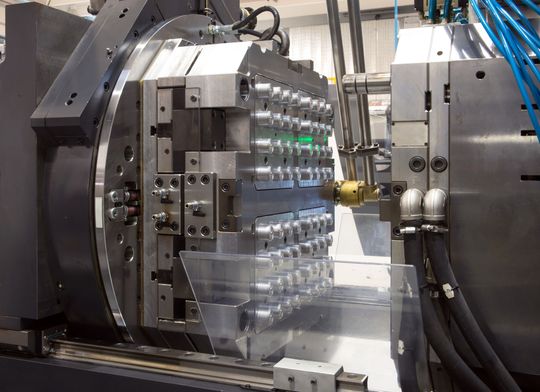
Injection molding is the application segment with the highest revenue. Automation and efficient production processes remain key competitive factors.
Extrusion is another key component of industrial plastics processing. It is used, among other things, in the manufacture of pipes, profiles, films, and sheets. Blow molding and thermoforming are particularly important for packaging applications.
It is interesting to note that rotational molding is classified as the fastest-growing application segment. The process enables the production of seamless, hollow plastic components and is used, for example, for containers and large engineering components. However, the study does not provide specific growth rates or market shares for the individual processing methods. A quantitative assessment of the respective growth trends is therefore not possible based on publicly available data.
Asia-Pacific is expanding its market position
From a regional perspective, the Asia-Pacific region is the most important market for plastics. The region combines a large industrial production base with high demand from the packaging, construction, automotive, electronics, and consumer goods industries.
Fundamental Business Insights forecasts an average annual growth rate of 5.02% for the Asia-Pacific region. This places the region above the global market average of 4.18%. The study cites extensive processing capacities, strong downstream industrial value creation, and demand from export-oriented manufacturing industries as key growth drivers.
Global plastics production continues to grow. The Asia-Pacific region, in particular, is expanding its role as a production and sales region, putting companies such as BASF under pressure.
Asia’s significance can also be gauged by looking at actual production trends. According to Plastics Europe, 430.9 million metric tons of plastics were produced worldwide in 2024. Asia accounted for 57.2% of that total. China alone accounted for 34.5% of global production volume. North America accounted for 16.3%, while the EU27+3 region accounted for approximately 12%. These figures reflect plastics production and should not be equated with the regional revenue shares reported in the market study.
North America also has a significant industrial plastics sector. Demand is driven, among other things, by the packaging, automotive, healthcare, and consumer goods industries. The market study particularly highlights the importance of material innovations, process efficiency, and the integration of recycled materials. However, the publicly available study overview does not specify a concrete growth rate for North America.
Europe faces other structural challenges. Sustainability, the circular economy, and regulatory requirements influence material selection and production processes. At the same time, the European plastics industry must hold its own in the face of international competition. Regional market opportunities therefore lie in high-performance materials as well as in recycling technologies and efficient processing methods.
The production data highlight the competitive pressure: Global plastics output rose by 4.1% in 2024 compared with the previous year. In Europe, production stabilized at just 54.6 million metric tons following the sharp decline in 2023. Europe’s share of global plastics production fell from 22% in 2006 to 12% in 2024. Industry revenue declined from 457 to 398 billion euros between 2022 and 2024.
This makes it clear that global market growth does not automatically mean better prospects for all production sites. For European manufacturers and processors in particular, factors such as cost structures, energy supply, investment conditions, and technological leadership will be decisive.
Different Priorities Among Industrialized Countries
The country analyses in the study show that the plastics markets in the six industrialized countries examined are characterized by different industrial priorities. However, the freely accessible study overview does not publish quantitative market figures or country-specific growth rates. The classification is therefore based on the key development areas described in the overview.
Land
Zentrale Entwicklungsschwerpunkte
USA
Hochleistungspolymere, Verpackungen, Automobilindustrie, Gesundheitswesen und Recycling
Japan
Spezialkunststoffe, Elektronik, Automobilindustrie und Präzisionswerkstoffe
Südkorea
Technische Kunststoffe, Elektronik, Halbleiter und Konsumgüter
Deutschland
Nachhaltige Werkstoffe, Polymertechnik und effiziente Verarbeitung
Frankreich
Kreislaufkunststoffe, ressourcenschonende Produktion und regulatorische Anforderungen
Italien
Verarbeitungseffizienz, Verpackungstechnik und Automobilindustrie
In the U.S., the focus is on applications with high performance requirements. Demand for polymer materials is driven in particular by the packaging, automotive, and healthcare industries. Japan and South Korea, on the other hand, are more specialized in technical and sophisticated polymer applications. The electronics, semiconductor, and automotive industries there create demand for materials with specific mechanical, thermal, and electrical properties.
In Europe, the priorities also differ. According to the study, Germany is increasingly focusing on combining technical performance with a circular economy and efficient processing technologies. France is concentrating on the use of recyclable materials and resource-efficient production processes. In Italy, the focus is on versatile polymer solutions and increasing productivity in packaging, automotive, and industrial applications.
The country-by-country analysis thus highlights an increasing differentiation among markets: While large production sites benefit primarily from economies of scale and broad industrial demand, high-performance materials and application-specific material solutions are gaining in importance in technologically specialized economies.
International Competitive Landscape
The global plastics market is dominated by international chemical and polymer manufacturers. Fundamental Business Insights lists ten companies that are among the most important market players:
BASF (Germany)
Dow (U.S.)
Sabic (Saudi Arabia)
LyondellBasell (Netherlands)
ExxonMobil (U.S.)
LG Chem (South Korea)
Ineos (United Kingdom)
Formosa Plastics (Taiwan)
Covestro (Germany)
DuPont (U.S.)
These companies differ in terms of their product portfolios, regional presence, and technological focus. What they have in common is their positioning along key segments of the polymer value chain.
In addition to production capacity and the availability of raw materials, technological differentiation and sustainable material solutions are becoming increasingly important for competitiveness. The development of recyclable plastics, bio-based alternatives, and high-performance polymer materials opens up opportunities for differentiation. At the same time, efficient production processes and resilient supply chains are becoming increasingly important.
Recyclable materials and advanced processing technologies are becoming key factors in the competitiveness of the plastics industry.
The market study also cites various corporate developments as examples of structural change in the industry. These include investments in recycling capacity, the consolidation of production activities, and strategic acquisitions. Among others, the study mentions the recycling projects of Tomra and Republic Services, as well as the integration of Japanese polypropylene and LLDPE operations by Mitsui Chemicals, Idemitsu Kosan, and Sumitomo Chemical.
The publicly available overview does not include specific market shares for individual companies or a reliable ranking based on revenue. A more detailed quantitative assessment of their competitive positions would therefore be speculative.
Growth alone is no guarantee of competitiveness
The forecast of a market size exceeding 1.52 trillion U.S. dollars by 2036 underscores the economic significance of the plastics industry. At the same time, the segment and regional analyses show that growth opportunities are distributed unevenly.
Asia-Pacific is set to become the key growth driver, with a projected annual growth rate of 5.02%. Packaging remains the largest and most dynamic end-use sector. Polyethylene maintains its leading position among plastic products, while epoxy polymers promise particularly high growth rates. In terms of processing methods, injection molding remains the market leader.
This creates a challenging situation for European companies. On the one hand, there continues to be broad industrial demand for plastics and high-performance polymer materials. On the other hand, production sites come under pressure when international competitors are able to operate with greater capacity and more favorable cost structures.
Therefore, the future prospects do not lie solely in increasing production volumes. The key factor will be how effectively companies integrate material development, processing technology, recycling, and resource efficiency. Opportunities for differentiation may arise particularly in the areas of engineering plastics, sophisticated industrial applications, and circular material solutions.
The global plastics market is growing—but value creation is increasingly distributed on an international scale. For the European plastics industry, the key will be to translate its technological strengths into economically competitive solutions.