On March 4 and 5, 2026, some 460 experts from 15 countries once again made Aachen the epicenter of the plastics industry. At the 33rd IKV Colloquium, it became clear that the industry is responding to regulatory pressure and economic upheavals with a forward-looking technological strategy.
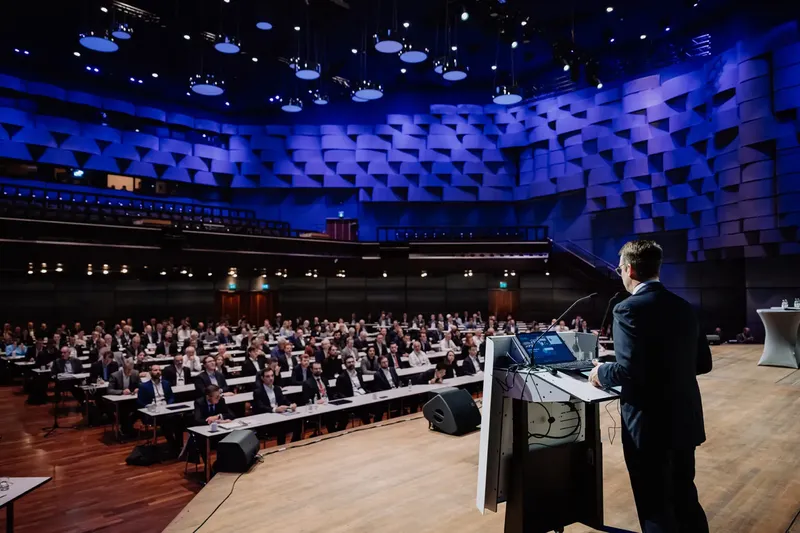
IKV Institute Director Prof. Dr.-Ing. Christian Hopmann will welcome approximately 460 experts from research and industry in the plastics sector to the 33rd IKV Colloquium in Aachen in early March.
(Bild: DF.Photography)
At a time when the plastics industry is facing massive environmental and economic challenges, the 33rd International Colloquium on Plastics Technology at Eurogress Aachen sent a clear message: Innovation is not an end in itself, but the key to sustainability.
Under the leadership of Prof. Christian Hopmann, approximately 420 participants gathered to discuss the industry’s most pressing issues in 16 thematic sessions and five plenary presentations. The common thread running through the two days was unmistakable: a consistent circular economy, digital intelligence, and advanced process technology are setting the course for the next decade.
A Circular Economy Requires Quality
The first day of the event kicked off with two plenary presentations that shed precise light on the tension between large-scale automotive production, economic hurdles, and the need for ecological transformation.
Each of the two days of the event began with two plenary presentations, followed by a Q&A session on the keynote speeches.
(Source: PlastXnow / Matthias Gutbrod)
In his presentation on the use of recycled materials in vehicle manufacturing, Dr.-Ing. Werner Tietz of Volkswagen AG addressed the significant challenges posed by increasing regulatory requirements. He emphasized that, at VW, sustainability must not come at the expense of technical excellence.
Tietz placed particular emphasis on the economic reality and the current cost structure. He pointed out that future legal requirements for high-quality plastic recyclates would entail higher procurement costs. Due to market pressures, these costs “cannot generally be passed on in full to customers.”
He demonstrated how this balancing act can still be achieved using the new VW ID.7 as an example. This electric sedan already incorporates sustainable materials such as the “ECO” Art-Velours, which is made from 71% PET bottles and used T-shirts. In addition, the “Anmut” headliner and the “Dilours” carpet are made from nearly 100% recycled PET.
A Circular Economy Requires Collaboration
Dr. Patrick Glöckner, Head of the Global Circular Economy Program at Evonik, then provided a systemic perspective on this transformation. In his case for circular value chains, he emphasized that the plastics transition goes far beyond mere process technology. “Collaboration and teamwork are crucial to making the circular economy a success. Only by building ecosystems can we develop a functioning circular economy along our value chains.”
Glöckner urged swift action and pointed out that the circular economy often has not yet gained the necessary momentum. In light of upcoming EU regulations such as the End-of-Life Vehicle Regulation (ELV), which mandates a 25 percent recycled content in new vehicles starting in 2030, he emphasized—under the slogan “Collaboration now!”— that the transformation must begin now.
The very first panel discussion provided a reality check for the automotive industry. Together with Werner Tietz (Volkswagen) and Patrick Glöckner (Evonik), moderator Prof. Christian Hopmann (IKV) analyzed the key drivers for the use of recycled materials (from left).
(Source: PlastXnow / Matthias Gutbrod)
This requires the coordinated interplay of “design for recycling” with mechanical and chemical recycling methods. Ultimately, it’s also about “business success” in a circular global market. “The goal is to maintain high quality for as long as possible, because that ensures the value of the recycled materials is high enough to make the cycle truly worthwhile.”
These two presentations laid the groundwork for the subsequent technical sessions by demonstrating that the transition to a circular economy can only succeed through the close integration of materials expertise, OEM requirements, and new partnership models.
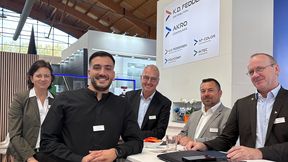
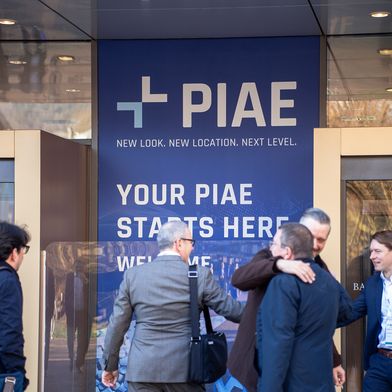
During the IKV Colloquium, visitors had the opportunity to maintain and expand their professional networks and to engage in conversation with exhibiting companies.
(Source: DF.Photography)
Increasing the Recycled Content Through Quality
Another key focus of the colloquium was meeting the EU requirements for recycled content in packaging, which will take effect in 2030. In Session 1, the IKV presented the holistic approach of advanced mechanical recycling. Particular attention was given to the Loopcycling joint project, in which more than 20 companies are participating. In this project, the entire process chain for LDPE packaging films collected in the yellow bag was optimized.
A key advancement is de-inking—that is, the removal of printing inks prior to regranulation—which has made it possible to reduce the degradation of plastics and lower contaminant levels. In his plenary presentation, Prof. Achim Grefenstein (IKV/Constantia Flexibles) emphasized that “plastics processing and mechanical recycling must be reimagined within the context of the circular economy.”
Date: 08.12.2025
Naturally, we always handle your personal data responsibly. Any personal data we receive from you is processed in accordance with applicable data protection legislation. For detailed information please see our privacy policy.
Consent to the use of data for promotional purposes
I hereby consent to Vogel Communications Group GmbH & Co. KG, Max-Planck-Str. 7-9, 97082 Würzburg including any affiliated companies according to §§ 15 et seq. AktG (hereafter: Vogel Communications Group) using my e-mail address to send editorial newsletters. A list of all affiliated companies can be found here
Newsletter content may include all products and services of any companies mentioned above, including for example specialist journals and books, events and fairs as well as event-related products and services, print and digital media offers and services such as additional (editorial) newsletters, raffles, lead campaigns, market research both online and offline, specialist webportals and e-learning offers. In case my personal telephone number has also been collected, it may be used for offers of aforementioned products, for services of the companies mentioned above, and market research purposes.
Additionally, my consent also includes the processing of my email address and telephone number for data matching for marketing purposes with select advertising partners such as LinkedIn, Google, and Meta. For this, Vogel Communications Group may transmit said data in hashed form to the advertising partners who then use said data to determine whether I am also a member of the mentioned advertising partner portals. Vogel Communications Group uses this feature for the purposes of re-targeting (up-selling, cross-selling, and customer loyalty), generating so-called look-alike audiences for acquisition of new customers, and as basis for exclusion for on-going advertising campaigns. Further information can be found in section “data matching for marketing purposes”.
In case I access protected data on Internet portals of Vogel Communications Group including any affiliated companies according to §§ 15 et seq. AktG, I need to provide further data in order to register for the access to such content. In return for this free access to editorial content, my data may be used in accordance with this consent for the purposes stated here. This does not apply to data matching for marketing purposes.
Right of revocation
I understand that I can revoke my consent at will. My revocation does not change the lawfulness of data processing that was conducted based on my consent leading up to my revocation. One option to declare my revocation is to use the contact form found at https://contact.vogel.de. In case I no longer wish to receive certain newsletters, I have subscribed to, I can also click on the unsubscribe link included at the end of a newsletter. Further information regarding my right of revocation and the implementation of it as well as the consequences of my revocation can be found in the data protection declaration, section editorial newsletter.
In addition, technological solutions such as a PECVD barrier coating were presented. These ultra-thin plasma coatings act as an effective barrier against gases and prevent the migration of contaminants from the recycled material into the product, enabling the use of recycled plastics even in sensitive sectors such as the cosmetics and food industries.
Breaking New Ground with Foam Injection Molding and Vitrimere
The mobility transition requires not only lightweight construction but also recyclability. Session 2 focused on thermoplastic foam injection molding (TSG). The “Foam2Cycle” project demonstrates how previously non-recyclable soft-touch components (such as those made from PUR foam and PVC film) can be replaced with purely thermoplastic solutions made from foamed TPE.
The technical breakthrough was achieved here through the use of a negative embossing stroke: The mold was opened in a controlled manner after filling to precisely control foam expansion. In doing so, the researchers identified critical parameters such as delay time and opening speed to ensure homogeneous foam structures without defects.
Another highlight was the presentation of Vitrimere in Session 6. This new class of matrices utilizes Covalent Adaptive Networks (CAN), which combine the chemical resistance of thermosets with the weldability of thermoplastics.
Jonatan Alms and Jannik Fuchs from the IKV explained: “By using vitrimers, we can not only repair fiber-reinforced composite structures more easily, but also specifically reuse them at the end of their life cycle. In doing so, we are laying the foundation for a true circular economy in lightweight construction.” Marc Fette (CTC Stade/Airbus) added to this by discussing the industrial perspective on sustainable aviation through eco-design and material-based CFRP recycling.
Artificial Intelligence for More Accurate Models
The plenary presentation “AI4KI – Artificial Intelligence for the Plastics Industry” set the strategic framework for digital transformation. According to Mauritius Schmitz (IKV/Osphim GmbH), AI has now become a key driver of productivity, energy efficiency, and the implementation of the circular economy.
The biggest hurdles to an industrial rollout are often not so much technical in nature, but rather stem from organizational shortcomings such as a lack of digital skills and unclear data structures. Schmitz presented the IKV’s KI4KI initiative, which supports companies through a structured four-phase model in systematically identifying AI use cases, building internal expertise, and implementing demonstrators in practice.
In Session 10, Dr.-Ing. Moritz Frenzel (Altair Engineering) elaborated on the potential of AI-powered engineering. He explained that by combining physics-based simulations with data analytics (surrogate modeling), hundreds of design variants can be evaluated virtually without the computational overhead of traditional methods. The goal is to transform data into “actionable knowledge” in order to make informed decisions early in the development process.
Luiz Lise (IKV) presented a technological breakthrough in the form of a multi-fidelity artificial neural network (MF-ANN) for predicting the anisotropy of short-fiber-reinforced thermoplastics. The framework combines fast but imprecise analytical models (Mori-Tanaka) with precise FEM simulations. This “residual learning” corrects systematic errors—in a fraction of the computation time required for a full FEM analysis.
In conclusion, Sebastian Schwan (IKV) outlined approaches for intelligently adapting material property data. Since discrepancies between simulation and reality are often due to inaccurate material data, an iterative algorithm was developed that automatically adjusts parameters such as the coefficient of thermal expansion (CLTE) to match actual component deformations. In experiments, this reduced the discrepancy between simulation and reality by up to 39%. In the future, AI methods and genetic algorithms are expected to further accelerate this adaptation and ensure its applicability to complex geometries.
Additive Manufacturing: SEAM on the Path to Mass Production
Session 15 presented new strategies for 3D printing of technical components, particularly for screw extrusion additive manufacturing (SEAM). The focus was on non-planar slicing, in which the filament deposition is adapted three-dimensionally to load paths and surface contours. This not only eliminates the need for support structures but also specifically leverages material anisotropy to increase component strength.
Process stability also remains an issue: To ensure process stability in high-volume systems, the IKV presented pressure-advance algorithms for dynamically compensating for the inertia of melt flow, which effectively prevent geometric deviations caused by under- or over-extrusion.
Live Research and Industry Exhibition
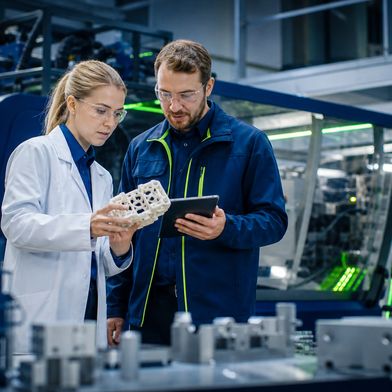
A special highlight on the afternoon of the first day of the event was the research tour “IKV 360° – Experience Research Live.” This year, participants were able to get an up-close look at current research projects at more than 80 stations in the institute buildings and technical facilities on the Melaten campus. There, research staff demonstrated their work, which covered the entire spectrum of plastics engineering.
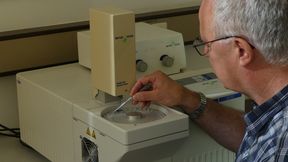
During an IKV 360° tour of the institute, visitors had the opportunity to explore many of the IKV’s facilities and laboratories. Researchers were stationed at approximately 80 stations to present their work to the guests and answer their questions.
(Source: DF.Photography)
The tour offered a unique opportunity to discuss details of process control, materials analysis, and tool design with the researchers right at the facilities, far from the lecture halls.
In addition to the institute, 23 exhibitors showcased their products to visitors at an accompanying industry exhibition. The exhibition provided a complementary setting for dialogue among materials manufacturers, machinery manufacturers, and end users.
Georg Menges Prize Awarded to Trade Press Representatives for the First Time
A traditional highlight of the IKV Colloquium is the presentation of the Georg-Menges Prize. This award underscores the IKV’s core mission: the direct transfer of scientific findings into industrial applications. This year, however, the jury sent a special message by honoring Markus Lüling (K-Profi)—the first representative of the trade press to receive the award. This recognized that the transfer of knowledge from the laboratory to the factory floor requires strong media coverage.
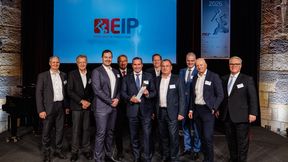
Prof. Christian Hopmann (left) and Dr.-Ing. Herbert Müller (right) present Markus Lüling (center) with the Georg-Menges Prize in recognition of his contributions to the plastics trade press.
(Source: PlastXnow / Matthias Gutbrod)
In his laudatory speech, Prof. Christian Hopmann emphasized that well-researched technical journalism is far more than mere reporting. It serves as a “conveyor belt in the plastics technology innovation system.” Over the course of decades, Markus Lüling has not only shed light on complex technological developments but also contextualized and critically examined them. In this way, the trade press plays a key role in transforming research initiatives into marketable innovations.
Reifenhäuser Award for Emerging Talent
In addition to honoring established industry leaders, the IKV Colloquium also turns its attention to the next generation. A highlight on the second day of the event was the presentation of the Reifenhäuser Sponsorship Award. With this award, the Reifenhäuser Group recognizes outstanding theses that demonstrate scientific quality and practical value for the plastics industry.
This year, the award went to Jan Kleinsorge, a research assistant at the IKV. He was honored for his master’s thesis on “Inverse Thermal Injection Mold Design.” The thesis solves a classic problem in plastics processing: Instead of iteratively determining the optimal temperature control for a mold, as has been done in the past, his approach enables a direct calculation of the required cooling geometry based on the desired thermal outcome for the part.
From Crisis Mode to a Technological Offensive
During the two intensive days at the Eurogress in Aachen, there was a sense of optimism and new beginnings. The 460 participants left the 2026 IKV Colloquium with more than just full notebooks. They took away the certainty that the plastics industry has moved beyond the phase of merely reacting to events.
The 2026 IKV Colloquium was no place for complaining about energy costs and regulations. It was a showcase of engineering excellence. The industry is demonstrating resilience through innovation. This year’s IKV Colloquium has once again shown that this is where knowledge is shared and the future of the plastics industry is actively shaped. The combination of scientific depth and industrial relevance made the event an indispensable date on every plastics expert’s calendar in 2026 as well.