


:quality(80)/p7i.vogel.de/wcms/8d/fd/8dfdc63153cce5816e7a371257b6bdff/nexofoam-epla-schaumv1.png "From compact EPLA granules to fully foamed insulation boards: This bio-based particle foam material can be processed as a drop-in solution on existing EPS molding machines. (Bild: Nexofoam)")
:quality(80)/p7i.vogel.de/wcms/91/39/91397ac53b2ca4d65d65f563ebdc12ea/nexofoam-epla-schaumv1.png "From compact EPLA granules to fully foamed insulation boards: This bio-based particle foam material can be processed as a drop-in solution on existing EPS molding machines. (Bild: Nexofoam)")
:quality(80)/p7i.vogel.de/wcms/2b/37/2b37601930b643d709629fa8005aade0/nexofoam-epla-schaumv1.png "From compact EPLA granules to finished foam insulation boards: This bio-based particle foam material can be processed as a drop-in solution on existing EPS molding machines. (Bild: Nexofoam)")
:quality(80)/p7i.vogel.de/wcms/97/0c/970c52fd142e10a3c4566168037ca637/materialloesungen-pressefoto-1890x1329v1.jpeg "rPET pellets: At Fraunhofer IAP, terephthalic acid is recovered from PET to produce new polymers for bottles, fibers, and films. The yellowish to grayish hues are due to the recycled raw material. Through the targeted addition of additives, the color can be adjusted to produce even colorless material. (Bild: Fraunhofer IAP / Romina Schönefeld)")
:quality(80)/p7i.vogel.de/wcms/ce/ee/ceeeef086bfb174ebdda31c0dfccaf9a/2-weiss-blick-in-produktion-dji-0095-kopiev1.jpeg "A look inside the injection molding shop at Weiss Kunststoffverarbeitung in Illertissen, Bavaria. (Bild: White)")
:quality(80)/p7i.vogel.de/wcms/33/08/3308710c85715e917ec1baf9767fe4a7/2026-ewikon-wago-hei-kanalv1.png "Ewikon's 48-cavity hot runner as a production mold. (Bild: Ewikon)")
:quality(80)/p7i.vogel.de/wcms/a2/a5/a2a516dc69b4c8f8ad6f475ae6746a08/sxkh-bei-hpf-gesamtwerkzeugv1.png "The HMG 70XS1510 trimming press from the Chinese manufacturer SXKH combines all the functions required by toolmakers at HPF in a very compact design. The deciding factors in the purchase were the purchase price—and confidence in the quality of established international key components. (Bild: Pergler Media)")
:quality(80)/p7i.vogel.de/wcms/19/5f/195fdb6e09629994f1d6e3cf94dac8d8/bild-1-exam510-ultem9085v1.jpeg "Granular printing (FGF) makes it cost-effective to produce large-format functional parts from high-performance polymers such as Ultem 9085. (Bild: NEW AIM3D)")
:quality(80)/p7i.vogel.de/wcms/d5/c4/d5c46d40e1ae062370d058e2c006c376/dimitrisvetsikas1969-belgium-3595351v1.jpeg "European Plastics Industry Calls for Immediate Action to Address the Industry Crisis (Bild: dimitrisvetsikas1969)")
:quality(80)/p7i.vogel.de/wcms/e6/63/e663f0e1dd8818fc501c6fb5c5d33712/19-5689-circular-economy-of-resourcesv1.jpeg "Plastic waste from the average household is very heterogeneous. Only the right mix of technologies can turn all types of plastic waste into a new source of raw materials. (Bild: BASF)")
:quality(80)/p7i.vogel.de/wcms/31/5b/315b714f653484179232fbc4d6d79543/sesotec-img-andreas-hanus-25-20-281-29v1.jpeg "Andreas Hanus, Head of AI Development at Sesotec: “AI will not replace traditional sorting technology, but will intelligently enhance it.” (Bild: Sesotec)")
:quality(80)/p7i.vogel.de/wcms/74/5f/745f512239689819275af39a82f59860/b-brenkenv1.jpeg "Dr. Benedikt Brenken, Director of R-Cycle: \"The digital product passport will fundamentally change plastic recycling.\" (Bild: R-Cycle)")
:quality(80)/p7i.vogel.de/wcms/40/6d/406d05534ab4d28194bd29699e023e67/2026-09-09-uni-kiel-aufmacherv1.jpeg "These self-polarizing polymer coatings could be used in a wide variety of electronic components in the future. (Bild: University of Kiel/C. Anders)")
:quality(80)/p7i.vogel.de/wcms/5d/46/5d46e098a7cfaebdd9643df47153c5af/aufmacherv1.png "The PPWR imposes new requirements on packaging: What impact does this have on mechanical engineering? (Bild: KI-generiert / Dall-E)")
:quality(80)/p7i.vogel.de/wcms/70/13/7013fe202fb4790708f62f69cd0c83d4/aufmacher-st-c3-a4rkeschaumfoliev1.png "Using thermoplastic starch as a base, researchers at the IKV successfully produced a flexible foam film using physical blowing agents. (Bild: IKV)")
:quality(80)/p7i.vogel.de/wcms/d1/2b/d12b536ba3b382d0d138e342ac1038e6/03--20pm-imm-mgsv1.jpeg "MGS Richfield Site (Bild: MGS)")
:quality(80)/p7i.vogel.de/wcms/90/9c/909cf6eb1b91a9a84ff535033ea9b048/honeycombv1.jpeg "The composite material made of epoxy and glass fibers not only protects against flames but is also fully recyclable. (Bild: Empa)")
:quality(80)/p7i.vogel.de/wcms/6a/d5/6ad5980b0c965409c71582fc59145e13/1920-covestro-new-covestro-headquartersv1.jpeg "Covestro's corporate headquarters in Leverkusen (Bild: Covestro)")
:quality(80)/p7i.vogel.de/wcms/db/74/db741079d26ad9e7a69278fde45e79c7/aufmacherv1.png "(Bild: KI-generiert / Dall-E)")
:quality(80)/p7i.vogel.de/wcms/b3/65/b3654df434f4d31e1fda3c79bc7bb4b0/nakura-20kunstrasenteppich-20ohne-20verf-c3-bcllungv1.jpeg "Tecnaro has developed synthetic turf fibers using a specially formulated Arboblend blend that offers high resistance to heat, UV rays, and weathering, and, because it is niobium-based, sequesters CO₂ over the long term. (Bild: Tecnaro)")
IKV: Research for Practical Application Short-Fiber-Reinforced Thermoplastics: Targeted Analysis of Fatigue Behavior and Improvement of Service Life
Related Vendor
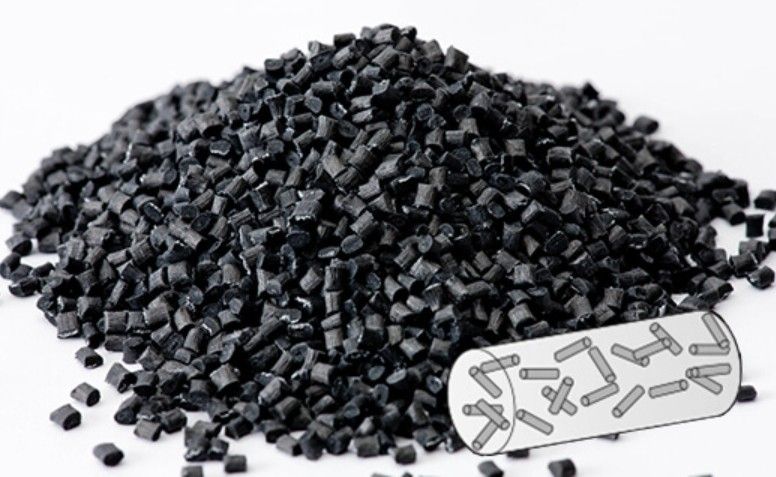
Short-fiber-reinforced thermoplastics are increasingly being used in high-stress applications—such as in automotive and equipment manufacturing. However, the inhomogeneous fiber orientation makes it difficult to reliably predict fatigue behavior. Researchers at the IKV demonstrate how targeted specimen fabrication, experimental analyses, and micromechanical simulations can lead to a better understanding of damage mechanisms and the development of more precise service life models.
Understanding the Fatigue Behavior of Short-Fiber-Reinforced Thermoplastics
Short-fiber-reinforced thermoplastics are increasingly being used in applications subject to fatigue loads, such as in automotive and equipment manufacturing. These materials are manufactured using injection molding, a process that results in a process-dependent distribution of fiber orientation across the wall thickness. This inhomogeneous anisotropy complicates damage analysis, as layer interactions cause a dependence on the fiber distribution. However, a method developed at the IKV makes it possible to produce test specimens with homogeneous, highly oriented fibers, thereby allowing for the investigation of damage mechanisms free from such interactions.
Sign in or register and read on
Please log in or register and read this article. To be able to read this article in full, you must be registered. Free registration gives you access to exclusive specialist information.
Already registered? Log in here
:quality(80)/p7i.vogel.de/wcms/c1/fa/c1faf72b09859e0ceed9b6658d685622/aufmacherv1.png "Researchers at the Institute for Plastics Processing (IKV) in Industry and
Crafts at RWTH Aachen University provide exclusive coverage of current topics for PlastXnow. (Bild: AI-generated/Gemini / KI-generiert / Gemini)")
:quality(80)/p7i.vogel.de/wcms/70/13/7013fe202fb4790708f62f69cd0c83d4/aufmacher-st-c3-a4rkeschaumfoliev1.png "Using thermoplastic starch as a base, researchers at the IKV successfully produced a flexible foam film using physical blowing agents. (Bild: IKV)")