Krones is celebrating a special anniversary this year: 75 years ago, Hermann Kronseder founded a small workshop for electrical machinery in Neutraubling. Today, the company is one of the world’s leading technology partners for the beverage industry—particularly in the PET sector.
Krones' customer base includes breweries, the soft drink industry, as well as wine, sparkling wine, and spirits producers; the food and beverage industry; and companies in the chemical, pharmaceutical, and cosmetics industries.
(Bild: Krones)
March 28, 2024, marks a major milestone in Krones’ 75-year history. As of that date, Krones has consolidated Netstal into the “Filling and Packaging Technology” segment.
The Neutraubling-based group thus covers all the technologies required for closed-loop PET recycling solutions: from the injection molding of preforms to PET container production, filling, and packaging, all the way through to the recycling of used bottles.
Krones’ success story is closely linked to the emergence and rise of the PET bottle. Without its triumphant advance through the beverage market, the company as we know it today probably would not have been possible. After all, it all started out quite differently.
From Neutraubling to the World
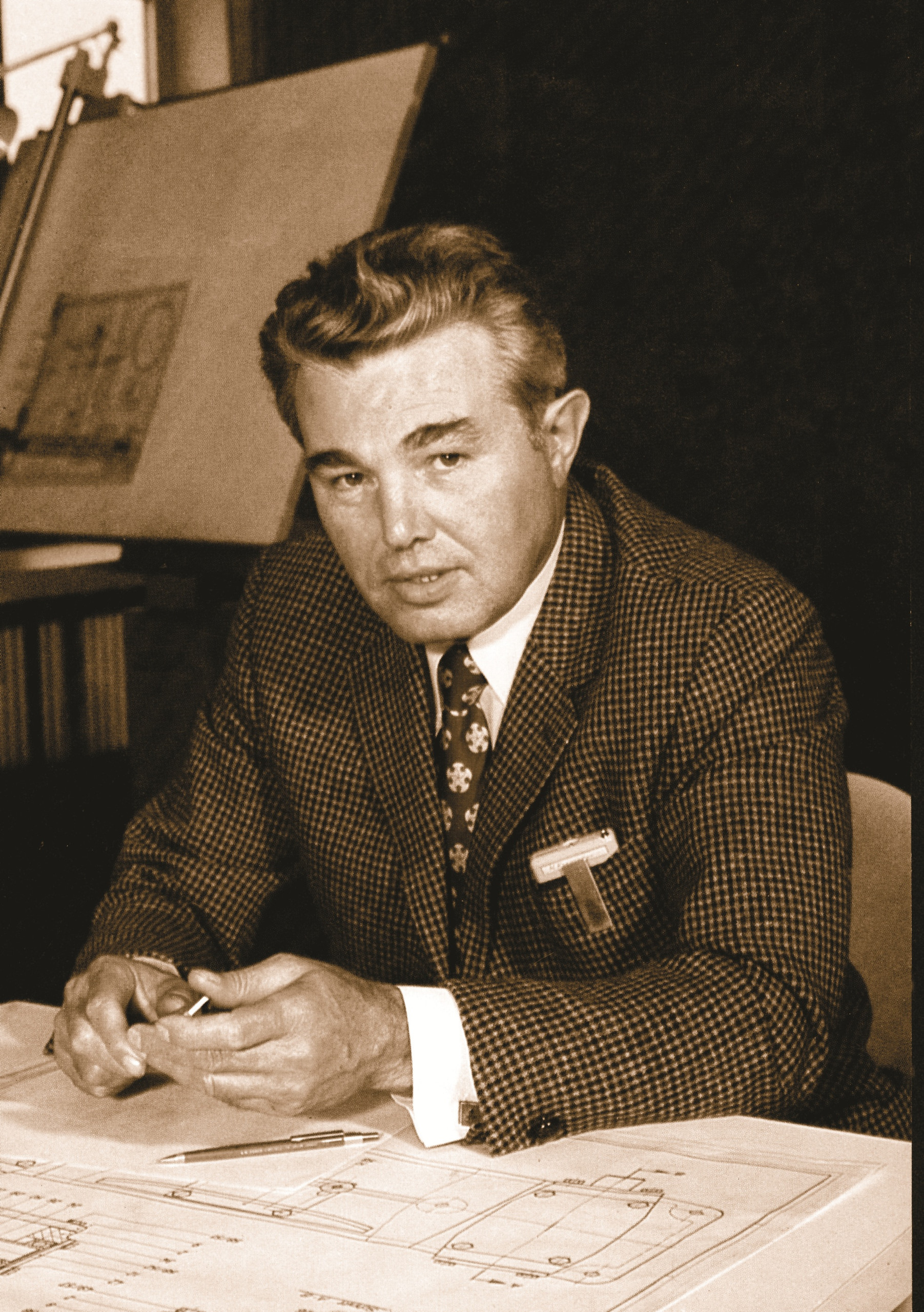
Hermann Kronseder (1924–2010): Company Founder and Entrepreneur
(Source: Krones)
Krones was founded in 1951. But Hermann Kronseder’s entrepreneurial journey began a little earlier: In July 1949, he and two partners founded a company to manufacture semi-automatic labeling machines, gaining his first experience in the beverage industry.
“Although the partnership lasted only about a year, that was enough for my father to learn what labeling machines were. And he immediately had his own ideas on how to improve the existing machines even further. In 1951, he drew his first machines at the kitchen table in our apartment in Neutraubling,” recalls his son, Volker Kronseder.
Today, Krones operates in more than 160 countries and employs more than 20,000 people worldwide. Its portfolio includes, among other things, machines and complete systems for beverage filling and packaging, process technology, intralogistics and digitalization solutions, as well as plastics recycling—encompassing all steps in the plastics cycle, from processing to reuse, as part of a comprehensive, systematic approach.
Beverages in PET
About ten years before Kronseder founded his company, the foundation for another global success story was laid in England: British chemists John Rex Whinfield and James Tennant Dickson developed the plastic polyethylene terephthalate (PET).
At the time, both were working for the textile company Calico Printers Association in Accrington and were conducting research on new synthetic polyester fibers. In the course of their work, they discovered that terephthalic acid and ethylene glycol could be used to produce a stable, versatile plastic. Their discovery laid the foundation for the later industrial production of PET, which was initially used primarily for textile fibers. It wasn’t until the 1970s that PET also became widely used as a material for beverage bottles and packaging, as it is lightweight, durable, and easily recyclable.
INFO
History of the PET Bottle – Milestones
1941: PET is discovered and patented for the first time in England.
1973: The first PET bottle is patented by American chemist Nathaniel Wyeth.
1978: With Coca-Cola's introduction of a 2-liter bottle in the U.S., the PET bottle began its global spread.
1990: Nationwide launch in Germany of Coca-Cola’s first “unbreakable” 1.5-liter reusable PET bottle, in collaboration with the manufacturer at the time, Schmalbach-Lubeca AG.
1998: After a five-year development phase, Gerolsteiner became the first German mineral water company to launch a PET bottle for carbonated mineral water.
2009: Coca-Cola introduces the PlantBottle—the world's first recyclable PET bottle that contains up to 30 percent plant-based materials.
2023: Nearly all PET bottles in circulation in Germany were recycled. The share of rPET rose to over 50 percent.
At Krones, the PET bottle made its debut in 1987. Initially, filling systems with lifting plates were used, such as the long-tube version installed at the Whitbread Samlesbury brewery in England. The first filler with neck-handling technology was delivered to the Polar brewery in Venezuela.
Producing PET Bottles in a Resource-Efficient Manner
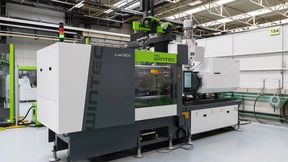
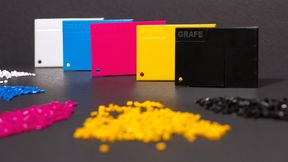
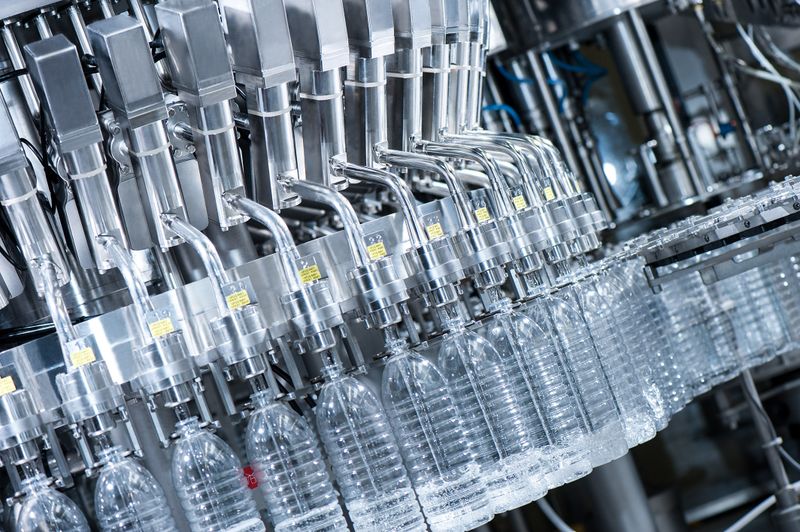
Before a PET bottle can be filled, it must first be manufactured. To do this, PET pellets are first melted and applied to injection molding machines into small, thick-walled preforms. In a subsequent step, these so-called preforms are reheated and then placed into a mold. There, they are inflated with compressed air (stretch blow molding). The material expands and takes on the shape of the final bottle. The bottle then cools, is removed from the mold, and can subsequently be filled, capped, and labeled.
Today, Krones is able to handle this entire process chain. Key factors in this development over the past 75 years have been both groundbreaking in-house innovations and strategic acquisitions:
Date: 08.12.2025
Naturally, we always handle your personal data responsibly. Any personal data we receive from you is processed in accordance with applicable data protection legislation. For detailed information please see our privacy policy.
Consent to the use of data for promotional purposes
I hereby consent to Vogel Communications Group GmbH & Co. KG, Max-Planck-Str. 7-9, 97082 Würzburg including any affiliated companies according to §§ 15 et seq. AktG (hereafter: Vogel Communications Group) using my e-mail address to send editorial newsletters. A list of all affiliated companies can be found here
Newsletter content may include all products and services of any companies mentioned above, including for example specialist journals and books, events and fairs as well as event-related products and services, print and digital media offers and services such as additional (editorial) newsletters, raffles, lead campaigns, market research both online and offline, specialist webportals and e-learning offers. In case my personal telephone number has also been collected, it may be used for offers of aforementioned products, for services of the companies mentioned above, and market research purposes.
Additionally, my consent also includes the processing of my email address and telephone number for data matching for marketing purposes with select advertising partners such as LinkedIn, Google, and Meta. For this, Vogel Communications Group may transmit said data in hashed form to the advertising partners who then use said data to determine whether I am also a member of the mentioned advertising partner portals. Vogel Communications Group uses this feature for the purposes of re-targeting (up-selling, cross-selling, and customer loyalty), generating so-called look-alike audiences for acquisition of new customers, and as basis for exclusion for on-going advertising campaigns. Further information can be found in section “data matching for marketing purposes”.
In case I access protected data on Internet portals of Vogel Communications Group including any affiliated companies according to §§ 15 et seq. AktG, I need to provide further data in order to register for the access to such content. In return for this free access to editorial content, my data may be used in accordance with this consent for the purposes stated here. This does not apply to data matching for marketing purposes.
Right of revocation
I understand that I can revoke my consent at will. My revocation does not change the lawfulness of data processing that was conducted based on my consent leading up to my revocation. One option to declare my revocation is to use the contact form found at https://contact.vogel.de. In case I no longer wish to receive certain newsletters, I have subscribed to, I can also click on the unsubscribe link included at the end of a newsletter. Further information regarding my right of revocation and the implementation of it as well as the consequences of my revocation can be found in the data protection declaration, section editorial newsletter.
1997: Krones develops the compact, two-story Contiform machine for heating preforms and stretch-blow molding PET bottles. This innovation is well received, even by the major soft drink bottlers. A successful launch of the new technology—and into an entirely new business segment.
2009: The ErgoBloc L enables the production, labeling, and filling of PET containers—all on a single, compact system. Thanks to its high performance and ease of operation, the wet-end module quickly became a bestseller.
2013: The Contiform AseptBloc sterilizes the preforms for plastic containers using gaseous hydrogen peroxide. The preforms are then blown into bottles under sterile conditions. A sterile process chain is established throughout the entire machine block, from stretch blow molding to the filling and capping of the products.
2018: With the acquisition of MHT Mold & Hotrunner Technology AG, Krones is expanding its expertise in the field of PET bottle production. The company specializes in high-precision mold modules for injection molding machines. These systems produce the preforms, which are later blown into PET bottles by machines such as the Krones Contiform.
2022: Whether it’s ambient temperature or humidity, preform weight, or the proportion of recycled material: Whenever such parameters change, the stretch-blow molding process for producing plastic bottles must always be readjusted or even reconfigured. But instead of being performed manually by operating personnel as in the past, this task is now handled by the intelligent control system Contiloop AI—which, thanks to artificial intelligence, performs it precisely, quickly, and fully automatically.
2024: Krones acquires 100 percent of the shares in the Swiss company Netstal, a leading manufacturer of injection molding machines for PET preforms and closures. With this addition, the Krones Group now offers all the technologies required for closed-loop PET solutions: from the injection molding of preforms, through PET container production, filling, and packaging, all the way to the recycling of used bottles.
However, 2024 is a special year for Krones not only from a business perspective, but also for personal reasons. That’s because on October 3, 2024, company founder Dr. Hermann Kronseder would have turned 100. “I think he recognized very early on that there was a lot of potential in the beverage industry and mechanical engineering. After all, people will always eat and drink,” recalls Volker Kronseder, his son and chairman of the executive board of Krones AG until the end of 2015 in an interview for the company’s in-house magazine.
Solutions for Plastic Recycling
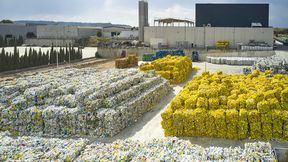
The PET bottle is an ingenious invention: hygienic, malleable, and unbreakable. Moreover, it is a prime example of successful plastic recycling—especially in Germany. This is because 98.7 percent of the 17 billion PET beverage bottles consumed in Germany in 2023 were collected as recyclables. Specifically, this means that bottlers, deposit systems, the Dual Systems, and other collection programs have efficiently and successfully kept single-use and reusable bottles in the cycle through the various channels of recyclables collection.
“75 years of Krones—that means 75 years of dedication, curiosity, and a spirit of innovation,” explains Christoph Klenk, CEO of Krones AG since 2016. “We are proud of what we have achieved together, and we thank all our employees who have shaped our journey with their expertise and passion.”
From a semi-automatic line producing 1,200 labeled glass bottles per hour in 1951 to today’s output of over 100,000 PET bottles per hour, it is impressive to see how far the company has come. “With advancing digitalization and increasingly intelligent systems, we are once again at an exciting turning point—and can look forward to seeing what new opportunities the future will bring,” Klenk continued.
Current
Krones Increases Revenue in 2025
According to preliminary results, Krones increased its order intake to 1.46 billion euros in the fourth quarter of 2025. This represents an increase of 8.6 percent compared with the same period last year. For the full year, orders totaled 5.56 billion euros, up 1.9 percent from the already high figure of the previous year.
The pricing strategy was consistently maintained throughout this period. As of December 31, 2025, Krones had an order backlog of 4.19 billion euros. This ensures capacity utilization in the plant and project business well into the third quarter of 2026.
The company also posted growth in revenue: In the final quarter, revenue rose by nearly 10 percent to 1.56 billion euros. For the full year, revenue totaled 5.66 billion euros. This represents a seven percent increase. Despite negative currency effects amounting to approximately 99 million euros, Krones thus met its own growth forecast of seven to nine percent.
Looking ahead to the coming years, the Group intends to continue focusing on the development and industrial implementation of new technological concepts—particularly in the areas of digitalization, process integration, and resource-efficient production systems. The goal is to continue working with customers and partners to identify the future needs of the beverage and food industries at an early stage, help shape them, and offer solutions that go beyond tomorrow.