The injection-molded frame of the Lion youth bikes is made of polyamide reinforced with 40 percent recycled carbon fiber. What makes it special: It is manufactured using water injection molding combined with FLEXflow HRS hot runner technology from Oerlikon HRSflow.
Cool and sustainable: The new Lion Bikes for kids, featuring frames and forks made of polyamide and recycled carbon fiber.
(Bild: Kids' Bike Revolution)
High safety and stability, lightweight design, sustainable manufacturing and construction—with these features, the Lion youth bikes from Kids Bike Revolution are setting new standards in the industry. A key factor in this is their Fibrit frames, available in two sizes. Fibrit is a polyamide (PA) reinforced with 40% recycled carbon fiber; it is lightweight and recyclable itself.
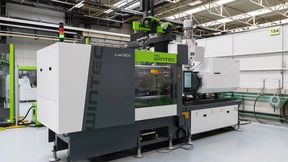
To manufacture these parts, Weber Fibertech uses a modified form of water-injection molding (WIT) and combines it with its patented E-LFT process as well as the FLEXflow HRS servo-driven hot-runner technology from Oerlikon HRSflow. The WIT technology was developed by Weber Fibertech’s subsidiary PME fluidtec, based in Ettenheim. KraussMaffei manufactures the injection molding machine of the MX 1600 type, which is tailored to this application.
(Source: Kids' Bike Revolution)
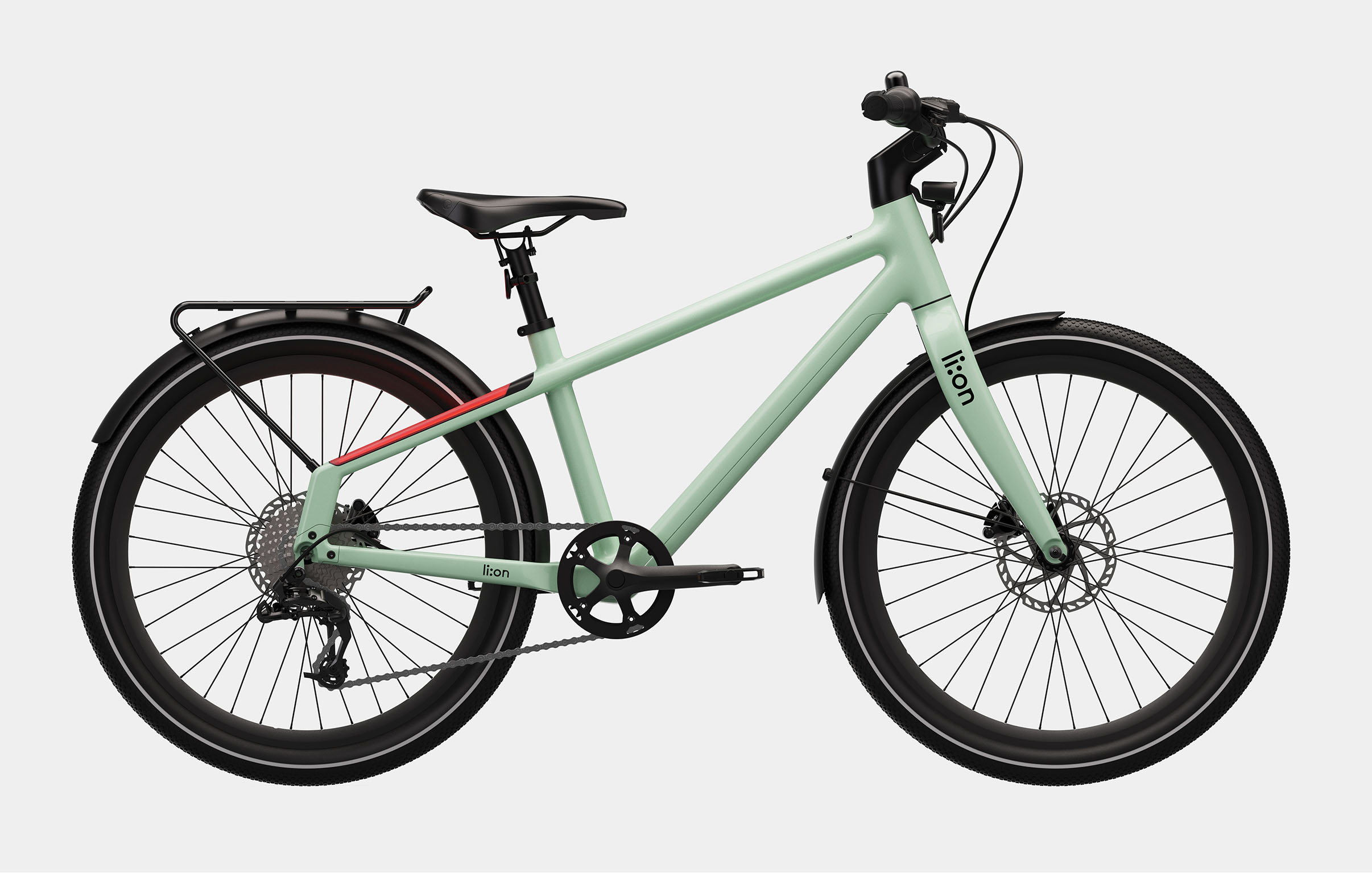
Buyers of the Lion youth bike—shown here in the Urban Green version—can choose from two frame sizes, three trim levels, and four colors.
FLEXflow HRS as a Key Technology
In the WIT process, the mold is first completely filled with molten material. Immediately afterward, a water jet strikes the still-liquid core of the part in the opposite direction of the injection flow, forcing excess material back into the injection molding machine’s melt reservoir. This saves material without reducing the rigidity of the tubular frame.
However, it requires a highly complex control system for opening and closing the injection nozzles during both phases of the WIT. The FLEXflow HRS needle-valve hot runner technology meets these requirements and was therefore key to the project's success.
(Source: Oerlikon HRSflow)
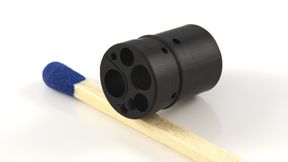
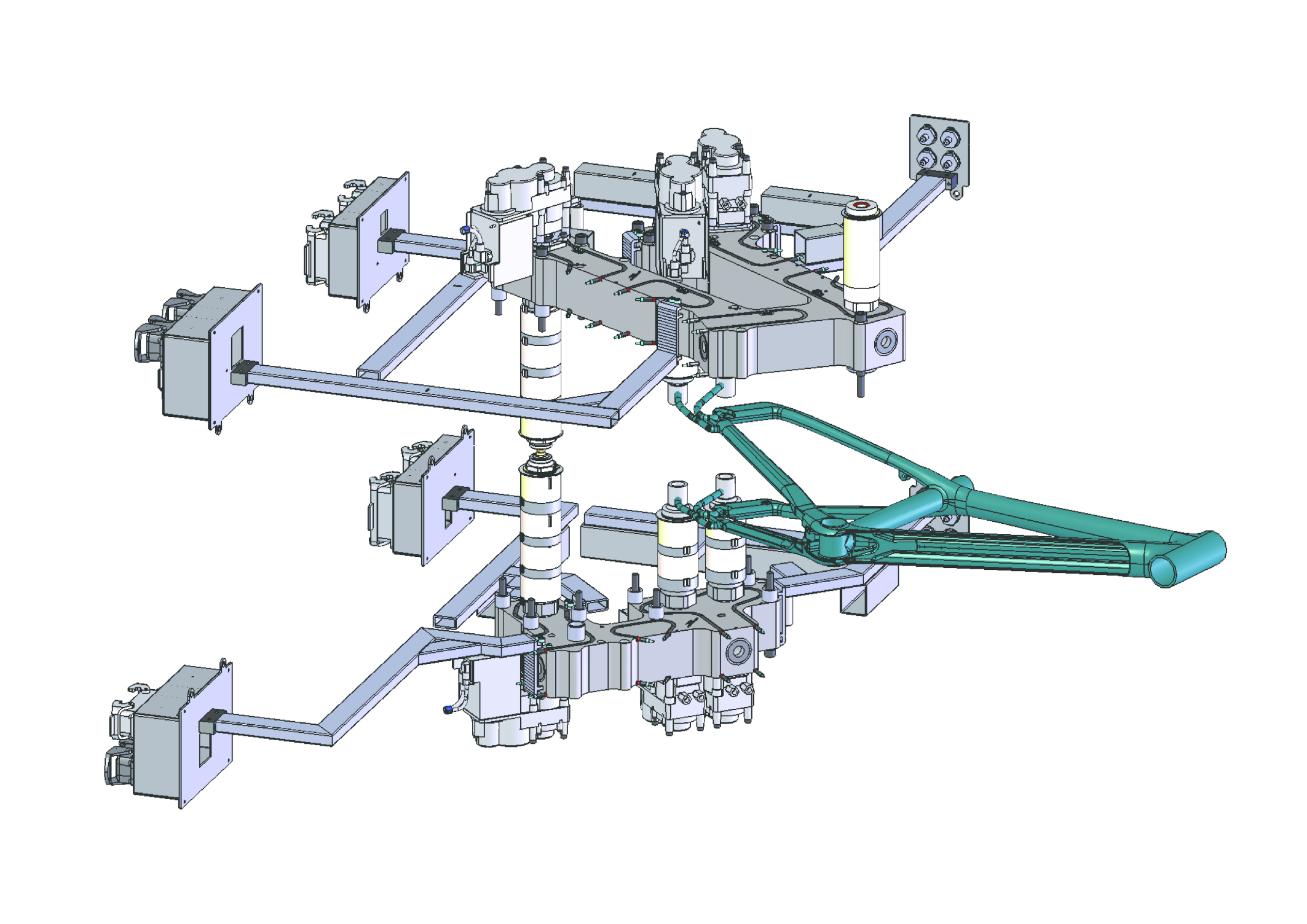
In accordance with the requirements of WIT technology, the hot-runner system used to manufacture the frames for Lion Bikes features a highly complex design.
Precise Process Control and Material Efficiency
Compared to conventional hot-runner injection molding, the combination of WIT and hot-runner technology, together with the flexible control unit of the servo-electric FLEXflow HRS systems, offers significant advantages. It enables independent and precise adjustment and monitoring of the needle stroke positions as well as the movement speeds of all nozzles integrated into a mold. This allows for precise control of the opening and closing cycles as well as the melt flow, compensates for different flow paths, and enables the targeted positioning of weld lines.
This flexibility is present both during injection into the cavity and during the WIT-specific retraction of the melt for direct use in the subsequent cycle. Separate overflow cavities are not required, thereby eliminating the material loss that would otherwise occur.
Precise melt control for the highest component quality
For both frame sizes of Lion Bikes, four injection points on the rear fork have proven to be optimal. There, nozzles from Oerlikon HRSflow’s Wa series—designed for medium to high shot weights—ensure short injection times. They are made of a special, highly wear-resistant steel and are therefore able to withstand the demands of processing the abrasive, carbon-fiber-reinforced polyamide.
“Thanks to FLEXflow-HRS hot-runner technology, we can use WIT for mass production. Even at first glance, these closed, multidimensional hollow profiles impress with their perfect surfaces and lack of warpage,” says Friedbert Schmitt, managing director of Weber Fibertech.
(Source: Oerlikon HRSflow)
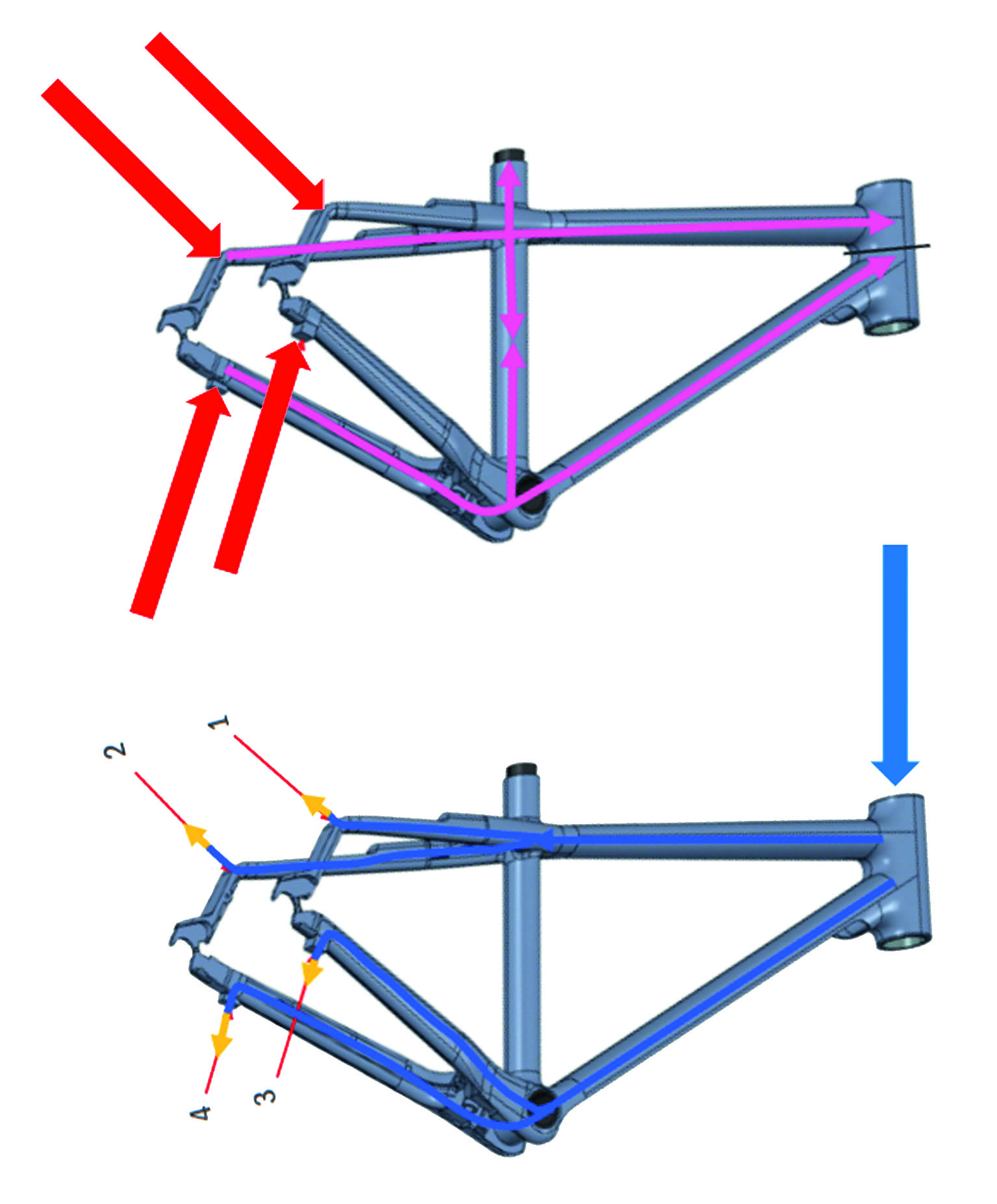
Phase 1 (above): Starting from the four injection points, the molten material spreads throughout the cavity until it is completely filled.
Phase 2 (below): Starting from the opposite side, the water then pushes the still-liquid souls from the individual sections back toward the needle-valve nozzles.
Despite varying flow paths and cross-sections, the individual sections are completely and uniformly filled and securely sealed by the end of the process. The wall thickness requirements are precisely met throughout. “The seam welds are optimally positioned, which minimizes their impact. In this way, we make a significant contribution to the products’ high level of safety in use,” Schmitt continues.
Precise needle control for controlled melt flow
To make optimal use of the capabilities of FLEXflow technology in conjunction with the WIT system, HRSflow has modified the control software for this specific application. As part of a joint development effort with PME Fluidtec, the interface to the WIT system was first established and refined. Subsequently, FLEXflow HRS was programmed so that the melt fronts converge in a defined manner, starting from the four injection points at the seat post, in the bottom bracket area, and at the head tube.
Date: 08.12.2025
Naturally, we always handle your personal data responsibly. Any personal data we receive from you is processed in accordance with applicable data protection legislation. For detailed information please see our privacy policy.
Consent to the use of data for promotional purposes
I hereby consent to Vogel Communications Group GmbH & Co. KG, Max-Planck-Str. 7-9, 97082 Würzburg including any affiliated companies according to §§ 15 et seq. AktG (hereafter: Vogel Communications Group) using my e-mail address to send editorial newsletters. A list of all affiliated companies can be found here
Newsletter content may include all products and services of any companies mentioned above, including for example specialist journals and books, events and fairs as well as event-related products and services, print and digital media offers and services such as additional (editorial) newsletters, raffles, lead campaigns, market research both online and offline, specialist webportals and e-learning offers. In case my personal telephone number has also been collected, it may be used for offers of aforementioned products, for services of the companies mentioned above, and market research purposes.
Additionally, my consent also includes the processing of my email address and telephone number for data matching for marketing purposes with select advertising partners such as LinkedIn, Google, and Meta. For this, Vogel Communications Group may transmit said data in hashed form to the advertising partners who then use said data to determine whether I am also a member of the mentioned advertising partner portals. Vogel Communications Group uses this feature for the purposes of re-targeting (up-selling, cross-selling, and customer loyalty), generating so-called look-alike audiences for acquisition of new customers, and as basis for exclusion for on-going advertising campaigns. Further information can be found in section “data matching for marketing purposes”.
In case I access protected data on Internet portals of Vogel Communications Group including any affiliated companies according to §§ 15 et seq. AktG, I need to provide further data in order to register for the access to such content. In return for this free access to editorial content, my data may be used in accordance with this consent for the purposes stated here. This does not apply to data matching for marketing purposes.
Right of revocation
I understand that I can revoke my consent at will. My revocation does not change the lawfulness of data processing that was conducted based on my consent leading up to my revocation. One option to declare my revocation is to use the contact form found at https://contact.vogel.de. In case I no longer wish to receive certain newsletters, I have subscribed to, I can also click on the unsubscribe link included at the end of a newsletter. Further information regarding my right of revocation and the implementation of it as well as the consequences of my revocation can be found in the data protection declaration, section editorial newsletter.
“Thanks to the ability to precisely control the movements and positions of the individual shut-off needles, we were ultimately able to adjust the timing of the melt backpressure so that the separate melt flows in the individual frame sections flow back evenly. This would not have been possible with conventional hot-runner technology,” explains Joachim Scheffer, Key Account Manager at Oerlikon HRSflow.
Focus on Safety and Sustainability
Developed by former professional cyclists Tony Martin and Marcel Kittel, Lion Bikes combine the light weight of aluminum frames with the high riding stability of carbon models. With three trim levels, three colors, and frame sizes of 24″ and 27.5″, the company claims they set a new standard for children’s and youth bicycles in terms of road safety and sustainability.
On the manufacturing side, the company ensures that the associated environmental impact remains as low as possible. “We manufacture all components in Germany. This keeps transportation distances short. In addition, we manufacture virtually ‘on demand.’ This minimizes the number of unsold returns that would otherwise have to be disposed of,” says Thomas Arimond, CEO of Lion Bikes.
The carbon fibers used in Fibrit come from the recycling cycle. The material itself can also be recycled and reintroduced into production. Compared to aluminum, it has a significantly lower CO2 footprint during manufacturing.
Info
To establish such frames—made of thermoplastic materials that can be processed cost-effectively—as an alternative to conventional aluminum and carbon frames on the market, Weber Fibertech founded the Fi.Bi.Tec (Fiber Bike Technology) division. This division focuses on the bicycle industry’s growing interest in “Made in Germany” frames and other components. The company supports OEMs from the feasibility study through to large-scale production in Germany.