Polyester Recycling How Matterr Recycles Polyester Waste into Virgin-Quality Material
A guest post by
Melanie Hackler, CEO, Matterr
| Translated by AI
6 min Reading Time
Polyester is everywhere—yet only a fraction of it is recycled today. The startup Matterr uses depolymerization to break down even complex waste streams into their chemical building blocks. This produces monomers of virgin-grade quality, enabling a true circular economy.
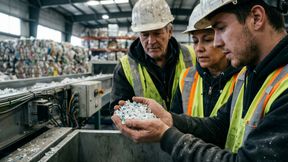
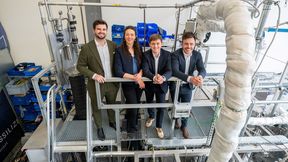
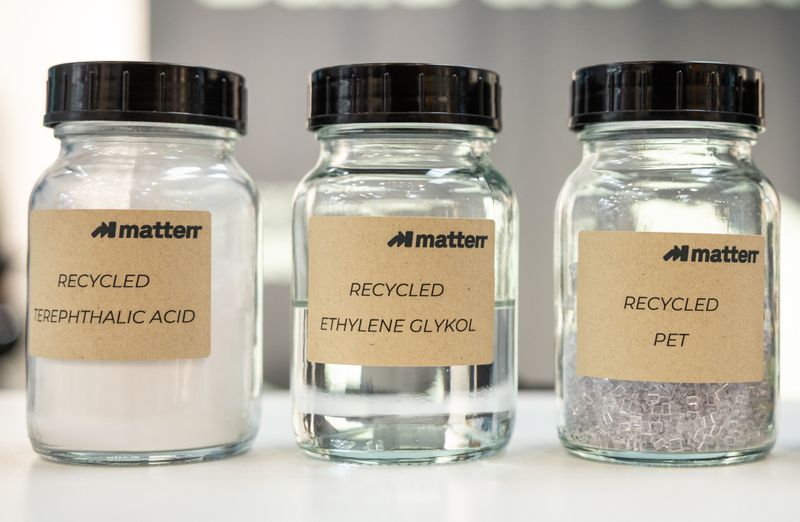
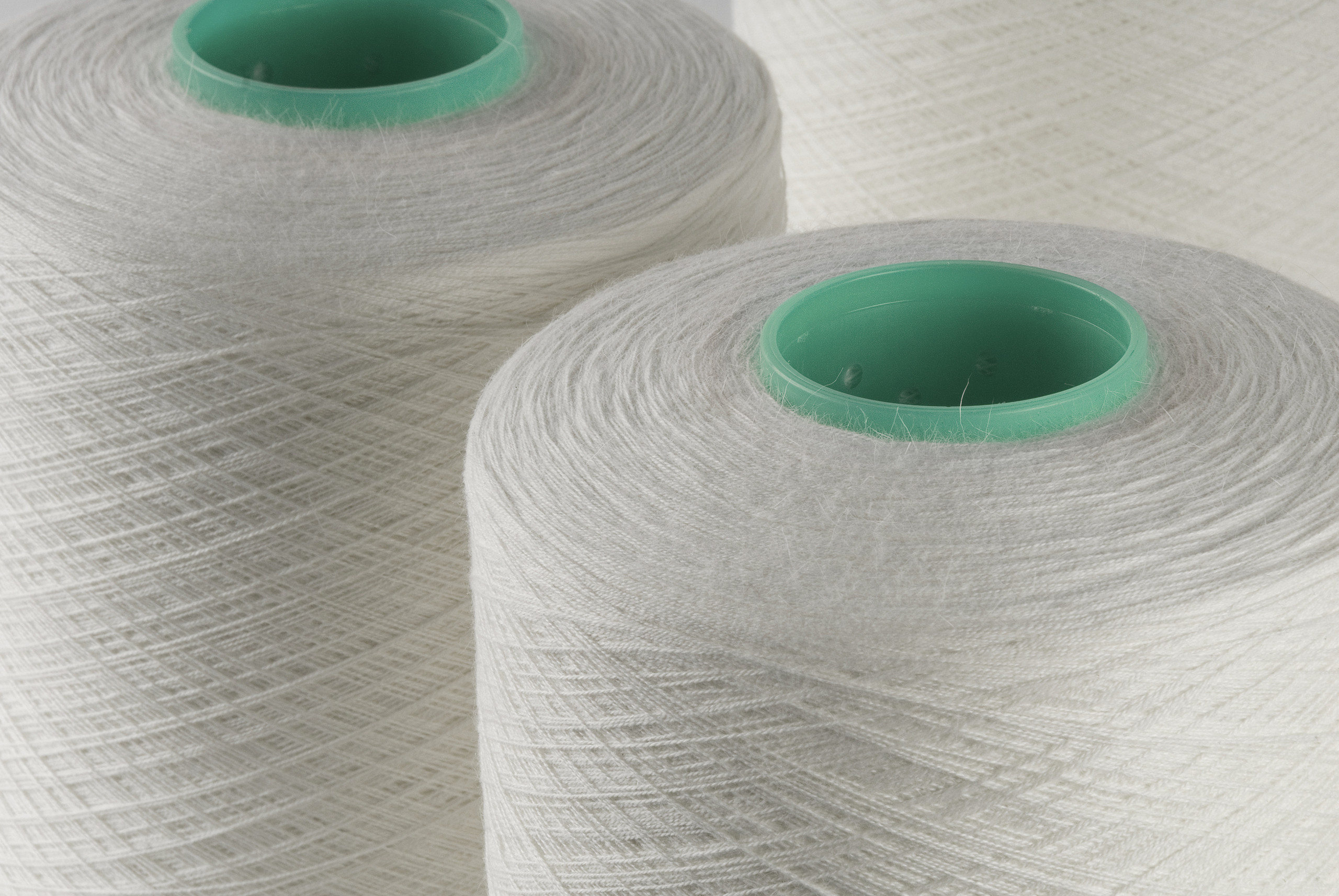
Polyester Recycling: From Textile to Monomer and Back Again — The startup Matterr breaks down complex polyester-containing textile and packaging waste back into monomers of virgin quality.
(Bild: Philipp Herfort Photography/Matterr)
At a Glance
Depolymerization as a Key Technology for Polyester Recycling
Advantages Over Mechanical Recycling for Complex Waste Streams
Industrial Implementation and Scaling at the Knapsack Chemical Park Site
Framework Conditions and Prospects for Closed-Loop Polyester Cycles
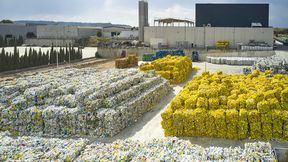
Polyester is produced in large quantities worldwide and is primarily derived from fossil-based raw materials. At the same time, the volume of polyester-containing waste is increasing—ranging from textiles and packaging to technical applications. A significant portion of these materials is landfilled or used for energy recovery, as complex mixed streams can hardly be recycled using today’s conventional methods. Only a small percentage is actually recycled into new fibers.
This is where Matterr comes in. Founded in Braunschweig in 2023, the company has developed a depolymerization technology that converts mixed polyester waste into raw materials of virgin-grade quality, thereby enabling their direct reintroduction into existing production chains.
About 110 million metric tons of polyester are produced annually, primarily for textiles. However, only a small portion is recycled—the rest usually ends up in landfills or incinerators; this is exactly where Matterr comes in.
Chemical recycling encompasses various technological approaches that must be considered separately. In Matterr’s depolymerization process, the functional ester bonds are selectively broken. This produces specific monomers—terephthalic acid (TPA) and monoethylene glycol (MEG)—which can be immediately reintroduced into PET production.
Matterr’s patented process breaks down mixed polyester waste into precisely these building blocks. After purification, TPA and MEG are available in virgin-equivalent quality and can be used in existing polymerization plants without any modifications. The result is polyester of virgin-grade quality.
Chemical recycling complements mechanical processes
Unlike conventional recycling methods, the polymer is not retained during depolymerization. Instead, the chains are specifically broken down into their chemical building blocks. This allows impurities to be separated and the monomers to be completely purified.
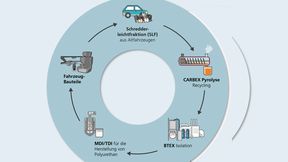
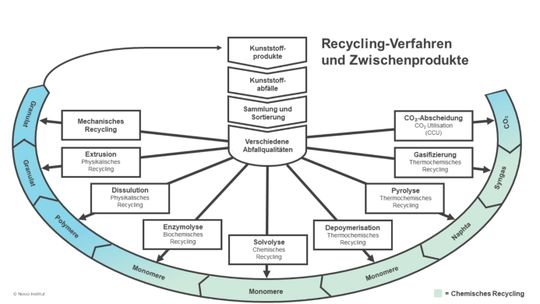
An overview of various plastic recycling processes.
Mechanical recycling quickly reaches its limits, particularly with textiles: fiber shortening, thermal stress, and contamination from dyes, additives, or mixed materials quickly lead to a loss of quality. Chemical recycling offers the possibility of a repeatable recycling process—regardless of color, previous use, or application.
Focus on Complex Waste Streams
Matterr specifically targets material streams containing polyester that are only partially recyclable—or not recyclable at all—through mechanical means. These include mixed and dyed textiles, finished fabrics, polyester-based packaging, and industrial waste. Even complex post-consumer and post-industrial fractions containing additives or featuring multilayer structures can be processed.
In chemical recycling, plastic waste is processed and converted into hydrocarbon-rich intermediate products (secondary raw materials). These secondary raw materials—such as synthesis gas, monomers, or pyrolysis oil—can then be used to produce new plastics.
The goal is to enable value creation in areas where, today, downcycling, export, or energy recovery are the predominant practices.
Heterogeneous Input, Defined Output: Virgin-Quality Monomers
Processing highly variable, heterogeneous material streams places high demands on process control. The output must be suitable for industrial use and meet consistent specifications.
The focus is on three aspects: stable process control despite fluctuating input qualities, purification of the monomers to a quality equivalent to virgin monomers, and the industrial robustness of the overall process. Operational reliability, availability, maintainability, and consistent product quality are crucial for the large-scale use of the monomers.
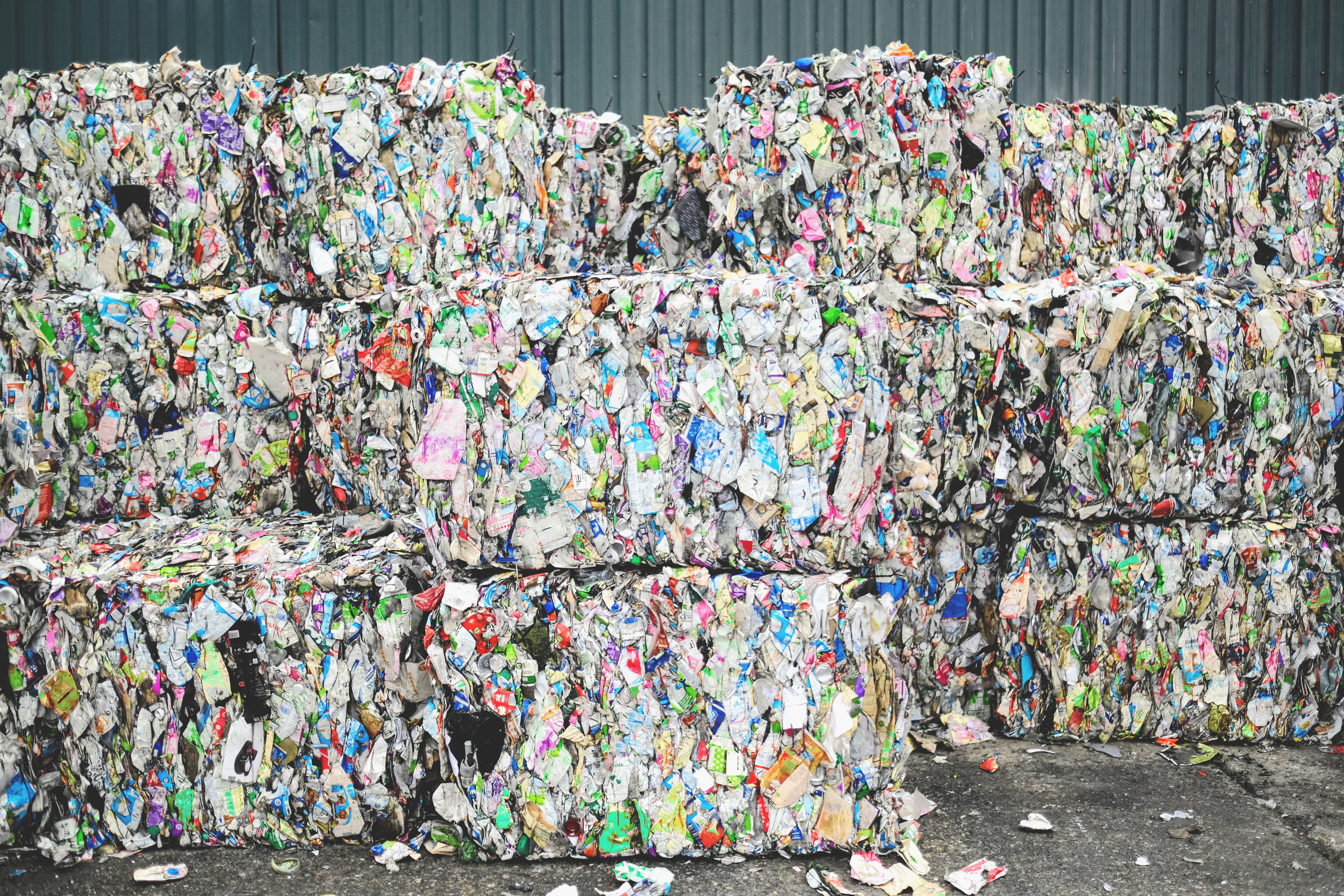
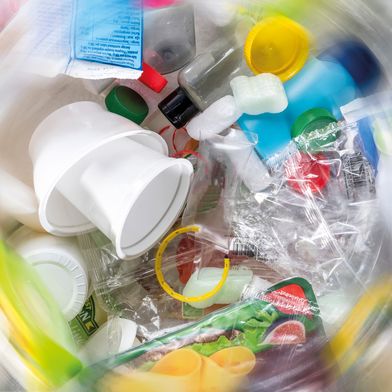
Heavily contaminated or mixed plastics can be given a new lease on life through chemical recycling.
Efficiency has also played a central role at Matterr from the very beginning. In a market that has been scaled and cost-optimized for decades, new processes must not only work technically but also be economically viable—especially in a environment of high energy prices.
New Depolymerization Plant Planned for the Knapsack Chemical Park
This year, Matterr will begin construction of an industrial depolymerization plant with an annual capacity of at least 10,000 metric tons at the Knapsack Chemical Park in Hürth (North Rhine-Westphalia). The site is located in one of Europe’s most important chemical and industrial regions. The Knapsack Chemical Park offers established infrastructure, a skilled workforce, and many years of experience in plant operation and permitting.
Date: 08.12.2025
Naturally, we always handle your personal data responsibly. Any personal data we receive from you is processed in accordance with applicable data protection legislation. For detailed information please see our privacy policy.
Consent to the use of data for promotional purposes
I hereby consent to Vogel Communications Group GmbH & Co. KG, Max-Planck-Str. 7-9, 97082 Würzburg including any affiliated companies according to §§ 15 et seq. AktG (hereafter: Vogel Communications Group) using my e-mail address to send editorial newsletters. A list of all affiliated companies can be found here
Newsletter content may include all products and services of any companies mentioned above, including for example specialist journals and books, events and fairs as well as event-related products and services, print and digital media offers and services such as additional (editorial) newsletters, raffles, lead campaigns, market research both online and offline, specialist webportals and e-learning offers. In case my personal telephone number has also been collected, it may be used for offers of aforementioned products, for services of the companies mentioned above, and market research purposes.
Additionally, my consent also includes the processing of my email address and telephone number for data matching for marketing purposes with select advertising partners such as LinkedIn, Google, and Meta. For this, Vogel Communications Group may transmit said data in hashed form to the advertising partners who then use said data to determine whether I am also a member of the mentioned advertising partner portals. Vogel Communications Group uses this feature for the purposes of re-targeting (up-selling, cross-selling, and customer loyalty), generating so-called look-alike audiences for acquisition of new customers, and as basis for exclusion for on-going advertising campaigns. Further information can be found in section “data matching for marketing purposes”.
In case I access protected data on Internet portals of Vogel Communications Group including any affiliated companies according to §§ 15 et seq. AktG, I need to provide further data in order to register for the access to such content. In return for this free access to editorial content, my data may be used in accordance with this consent for the purposes stated here. This does not apply to data matching for marketing purposes.
Right of revocation
I understand that I can revoke my consent at will. My revocation does not change the lawfulness of data processing that was conducted based on my consent leading up to my revocation. One option to declare my revocation is to use the contact form found at https://contact.vogel.de. In case I no longer wish to receive certain newsletters, I have subscribed to, I can also click on the unsubscribe link included at the end of a newsletter. Further information regarding my right of revocation and the implementation of it as well as the consequences of my revocation can be found in the data protection declaration, section editorial newsletter.
For chemical recycling processes, a reliable supply of energy and utilities, integrated site services, and comprehensive safety and environmental strategies are particularly important. At the same time, the circular economy is firmly anchored in North Rhine-Westphalia’s industrial policy. From here, integration into existing value chains and scaling up into the European market can be achieved.
Smart Industrial Policy as a Prerequisite for Investment
Long-term investments in industrial facilities require reliable regulatory guidelines. At the European level, a stable regulatory framework is necessary to structurally embed recycled raw materials in the market and ensure investment security.
Mandatory recycled-content requirements can also help ensure demand. Equally crucial are technology-neutral recognition of chemical recycling and practical mass balance systems throughout the value chain. Matterr is also committed to this cause at the industry association level: The startup is a member of Plastics Europe Germany, the association of plastics manufacturers, and actively participates in the discussion on industrial policy through the association.
Without competitive energy prices, predictable permitting processes, and consistent legislation, new European recycling facilities risk facing a structural competitive disadvantage.
Mechanical and chemical recycling of polyester reduces the consumption of fossil resources, decreases dependence on imported raw materials, and prevents environmental pollution caused by packaging and textile waste.
In the long term, Matterr is pursuing three areas of development: continuous process optimization in terms of yield, energy efficiency, and stability; further capacity expansion within the industrial network; and the licensing of the technology through partners.
The goal is to integrate the depolymerization of material streams containing polyester more broadly into existing production networks and, in the long term, to roll it out internationally.
FAQ: Chemical Recycling of Polyester
Why is polyester so difficult to recycle? Polyester is often found in complex mixtures—such as in textiles containing additives, dyes, or other fibers. Mechanical recycling quickly leads to a loss of quality in these cases. What is the difference between chemical and mechanical recycling? In mechanical recycling, the polymer is preserved but often loses quality. In chemical recycling, it is broken down into its basic building blocks and can then be reconstituted to virgin-grade quality. How does depolymerization work at Matterr? The process specifically breaks the ester bonds in the polyester. This produces the monomers terephthalic acid (TPA) and monoethylene glycol (MEG), which can be directly reused for PET production. What types of waste streams can be processed? In addition to traditional PET waste, the process primarily handles complex materials such as mixed textiles, dyed fabrics, packaging, or industrial residues. What advantages does the process offer the industry? It enables true circularity with consistent material quality, regardless of the material’s color or previous use—a decisive advantage over downcycling. What challenges still exist today? In addition to technical scaling, economic factors such as energy prices and a stable regulatory framework are crucial for widespread industrial adoption. What role does the planned facility at the Knapsack Chemical Park play? It is an important step toward the industrialization of the technology and is intended to demonstrate that chemical recycling can also be operated economically on a large scale.
Melanie Hackler Melanie Hackler ist CEO von Matterr und verantwortet die strategische Weiterentwicklung, Governance und Finanzierung einer innovativen Polyester-Depolymerisationstechnologie. Ihr Fokus liegt darauf, technologische Innovation in skalierbare, asset-intensive Industrie zu überführen und nachhaltige industrielle Wertschöpfung aufzubauen.Sie verfügt über mehr als 20 Jahre Erfahrung in leitenden Management- und Interim-Rollen in internationalen Industrie- und Produktionsumfeldern – von der Tätigkeit als Business Partner für Vorstände multinationaler Unternehmen bis hin zu Geschäftsführungs- und Vorstandspositionen. Diese Laufbahn prägt ihr tiefes Verständnis für Strategie, operative Umsetzung und Organisationsentwicklung in Europa, Nordamerika und Asien.Neben ihrer Rolle bei Matterr berät sie Organisationen zu Strategie, Struktur und Wachstum. Der Schwerpunkt liegt auf robusten Geschäftsmodellen und belastbaren Governance-Strukturen für langfristige Entwicklung. Darüber hinaus engagiert sie sich als Autorin und Panelistin zu Führung, Innovation und wertebasierter Unternehmensentwicklung.