Rosin as an Additive for Starch-Based PolymersFrom Tree Resin to Functional Additive
From
Synco de Vogel, Synthomer Germany | Translated by AI
7 min Reading Time
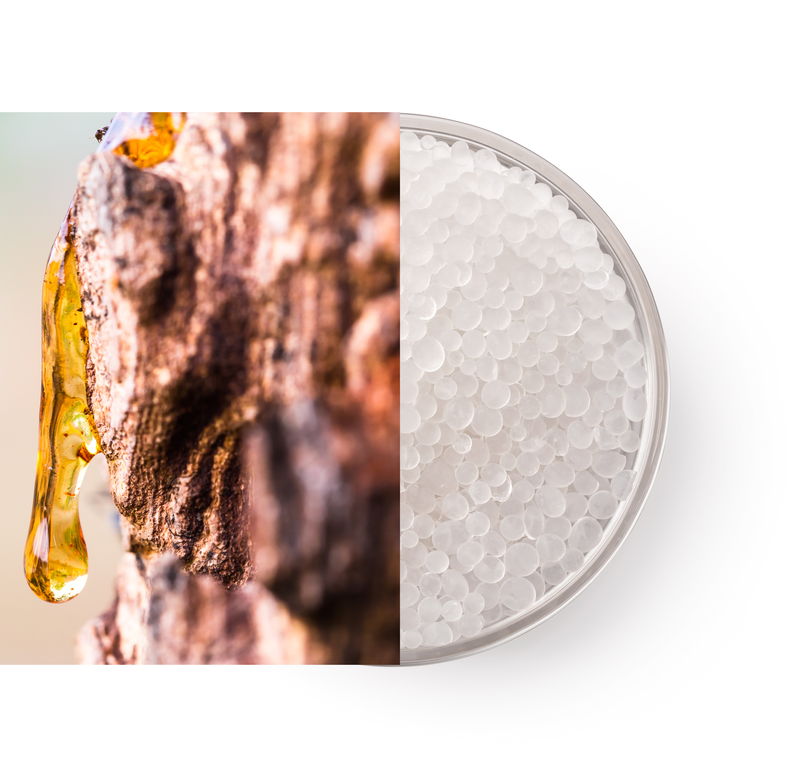
A new approach to an old problem: For decades, starch-based bioplastics have been considered a promising alternative to fossil-based materials. However, their industrial use has been limited by one challenge: insufficient mechanical properties at high starch content. Modified tree resins can change that.
Chemically modified tree resins can be used as functional additives to improve the properties of bioplastics.
(Bild: Synthomer)
Tree resins (also known as colophony or rosin) are primarily extracted from coniferous trees and are used in a variety of industrial applications—particularly as processing aids and binders. Synthomer Deutschland, based in Marl, has now expanded the range of applications for these resins and has been nominated for the Biopolymer Innovation Award for this achievement.
Synthomer modifies rosin through processes such as esterification and hydrogenation to improve properties such as thermal stability, oxidation resistance, and surface wetting. This makes the resins suitable as functional additives for enhancing the properties of biopolymer compounds.
Resin Chemistry for Targeted Functionalization
The key lies not only in the selection of the base polymer, but also in the targeted adjustment of rheology, interfacial properties, and morphology. This is precisely where rosin resins come into play. As bio-based, functional resin additives, they can facilitate the processing of PLA/starch/glycerin systems, improve phase bonding, and at the same time open up new possibilities for compostable films, injection-molded parts, and filled biopolymer compounds.
Rosins are based on natural resin acids derived from renewable raw materials. Through hydrogenation, esterification, or targeted functionalization, polarity, acid number, softening point, and compatibility can be adjusted. These parameters are crucial when resins are used not only as processing aids but also as functional morphology and interfacial additives in biopolymers.
Why PLA/starch systems are difficult to formulate
PLA is rigid, relatively hydrophobic, and susceptible to hydrolysis. Starch is polar, hydrophilic, and requires appropriate plasticization—often with glycerin—for thermoplastic processing. PLA/starch/glycerin blends therefore combine two very different material properties.
Synthomer rosins can be used in PLA/starch/glycerin systems as effective process and morphology modifiers.
(Source: Synthomer)
Without proper modification, coarse phase structures, interfacial defects, and local stress peaks often develop. This results in limited elongation, low tensile strength, and unstable processing. Particularly at high starch loadings, the starch fraction is then no longer utilized as a functional component of the material but increasingly acts as a filler with defect-like characteristics.
Rosin resins can change this situation. Their hydrophobic resin matrix exhibits an affinity for polyester phases such as PLA, PBAT, or PHA. At the same time, polar groups can interact with starch, glycerin, or other organic fillers. This improves the wetting of the phases, makes the melt easier to process, and promotes the formation of finer morphologies.
Foralyn and Pentalyn: Robust Processing and Improved Morphology
The resin additives Foralyn and Pentalyn are prime examples of hydrogenated rosin derivatives that can be used as effective process and morphology modifiers in PLA/organic filler/glycerin systems. In tested formulations, Pentalyn or Foralyn significantly improves processability, particularly when high proportions of organic fillers are present.
The effect is multidimensional. On the one hand, melt viscosity decreases, which facilitates mixing, dispersion, and discharge in the extruder. On the other hand, the resin improves interfacial wetting between the polar fraction of the fillers and the polyester phase. The result is a more homogeneous structure with improved stress transfer.
This is particularly relevant for film applications. In these applications, it is not only tensile strength and elongation that are crucial, but also tear resistance, tear initiation, and process reliability on existing equipment. Foralyn can help bring organic, filler-rich systems into a processable range without having to soften the formulation solely by increasing the plasticizer content.
Technical Distinction from Low-Acid Resin Formulations
There are technical PLA/starch formulations on the market that focus heavily on rosin resin derivatives with very low acidity, particularly resins with a very low acid number. This strategy can be useful when the primary goal is maximum chemical inertness toward hydrolysis-sensitive polyesters.
Date: 08.12.2025
Naturally, we always handle your personal data responsibly. Any personal data we receive from you is processed in accordance with applicable data protection legislation. For detailed information please see our privacy policy.
Consent to the use of data for promotional purposes
I hereby consent to Vogel Communications Group GmbH & Co. KG, Max-Planck-Str. 7-9, 97082 Würzburg including any affiliated companies according to §§ 15 et seq. AktG (hereafter: Vogel Communications Group) using my e-mail address to send editorial newsletters. A list of all affiliated companies can be found here
Newsletter content may include all products and services of any companies mentioned above, including for example specialist journals and books, events and fairs as well as event-related products and services, print and digital media offers and services such as additional (editorial) newsletters, raffles, lead campaigns, market research both online and offline, specialist webportals and e-learning offers. In case my personal telephone number has also been collected, it may be used for offers of aforementioned products, for services of the companies mentioned above, and market research purposes.
Additionally, my consent also includes the processing of my email address and telephone number for data matching for marketing purposes with select advertising partners such as LinkedIn, Google, and Meta. For this, Vogel Communications Group may transmit said data in hashed form to the advertising partners who then use said data to determine whether I am also a member of the mentioned advertising partner portals. Vogel Communications Group uses this feature for the purposes of re-targeting (up-selling, cross-selling, and customer loyalty), generating so-called look-alike audiences for acquisition of new customers, and as basis for exclusion for on-going advertising campaigns. Further information can be found in section “data matching for marketing purposes”.
In case I access protected data on Internet portals of Vogel Communications Group including any affiliated companies according to §§ 15 et seq. AktG, I need to provide further data in order to register for the access to such content. In return for this free access to editorial content, my data may be used in accordance with this consent for the purposes stated here. This does not apply to data matching for marketing purposes.
Right of revocation
I understand that I can revoke my consent at will. My revocation does not change the lawfulness of data processing that was conducted based on my consent leading up to my revocation. One option to declare my revocation is to use the contact form found at https://contact.vogel.de. In case I no longer wish to receive certain newsletters, I have subscribed to, I can also click on the unsubscribe link included at the end of a newsletter. Further information regarding my right of revocation and the implementation of it as well as the consequences of my revocation can be found in the data protection declaration, section editorial newsletter.
Synthomer also takes a broader technical approach. Resins with acid numbers above this very low-acid range open up additional possibilities: They can interact more strongly with interfacial forces, have a more significant impact on rheology, and specifically contribute to degradability in compostable systems. The key factor here is not a single parameter, but rather the interplay of acid number, softening point, molecular weight, polarity, and process window.
This distinction is technically relevant: Low-acid resin esters are often very stable, but they are not always the most effective interfacial additives for highly filled starch-polyester systems. More functional rosin resins can provide additional flexibility here—especially where high starch loading, good processability, and controlled compostability are all required simultaneously.
Accelerators for home composting systems
Foral AX-E is a particularly interesting example of a more functional synthomer rosin. Due to its higher acid number, it introduces greater polarity and reactivity into the system. In PLA/starch/glycerin compounds, this can significantly reduce melt viscosity and promote the formation of a finer morphology.
This effect is particularly relevant for home composting applications. While many PLA-based systems degrade only slowly under home composting conditions, Foral AX-E can help accelerate the hydrolysis of polyester-based phases under the influence of moisture and heat. This makes it possible to design formulations not only for processing and mechanical properties, but also for a defined rate of degradation.
In tested systems, starch content levels of over 70% can be achieved. This is technically significant because starch is then no longer used merely as an inexpensive filler, but as the dominant, renewable component of the material. In such formulations, Foral AX-E can act as a processing aid, an interfacial modifier, and a compostability enhancer.
At the same time, this strategy requires careful process control. Moisture, temperature, and residence time must be monitored, as acidic groups can accelerate the hydrolysis of PLA. This is an advantage for short-lived, home-compostable films. For longer-lasting molded parts, the formulation must be stabilized accordingly or adapted to use less reactive resin types.
Beyond PLA/Starch: PHA, PBAT/PLA, and Organic Fillers
The benefits of Synthomer rosins are not limited to traditional PLA/starch/glycerin systems. In PHA compounds, PBAT/PLA combinations, and other bio-based plastic systems, these resins can also help adjust flow behavior, compatibility, and filler adhesion.
The use of organic fillers derived from food waste is particularly interesting. When these waste materials are cryogenically ground, they produce fine particles with a high specific surface area. In combination with PLA, PHA, or other compostable polymers, these can be used to develop cost-effective bioplastics. Here, too, the technical challenge lies at the interface: Organic fillers are typically polar, hygroscopic, and chemically heterogeneous. Without modification, they often impair flow behavior, impact strength, and elongation at break.
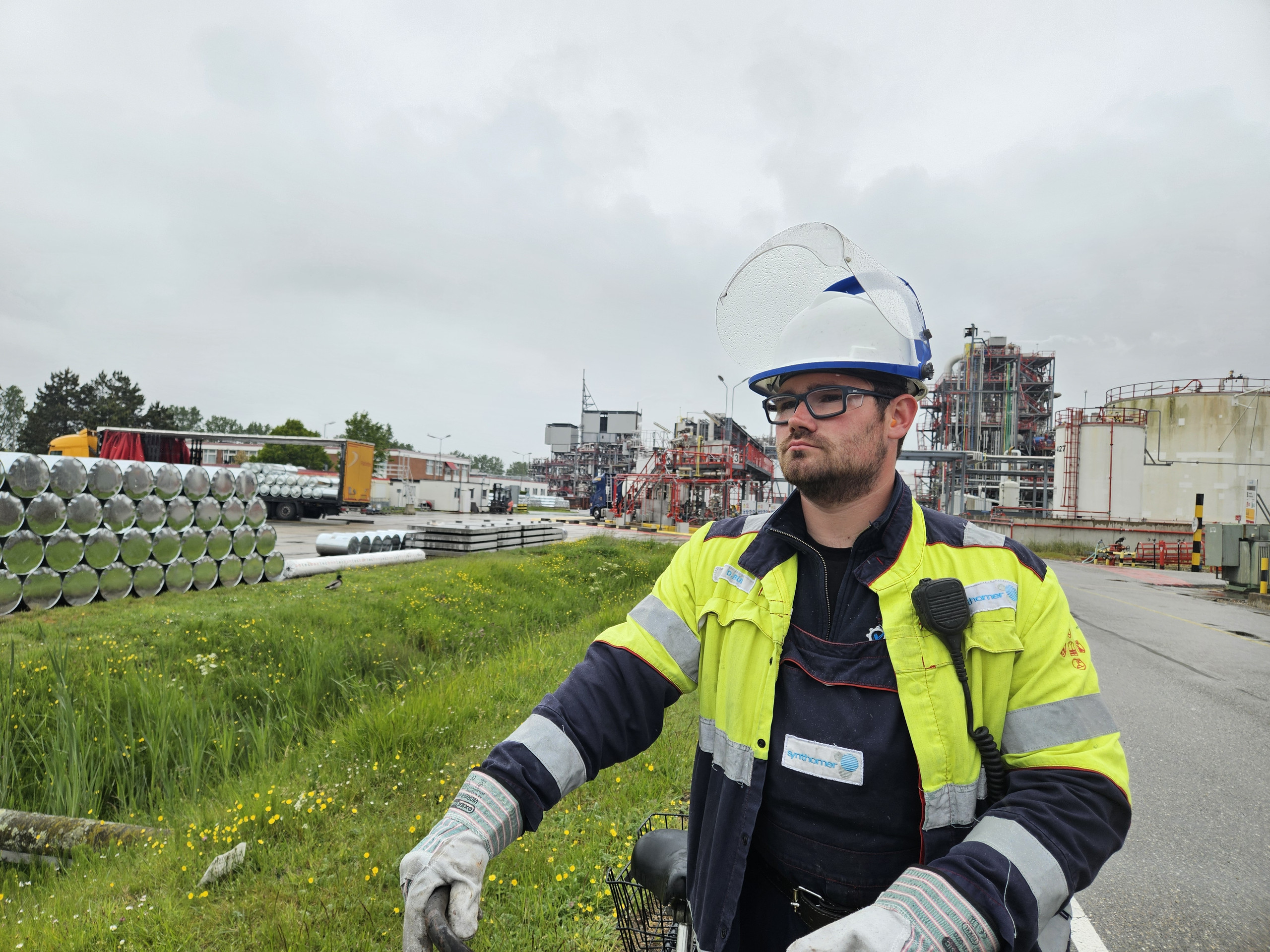
Production of Synthomer Rosins in Marl, Germany
(Source: Synthomer)
Synthomer rosins can bridge this gap. They improve the wetting of organic particles, facilitate dispersion during the compounding process, and reduce melt viscosity. This allows for the processing of higher filler contents without compromising compound stability or causing a disproportionate decline in mechanical properties.
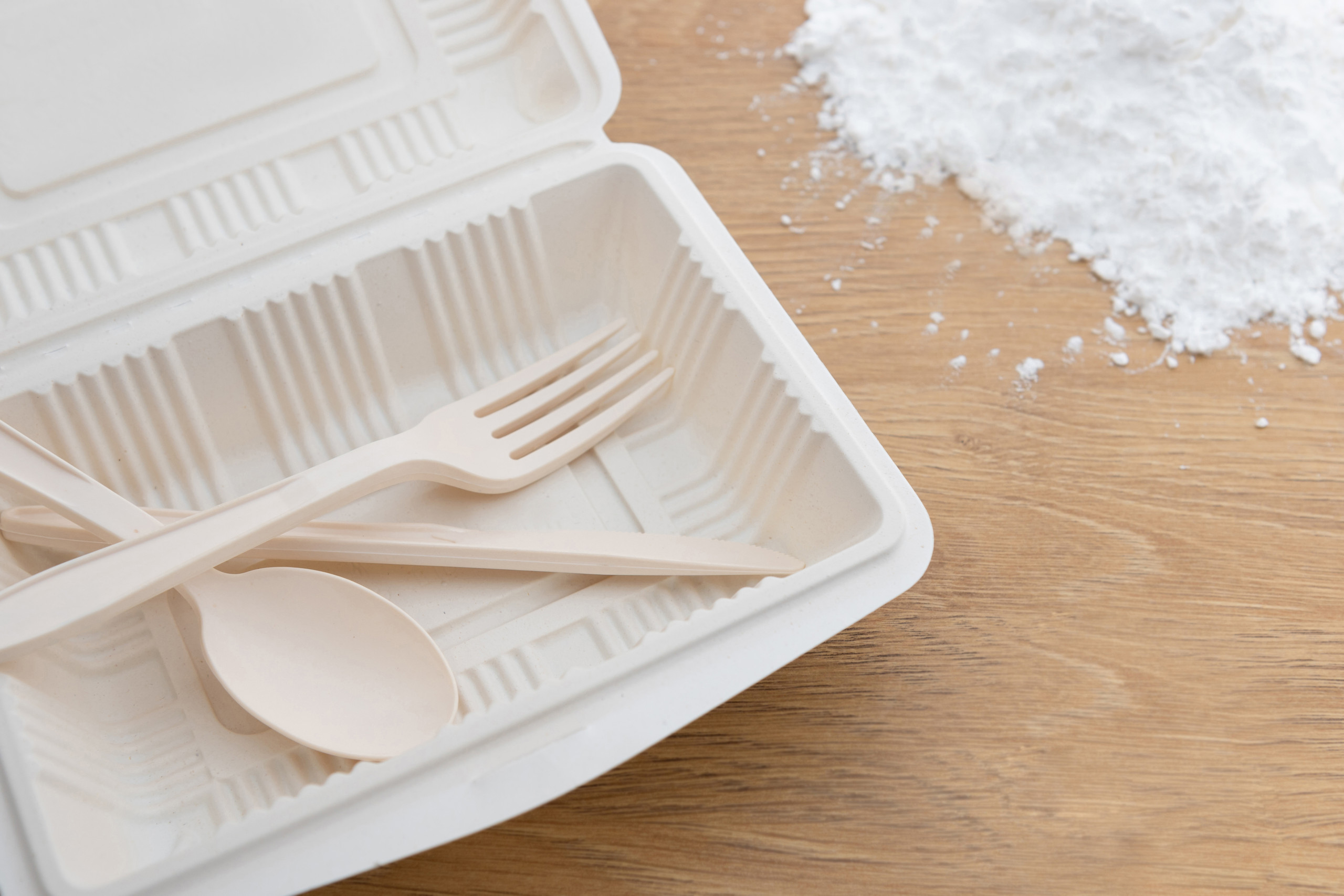
This opens up new applications: cost-effective injection-molded parts, technical packaging, agricultural applications, single-use items with a higher bio-based content, or compostable films with functional fillers. It is crucial that the resins are not considered in isolation, but rather as part of a modular formulation system consisting of polymer, starch or filler, plasticizer, and process window.
Benefits in Terms of Application Technology
There are several advantages for processors:
lower melt viscosity and, as a result, more stable extrusion,
better dispersion of high starch or filler content,
improved elongation and tensile strength due to a finer morphology,
a wider process window on existing systems,
Ability to specifically adjust home compostability,
Use of low-cost, biogenic fillers derived from waste streams.
In this way, Synthomer rosins address a key trade-off in biopolymer development: achieving high biogenic content, industrial processability, and sufficient mechanical performance all at the same time.
Conclusion
Starch-based biopolymers do not have to be limited by high filler content or poor mechanical properties. With the right rosins, rheology, interfacial behavior, and degradation behavior can be specifically tailored. A Synthomer rosin offers a robust path to improved processability and morphology. Foral AX-E also opens up new possibilities for formulations that are rapidly compostable at home and contain very high starch loads.
This technology is not limited to PLA/starch. PHA, PBAT/PLA systems, and organic fillers derived from food waste offer further avenues for cost-effective, bio-based, and compostable materials.
The relevance of this approach was also recognized externally: Synthomer Rosins was a finalist in the Biopolymer Awards 2026 as part of the Biopolymer Conference in Halle (Saale), Germany. As a result, Synthomer rosins are increasingly coming into focus in the plastics processing industry as functional additives for the next generation of biopolymers.
Synco de Vogel ist als Polymer Technologist im Bereich Product & Application Development bei Synthomer Deutschland in Marl tätig. Der erfahrene Experte für Kunststofftechnologie fokussiert sich primär auf die Modifizierung von Polymeren. Durch den Einsatz natürlicher Harze (wie der Foral-Reihe von Synthomer) optimiert er die oft kritischen Verarbeitungs- und Performance-Eigenschaften biobasierter Polymere.



:quality(80)/p7i.vogel.de/wcms/97/0c/970c52fd142e10a3c4566168037ca637/materialloesungen-pressefoto-1890x1329v1.jpeg "rPET pellets: At Fraunhofer IAP, terephthalic acid is recovered from PET to produce new polymers for bottles, fibers, and films. The yellowish to grayish hues are due to the recycled raw material. Through the targeted addition of additives, the color can be adjusted to produce even colorless material. (Bild: Fraunhofer IAP / Romina Schönefeld)")
:quality(80)/p7i.vogel.de/wcms/b7/76/b776134c0507ea4671f44226bcfc4d23/materialloesungen-pressefoto-1890x1329v1.jpeg "rPET pellets: At Fraunhofer IAP, terephthalic acid is recovered from PET to produce new polymers for bottles, fibers, and films. The yellowish to grayish hues are due to the recycled raw material. Through the targeted addition of additives, the color can be adjusted to produce even colorless material. (Bild: Fraunhofer IAP / Romina Schönefeld)")
:quality(80)/p7i.vogel.de/wcms/ed/13/ed1372deb944662e350a3a7cb7722941/materialloesungen-pressefoto-1890x1329v1.jpeg "rPET pellets: At Fraunhofer IAP, terephthalic acid is recovered from PET to produce new polymers for bottles, fibers, and films. The yellowish to grayish hues are due to the recycled raw material. Through the targeted addition of additives, the color can be adjusted to produce even colorless material. (Bild: Fraunhofer IAP / Romina Schönefeld)")
:quality(80)/p7i.vogel.de/wcms/59/04/590479528acbd2eff1f451c79dd298b5/materialloesungen-pressefoto-1890x1329v1.jpeg "rPET pellets: At Fraunhofer IAP, terephthalic acid is recovered from PET to produce new polymers for bottles, fibers, and films. The yellowish to grayish hues are due to the recycled raw material. Through the targeted addition of additives, the color can be adjusted to produce even colorless material. (Bild: Fraunhofer IAP / Romina Schönefeld)")
:quality(80)/p7i.vogel.de/wcms/ce/ee/ceeeef086bfb174ebdda31c0dfccaf9a/2-weiss-blick-in-produktion-dji-0095-kopiev1.jpeg "A look inside the injection molding shop at Weiss Kunststoffverarbeitung in Illertissen, Bavaria. (Bild: White)")
:quality(80)/p7i.vogel.de/wcms/33/08/3308710c85715e917ec1baf9767fe4a7/2026-ewikon-wago-hei-kanalv1.png "Ewikon's 48-cavity hot runner as a production mold. (Bild: Ewikon)")
:quality(80)/p7i.vogel.de/wcms/a2/a5/a2a516dc69b4c8f8ad6f475ae6746a08/sxkh-bei-hpf-gesamtwerkzeugv1.png "The HMG 70XS1510 trimming press from the Chinese manufacturer SXKH combines all the functions required by toolmakers at HPF in a very compact design. The deciding factors in the purchase were the purchase price—and confidence in the quality of established international key components. (Bild: Pergler Media)")
:quality(80)/p7i.vogel.de/wcms/19/5f/195fdb6e09629994f1d6e3cf94dac8d8/bild-1-exam510-ultem9085v1.jpeg "Granular printing (FGF) makes it cost-effective to produce large-format functional parts from high-performance polymers such as Ultem 9085. (Bild: NEW AIM3D)")
:quality(80)/p7i.vogel.de/wcms/d5/c4/d5c46d40e1ae062370d058e2c006c376/dimitrisvetsikas1969-belgium-3595351v1.jpeg "European Plastics Industry Calls for Immediate Action to Address the Industry Crisis (Bild: dimitrisvetsikas1969)")
:quality(80)/p7i.vogel.de/wcms/e6/63/e663f0e1dd8818fc501c6fb5c5d33712/19-5689-circular-economy-of-resourcesv1.jpeg "Plastic waste from the average household is very heterogeneous. Only the right mix of technologies can turn all types of plastic waste into a new source of raw materials. (Bild: BASF)")
:quality(80)/p7i.vogel.de/wcms/31/5b/315b714f653484179232fbc4d6d79543/sesotec-img-andreas-hanus-25-20-281-29v1.jpeg "Andreas Hanus, Head of AI Development at Sesotec: “AI will not replace traditional sorting technology, but will intelligently enhance it.” (Bild: Sesotec)")
:quality(80)/p7i.vogel.de/wcms/74/5f/745f512239689819275af39a82f59860/b-brenkenv1.jpeg "Dr. Benedikt Brenken, Director of R-Cycle: \"The digital product passport will fundamentally change plastic recycling.\" (Bild: R-Cycle)")
:quality(80)/p7i.vogel.de/wcms/40/6d/406d05534ab4d28194bd29699e023e67/2026-09-09-uni-kiel-aufmacherv1.jpeg "These self-polarizing polymer coatings could be used in a wide variety of electronic components in the future. (Bild: University of Kiel/C. Anders)")
:quality(80)/p7i.vogel.de/wcms/5d/46/5d46e098a7cfaebdd9643df47153c5af/aufmacherv1.png "The PPWR imposes new requirements on packaging: What impact does this have on mechanical engineering? (Bild: KI-generiert / Dall-E)")
:quality(80)/p7i.vogel.de/wcms/70/13/7013fe202fb4790708f62f69cd0c83d4/aufmacher-st-c3-a4rkeschaumfoliev1.png "Using thermoplastic starch as a base, researchers at the IKV successfully produced a flexible foam film using physical blowing agents. (Bild: IKV)")
:quality(80)/p7i.vogel.de/wcms/d1/2b/d12b536ba3b382d0d138e342ac1038e6/03--20pm-imm-mgsv1.jpeg "MGS Richfield Site (Bild: MGS)")
:quality(80)/p7i.vogel.de/wcms/90/9c/909cf6eb1b91a9a84ff535033ea9b048/honeycombv1.jpeg "The composite material made of epoxy and glass fibers not only protects against flames but is also fully recyclable. (Bild: Empa)")
:quality(80)/p7i.vogel.de/wcms/6a/d5/6ad5980b0c965409c71582fc59145e13/1920-covestro-new-covestro-headquartersv1.jpeg "Covestro's corporate headquarters in Leverkusen (Bild: Covestro)")
:quality(80)/p7i.vogel.de/wcms/db/74/db741079d26ad9e7a69278fde45e79c7/aufmacherv1.png "(Bild: KI-generiert / Dall-E)")
:quality(80)/p7i.vogel.de/wcms/b3/65/b3654df434f4d31e1fda3c79bc7bb4b0/nakura-20kunstrasenteppich-20ohne-20verf-c3-bcllungv1.jpeg "Tecnaro has developed synthetic turf fibers using a specially formulated Arboblend blend that offers high resistance to heat, UV rays, and weathering, and, because it is niobium-based, sequesters CO₂ over the long term. (Bild: Tecnaro)")

:quality(80)/p7i.vogel.de/wcms/70/13/7013fe202fb4790708f62f69cd0c83d4/aufmacher-st-c3-a4rkeschaumfoliev1.png "Using thermoplastic starch as a base, researchers at the IKV successfully produced a flexible foam film using physical blowing agents. (Bild: IKV)")
:quality(80)/p7i.vogel.de/wcms/1a/dd/1add7f85f1c8fdb5dc4b86c224c8010b/bio-20net-2c-20plastrans-2c-20meshpack-2c-20biologiq-20-285-29v1.png "The Bio-Net thus combines key characteristics of conventional plastic nets—particularly mechanical performance and efficient use of materials—with the advantages of biodegradability and compostability. (Bild: Plastrans)")