Biopolymers in Industrial ApplicationsHow Biopolymers Make Artificial Turf Microplastic-Free
A guest post by
Dr. Dirk Schawaller, Research & Development at Tecnaro
| Translated by AI
4 min Reading Time
Biopolymers are finding new industrial applications. The NaKura project demonstrates how bio-based and biodegradable materials are making microplastic-free artificial turf possible for the first time. This innovative material concept combines high technical performance with environmental sustainability while also addressing future regulatory requirements.
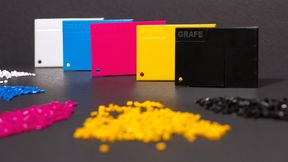
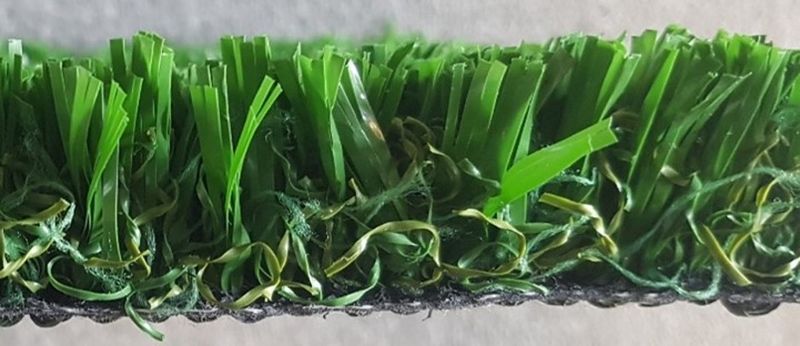
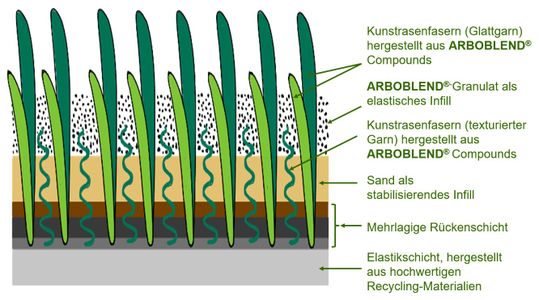
Tecnaro has developed synthetic turf fibers using a specially formulated Arboblend blend that offers high resistance to heat, UV rays, and weathering, and, because it is niobium-based, sequesters CO₂ over the long term.
(Bild: Tecnaro)
NaKura marks a turning point in the development of sustainable sports infrastructure. With the world’s first microplastic-free artificial turf sports field made from bio-based materials, the project demonstrates how modern biopolymer technology can effectively address one of the biggest environmental impacts of sports.
Artificial turf surfaces are indispensable today, but the environmental consequences of conventional plastic granules are severe: Across the EU, tens of thousands of metric tons of microplastics from artificial turf end up in soil and water bodies every year. NaKura proves that these emissions no longer have to be considered unavoidable. The innovation is based on the bio-based Arboblend materials from Tecnaro GmbH, which were used to develop both the infill granules and the artificial turf fibers. The novel infill is bio-based and biodegradable in soil and water, yet remains stable over the long term within the artificial turf system—a crucial factor, as an infill that decomposes during use would be technically unusable.
Biopolymers as a Solution to the Microplastics Problem
Material development therefore had to reconcile two conflicting requirements: stability within the system and biodegradability in the environment. The fact that this was achieved marks one of the key innovations of this project.As a result, it completely replaces conventional plastic pellets and prevents microplastic emissions right at the source. In addition, artificial turf fibers were developed using a specially formulated Arboblend formulation, which exhibits high resistance to temperature, UV radiation, and weathering and, due to its niobium-based composition, sequesters CO2 over the long term. The system’s elastic layer consists of single-source recycled plastics and expands the concept to include a consistently circular-economy-oriented approach.
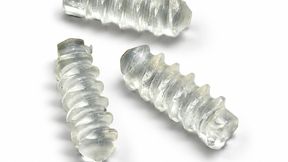
The innovative infill is bio-based and biodegradable in soil and water, and remains stable over the long term within the artificial turf system—a crucial factor, since an infill that breaks down during use would be technically unusable.
(Bild: Tecnaro)
The combination of these material innovations results in a high-quality, durable, and environmentally beneficial artificial turf system that surpasses conventional solutions both technically and ecologically, without compromising on playing quality or safety. NaKura demonstrates that sustainable sports surfaces are not only possible but also high-performance and forward-looking. The biodegradability of the infill, in accordance with the requirements of Regulation (EU) 2023/2055, has been verified by an accredited testing institute—another step that underscores the project’s innovative nature.
Material Development: Balancing Stability and Biodegradability
The system has a wide range of applications: municipal sports fields, club facilities, school and college sports fields, as well as training and competition facilities in both amateur and professional sports all benefit equally from this durable, year-round, and environmentally friendly playing surface. With NaKura, cities and municipalities, sports clubs, sports associations, educational institutions, planning firms, and landscape architects gain a system that not only meets current requirements for microplastic prevention but also anticipates future regulatory developments. In this way, NaKura sets new standards for eco-friendly sports facilities in Germany and Europe.
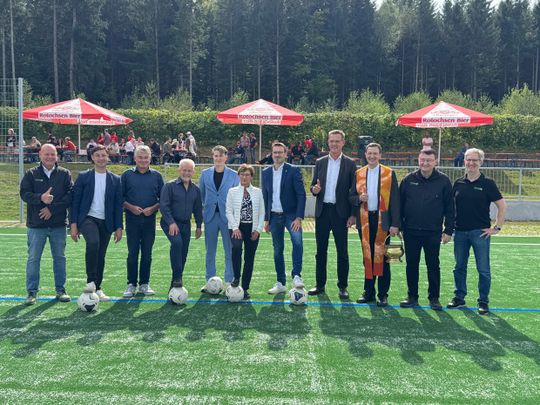
The practical viability of this innovation has already been impressively demonstrated. The system was installed on a full-scale artificial turf sports field in Ellwangen as part of the FNR “NaKura” project and has been in use for regular training and games since its opening. Experience to date confirms the system’s high functionality, weather resistance, and playing quality. Expectations have been met, and insights gained from ongoing operation are continuously incorporated into further development.
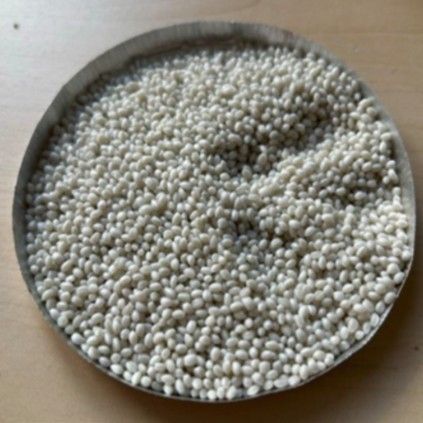
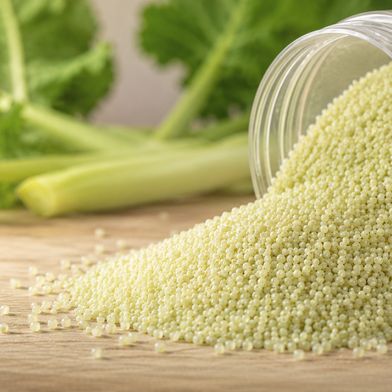
The newly developed infill made from Arboblend completely replaces conventional plastic pellets and prevents microplastic emissions right at the source.
(Bild: Tecnaro)
A Materials Concept for the Circular Economy
The market potential of this innovation is significant. Bio-based and biodegradable materials provide clear points of differentiation from fossil-based solutions and offer manufacturers, distributors, and operators strong selling points—especially in light of increasing regulations on microplastics and fossil-based plastics. The robust life cycle assessment and low product carbon footprint serve as additional seals of quality and sustainability. The market launch is planned for early 2027 and opens up broad growth potential in a market that is increasingly shifting toward sustainable material concepts.
Date: 08.12.2025
Naturally, we always handle your personal data responsibly. Any personal data we receive from you is processed in accordance with applicable data protection legislation. For detailed information please see our privacy policy.
Consent to the use of data for promotional purposes
I hereby consent to Vogel Communications Group GmbH & Co. KG, Max-Planck-Str. 7-9, 97082 Würzburg including any affiliated companies according to §§ 15 et seq. AktG (hereafter: Vogel Communications Group) using my e-mail address to send editorial newsletters. A list of all affiliated companies can be found here
Newsletter content may include all products and services of any companies mentioned above, including for example specialist journals and books, events and fairs as well as event-related products and services, print and digital media offers and services such as additional (editorial) newsletters, raffles, lead campaigns, market research both online and offline, specialist webportals and e-learning offers. In case my personal telephone number has also been collected, it may be used for offers of aforementioned products, for services of the companies mentioned above, and market research purposes.
Additionally, my consent also includes the processing of my email address and telephone number for data matching for marketing purposes with select advertising partners such as LinkedIn, Google, and Meta. For this, Vogel Communications Group may transmit said data in hashed form to the advertising partners who then use said data to determine whether I am also a member of the mentioned advertising partner portals. Vogel Communications Group uses this feature for the purposes of re-targeting (up-selling, cross-selling, and customer loyalty), generating so-called look-alike audiences for acquisition of new customers, and as basis for exclusion for on-going advertising campaigns. Further information can be found in section “data matching for marketing purposes”.
In case I access protected data on Internet portals of Vogel Communications Group including any affiliated companies according to §§ 15 et seq. AktG, I need to provide further data in order to register for the access to such content. In return for this free access to editorial content, my data may be used in accordance with this consent for the purposes stated here. This does not apply to data matching for marketing purposes.
Right of revocation
I understand that I can revoke my consent at will. My revocation does not change the lawfulness of data processing that was conducted based on my consent leading up to my revocation. One option to declare my revocation is to use the contact form found at https://contact.vogel.de. In case I no longer wish to receive certain newsletters, I have subscribed to, I can also click on the unsubscribe link included at the end of a newsletter. Further information regarding my right of revocation and the implementation of it as well as the consequences of my revocation can be found in the data protection declaration, section editorial newsletter.
Passed the practical test on the sports field
The artificial turf sports field was constructed by Tarkett / Tarkett Sports / FieldTurf in collaboration with the architectural firm Eger & Partner Landschaftsarchitekten BDLA and the City of Ellwangen. The close cooperation among all parties involved was crucial to successfully bringing this innovation to market and realizing the project in Ellwangen.
(Bild: Tecnaro)
A strong network of scientific, industrial, and application-oriented partners contributed to the project’s success. On the scientific side, the Institute for Biomaterials and Biomolecular Systems (IBBS) and the Institute for Plastics Processing (IKT) at the University of Stuttgart played a key role. Morton Extrusionstechnik GmbH supported the process engineering implementation, while the ifeu Institute for Energy and Environmental Research Heidelberg gGmbH was responsible for the environmental assessment. Within the company Tecnaro, an interdisciplinary team developed the bio-based and biodegradable material solutions, including Jürgen Pfitzer, Dr. Michael Schweizer, Dr. Dirk Schawaller, Michael Häberle, and Eberhard Schauz. The project was funded by the Fachagentur Nachwachsende Rohstoffe e.V. (FNR) and the Federal Ministry of Agriculture, Food, and Home Affairs (BMLEH). The practical implementation of the artificial turf sports field was carried out by Tarkett / Tarkett Sports / FieldTurf in collaboration with the architectural firm Eger & Partners Landscape Architects BDLA and the city of Ellwangen. The close cooperation among all parties involved was crucial to successfully bringing this innovation to market and realizing the project in Ellwangen.
NaKura Demonstrates the Potential of Modern Biopolymers
NaKura exemplifies the innovative power of bio-based materials and demonstrates how technical performance, environmental responsibility, and social benefits can be combined in a single product. Its development proves that sustainable material technologies are not merely an alternative but a genuine advancement over fossil-based solutions. NaKura demonstrates how bioplastics can make a decisive contribution to the transformation of sports infrastructure—both today and in the future. With NaKura, there will now always be two winners: the team that scores the most goals and our environment.