E-Paper: Applications of BiopolymersA Roadmap for a Sustainable Plastics Industry
From
Melanie Ehrhardt (in charge) | Translated by AI
6 min Reading Time
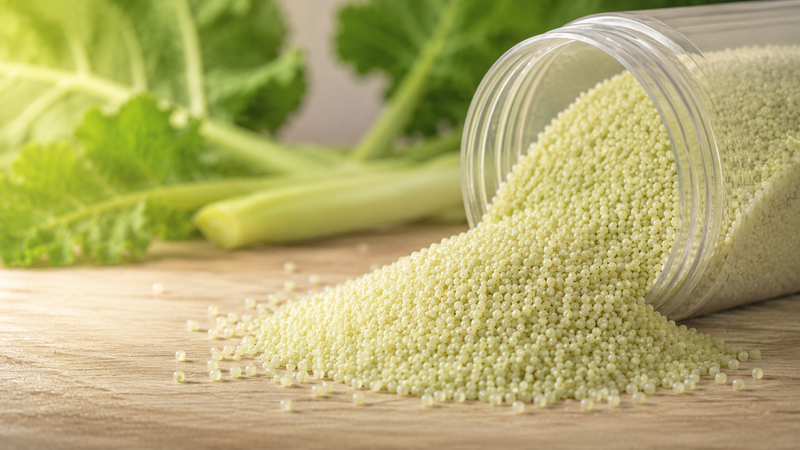
Biopolymers are increasingly making their way from research into industrial applications. Thanks to their diverse properties, they offer sustainable alternatives to traditional plastics and are already being used successfully in fields such as packaging, medicine, agriculture, and technology.
(Bild: KI-generiert / Dall-E)
Bioplastics are considered a path toward a sustainable plastics industry because they can help replace fossil-based raw materials and reduce petroleum consumption. Many bioplastics are made from renewable raw materials and, depending on the material, can be recycled or biodegraded. As a result, they help conserve resources and reduce environmental impact in certain applications.
At the same time, they promote the development of new materials and innovative manufacturing processes. Although bioplastics cannot completely replace conventional plastics, they make an important contribution to a more resource-efficient and sustainable plastics industry.
And even though their market share is still very small compared to petroleum-based plastics, a growing number of applications show that switching to bioplastics can be worthwhile. The new e-paper “PlastXnow: Biopolymers in Practice” (+) provides an overview of the most exciting projects and products currently available.
E-Paper
Biopolymers: From Research to Practice
(Source: WIN)
What Role Bioplastics Might Play in the Future
Biopolymer Congress 2026: An international platform for sustainable plastics with a strong practical focus
These are the winners of the 2026 Biopolymer Innovation Award
Bioplastics at the Price of Petroleum
Shaftless machines optimize the sampling of bioplastics
Bioplastics, also known as biopolymers, are plastics made entirely or partially from renewable raw materials such as corn, sugarcane, or potato starch. Some bioplastics are biodegradable, while others are not.
Distinction: Bio-based vs. Biodegradable
"Bio-based" means that a plastic is made entirely or partially from renewable raw materials such as corn, sugarcane, or wood, rather than from petroleum. However, bio-based plastics are not necessarily biodegradable.
"Biodegradable" means that, under certain conditions, a plastic can be broken down by microorganisms into water, carbon dioxide, and biomass. Biodegradable plastics can be made from both renewable raw materials and petroleum.
Distinction: Drop-in Solutions vs. New Materials
Drop-in solutions are bio-based plastics that have the same properties as conventional plastics and can be used without any modifications to existing production facilities. One example is bio-PE (bio-based polyethylene).
New materials are newly developed bioplastics with unique properties. They differ from conventional plastics and are often biodegradable, such as PLA.
Three Examples of Bioplastics
PLA (polylactic acid)
PLA is made from renewable raw materials such as cornstarch or sugarcane. The plastic is biodegradable under industrial composting conditions. It is lightweight, transparent, and easy to process. PLA is commonly used in packaging, disposable tableware, and additive manufacturing (3D printing).
Bio-PE (bio-based polyethylene)
Bio-PE is made from sugarcane and has the same properties as conventional polyethylene (PE) derived from petroleum. It is very sturdy, durable, and fully recyclable. Because it is a so-called “drop-in” solution, it can be processed in existing facilities. Bio-PE is used for bottles, films, pipes, and packaging.
PHA (polyhydroxyalkanoates)
PHA is produced by microorganisms from plant-based raw materials. The plastic is biodegradable and can break down even in natural environments. It is particularly well-suited for applications where plastic might end up in the environment. Applications for PHA include packaging, medicine, and agriculture, among others.
Overview: Applications of Biopolymers
Bioplastics have many applications and are already being used successfully in many industries. These include:
Packaging Industry: Food packaging, films, bottles, and disposable tableware
Medical Technology: Surgical sutures, implants, capsules, and other biodegradable medical devices
Agriculture: Mulch films, plant pots, and seed coatings
Automotive Industry: Interior trim, trim components, and parts made from bio-based plastics
Consumer goods industry: toothbrushes, toys, textiles, and household items• 3D printing: PLA, in particular, is frequently used as a filament for 3D printing
Real-World Examples: From the Supermarket to the Ski Slopes
How Biopolymers Make Artificial Turf Microplastic-Free
Biopolymers are finding new industrial applications. The project NaKura (+) demonstrates how bio-based and biodegradable materials are making microplastic-free artificial turf possible for the first time. This innovative material concept combines high technical performance with environmental sustainability while also addressing future regulatory requirements.
Date: 08.12.2025
Naturally, we always handle your personal data responsibly. Any personal data we receive from you is processed in accordance with applicable data protection legislation. For detailed information please see our privacy policy.
Consent to the use of data for promotional purposes
I hereby consent to Vogel Communications Group GmbH & Co. KG, Max-Planck-Str. 7-9, 97082 Würzburg including any affiliated companies according to §§ 15 et seq. AktG (hereafter: Vogel Communications Group) using my e-mail address to send editorial newsletters. A list of all affiliated companies can be found here
Newsletter content may include all products and services of any companies mentioned above, including for example specialist journals and books, events and fairs as well as event-related products and services, print and digital media offers and services such as additional (editorial) newsletters, raffles, lead campaigns, market research both online and offline, specialist webportals and e-learning offers. In case my personal telephone number has also been collected, it may be used for offers of aforementioned products, for services of the companies mentioned above, and market research purposes.
Additionally, my consent also includes the processing of my email address and telephone number for data matching for marketing purposes with select advertising partners such as LinkedIn, Google, and Meta. For this, Vogel Communications Group may transmit said data in hashed form to the advertising partners who then use said data to determine whether I am also a member of the mentioned advertising partner portals. Vogel Communications Group uses this feature for the purposes of re-targeting (up-selling, cross-selling, and customer loyalty), generating so-called look-alike audiences for acquisition of new customers, and as basis for exclusion for on-going advertising campaigns. Further information can be found in section “data matching for marketing purposes”.
In case I access protected data on Internet portals of Vogel Communications Group including any affiliated companies according to §§ 15 et seq. AktG, I need to provide further data in order to register for the access to such content. In return for this free access to editorial content, my data may be used in accordance with this consent for the purposes stated here. This does not apply to data matching for marketing purposes.
Right of revocation
I understand that I can revoke my consent at will. My revocation does not change the lawfulness of data processing that was conducted based on my consent leading up to my revocation. One option to declare my revocation is to use the contact form found at https://contact.vogel.de. In case I no longer wish to receive certain newsletters, I have subscribed to, I can also click on the unsubscribe link included at the end of a newsletter. Further information regarding my right of revocation and the implementation of it as well as the consequences of my revocation can be found in the data protection declaration, section editorial newsletter.
Packaging: Organic Netting for the Food Industry
A newly developed Bio-Netz (+) combines, for the first time, the mechanical performance of conventional plastic nets with certified compostability. This material innovation, based on thermoplastic starch, can be processed on existing production lines and opens up new possibilities for sustainable packaging and agricultural applications.
Packaging: Recyclable can made of bio-PE
Packaging specialist Alpla and micronutrient manufacturer Biogena have developed a fully recyclable packaging solution made from sugarcane waste. By using bio-based polyethylene (Bio-PE), the project saves approximately 274 metric tons of CO2 annually.
Cosmetics: Natural Makeup Removal with Disposable Exfoliating Pads
CMC Consumer Medical Care GmbH has developed an innovative, eco-friendly exfoliating pad (+), which is completely free of microplastics. It consists of 100% pure cotton fibers combined with a fully biodegradable exfoliating material. More than 50% of this material is derived from renewable, plant-based raw materials.
Sports: Ski touring bindings made from bioplastic
In the Ski Touring Binding Technology (+), the Lehvoss Group is collaborating with binding manufacturers Marker and Rowa Masterbatch. This involves the use of bio-based, long-glass-fiber-reinforced high-performance plastics from the Luvocom LFT series (specifically PA410-GF and PA66-LGF). The result: lightweight, safe, and resource-efficient fastening components.
Processing Considerations
Advantages of Bio-Based Polymers
Bio-based polymers are made entirely or partially from renewable raw materials, thereby conserving fossil resources. They can reduce CO₂ emissions over their life cycle. Many bio-based plastics can be recycled just like conventional plastics. In addition, so-called “drop-in” solutions, such as bio-PE, can be processed without any modifications to existing production facilities.
Advantages of Biodegradable Polymers
Biodegradable polymers can be broken down by microorganisms under suitable conditions. They are particularly suitable for short-lived products such as packaging or disposable tableware. They are also advantageous for applications where material recovery is difficult, such as agricultural mulch films. As a result, they can help reduce long-lasting plastic waste in certain areas of use.
Injection Molding with Biopolymers
Many bioplastics can be processed on conventional injection molding machines. Bio-based drop-in plastics in particular, such as bio-PE or bio-PET, can be processed without any modifications to the machines.
Bioplastics such as PLA or PHA can also be produced using injection molding; however, the processing parameters—such as temperature, drying, and cooling—must be adjusted to suit the properties of the specific material. As a result, in most cases, no new machine is required; instead, the existing equipment simply needs to be properly configured.
Mechanical Limits
Many bioplastics are more brittle than conventional plastics and therefore break more easily under heavy stress. Some materials have lower heat resistance and can deform at higher temperatures. In addition, some bioplastics have lower impact strength and wear out more quickly under heavy use. For this reason, they are not suitable for all technical applications and must be carefully selected depending on the intended use.
Cost-Effectiveness and Scalability
Bioplastics are currently often more expensive than conventional plastics, as production costs are higher and production volumes are still lower. However, as demand rises and production facilities expand, costs may fall.
Many bio-based plastics, particularly so-called “drop-in” solutions, can already be processed in existing production facilities and are therefore easily scalable. Some new bioplastics require adapted processing methods and are still in the process of expanding industrial production. Overall, the economic viability of bioplastics is steadily increasing thanks to technological progress and rising demand.
Conclusion & Outlook
Bioplastics are an important complement to conventional plastics, as they reduce the use of fossil-based raw materials and, depending on the material, can offer additional environmental benefits. They are already suitable for many applications in the packaging, medical, agricultural, and automotive industries.
Nevertheless, challenges remain, such as costs, mechanical properties, and the expansion of suitable recycling and composting infrastructure. With increasing research, technical advancements, and rising production volumes their importance will continue to grow in the future. Bioplastics are therefore expected to make a significant contribution to sustainable plastics processing.
Transparency: This text was also written with the help of AI.



:quality(80)/p7i.vogel.de/wcms/78/ce/78ce24a7ba8343ef49bc3dbb49016443/pasja1000-the-bottle-5128607v1.jpeg "The new plastic tax would amount to 0.28 cents for a yogurt cup and 1.93 cents for a large PET bottle. (Bild: pasja1000)")
:quality(80)/p7i.vogel.de/wcms/cc/db/ccdb09d1d9b3fcabf147abba7fd9e3c5/pasja1000-the-bottle-5128607v1.jpeg "The new plastic tax would amount to 0.28 cents for a yogurt cup and 1.93 cents for a large PET bottle. (Bild: pasja1000)")
:quality(80)/p7i.vogel.de/wcms/be/0a/be0a2864a5f59b0c9bca685dd23bdf79/pasja1000-the-bottle-5128607v1.jpeg "The new plastic tax would amount to 0.28 cents for a yogurt cup and 1.93 cents for a large PET bottle. (Bild: pasja1000)")
:quality(80)/p7i.vogel.de/wcms/b6/fe/b6fe83997fc68192cf8cd8a89b0bab5f/pasja1000-the-bottle-5128607v1.jpeg "The new plastic tax would amount to 0.28 cents for a yogurt cup and 1.93 cents for a large PET bottle. (Bild: pasja1000)")
:quality(80)/p7i.vogel.de/wcms/ce/ee/ceeeef086bfb174ebdda31c0dfccaf9a/2-weiss-blick-in-produktion-dji-0095-kopiev1.jpeg "A look inside the injection molding shop at Weiss Kunststoffverarbeitung in Illertissen, Bavaria. (Bild: White)")
:quality(80)/p7i.vogel.de/wcms/33/08/3308710c85715e917ec1baf9767fe4a7/2026-ewikon-wago-hei-kanalv1.png "Ewikon's 48-cavity hot runner as a production mold. (Bild: Ewikon)")
:quality(80)/p7i.vogel.de/wcms/a2/a5/a2a516dc69b4c8f8ad6f475ae6746a08/sxkh-bei-hpf-gesamtwerkzeugv1.png "The HMG 70XS1510 trimming press from the Chinese manufacturer SXKH combines all the functions required by toolmakers at HPF in a very compact design. The deciding factors in the purchase were the purchase price—and confidence in the quality of established international key components. (Bild: Pergler Media)")
:quality(80)/p7i.vogel.de/wcms/19/5f/195fdb6e09629994f1d6e3cf94dac8d8/bild-1-exam510-ultem9085v1.jpeg "Granular printing (FGF) makes it cost-effective to produce large-format functional parts from high-performance polymers such as Ultem 9085. (Bild: NEW AIM3D)")
:quality(80)/p7i.vogel.de/wcms/d5/c4/d5c46d40e1ae062370d058e2c006c376/dimitrisvetsikas1969-belgium-3595351v1.jpeg "European Plastics Industry Calls for Immediate Action to Address the Industry Crisis (Bild: dimitrisvetsikas1969)")
:quality(80)/p7i.vogel.de/wcms/e6/63/e663f0e1dd8818fc501c6fb5c5d33712/19-5689-circular-economy-of-resourcesv1.jpeg "Plastic waste from the average household is very heterogeneous. Only the right mix of technologies can turn all types of plastic waste into a new source of raw materials. (Bild: BASF)")
:quality(80)/p7i.vogel.de/wcms/31/5b/315b714f653484179232fbc4d6d79543/sesotec-img-andreas-hanus-25-20-281-29v1.jpeg "Andreas Hanus, Head of AI Development at Sesotec: “AI will not replace traditional sorting technology, but will intelligently enhance it.” (Bild: Sesotec)")
:quality(80)/p7i.vogel.de/wcms/74/5f/745f512239689819275af39a82f59860/b-brenkenv1.jpeg "Dr. Benedikt Brenken, Director of R-Cycle: \"The digital product passport will fundamentally change plastic recycling.\" (Bild: R-Cycle)")
:quality(80)/p7i.vogel.de/wcms/40/6d/406d05534ab4d28194bd29699e023e67/2026-09-09-uni-kiel-aufmacherv1.jpeg "These self-polarizing polymer coatings could be used in a wide variety of electronic components in the future. (Bild: University of Kiel/C. Anders)")
:quality(80)/p7i.vogel.de/wcms/5d/46/5d46e098a7cfaebdd9643df47153c5af/aufmacherv1.png "The PPWR imposes new requirements on packaging: What impact does this have on mechanical engineering? (Bild: KI-generiert / Dall-E)")
:quality(80)/p7i.vogel.de/wcms/70/13/7013fe202fb4790708f62f69cd0c83d4/aufmacher-st-c3-a4rkeschaumfoliev1.png "Using thermoplastic starch as a base, researchers at the IKV successfully produced a flexible foam film using physical blowing agents. (Bild: IKV)")
:quality(80)/p7i.vogel.de/wcms/d1/2b/d12b536ba3b382d0d138e342ac1038e6/03--20pm-imm-mgsv1.jpeg "MGS Richfield Site (Bild: MGS)")
:quality(80)/p7i.vogel.de/wcms/90/9c/909cf6eb1b91a9a84ff535033ea9b048/honeycombv1.jpeg "The composite material made of epoxy and glass fibers not only protects against flames but is also fully recyclable. (Bild: Empa)")
:quality(80)/p7i.vogel.de/wcms/6a/d5/6ad5980b0c965409c71582fc59145e13/1920-covestro-new-covestro-headquartersv1.jpeg "Covestro's corporate headquarters in Leverkusen (Bild: Covestro)")
:quality(80)/p7i.vogel.de/wcms/db/74/db741079d26ad9e7a69278fde45e79c7/aufmacherv1.png "(Bild: KI-generiert / Dall-E)")
:quality(80)/p7i.vogel.de/wcms/b3/65/b3654df434f4d31e1fda3c79bc7bb4b0/nakura-20kunstrasenteppich-20ohne-20verf-c3-bcllungv1.jpeg "Tecnaro has developed synthetic turf fibers using a specially formulated Arboblend blend that offers high resistance to heat, UV rays, and weathering, and, because it is niobium-based, sequesters CO₂ over the long term. (Bild: Tecnaro)")
:quality(80)/p7i.vogel.de/wcms/b4/34/b4345a0aa0a4d0f53ba91bfbb068c8c2/2026-09-30-furanovav1.jpeg "From left: ISG Managing Director Dominik Gschwendtner, Business Development Manager Christian Eichner, Furanova CEO Dr. Oliver Bolzern, Furanova COO Dr. Christian Keck, ISG Managing Director Dr. Christoph von Reden. (Bild: Heiner Heine)")
:quality(80)/p7i.vogel.de/wcms/6a/d5/6ad5980b0c965409c71582fc59145e13/1920-covestro-new-covestro-headquartersv1.jpeg "Covestro's corporate headquarters in Leverkusen (Bild: Covestro)")