Hyper-branched additives optimize the processing of recycled materials by controlling viscosity fluctuations and significantly expanding process windows. These smart additives reduce energy consumption and scrap rates and even enable high-quality upcycling.
Hyperbranched additives optimize the processing of recycled material. Adding them reduces melt viscosity while maintaining the material's other physical properties.
(Bild: Polytives)
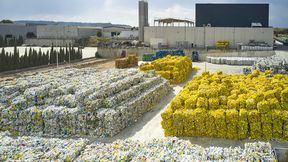
The use of recycled materials is increasingly becoming an established best practice. While companies previously relied on the voluntary use of post-consumer recycled (PCR) materials, lawmakers are now actively—albeit gradually—pushing to close the loop. In demanding applications, this can lead to material shortages, as demonstrated by the EU End-of-Life Vehicles Regulation. Mechanically recycled material continues to pose process-related challenges for extruders and injection molders.
Among the biggest challenges are fluctuating melt viscosities resulting from inhomogeneous material flows, as well as thermal degradation of the material during processing. Process stability cannot be guaranteed due to unstable pressures and/or limited flowability, which leads to increased scrap rates or uneconomical throughput.
High-performance additives that specifically target the rheological behavior of the melt can remedy this situation. Traditional approaches have primarily involved breaking or shortening the polymer chains to increase their mobility and, consequently, their flowability. Low-molecular-weight structures can also be added to improve sliding behavior; these act either intrinsically within the melt or on the surfaces and walls of machines and tools. While these approaches provide short-term solutions, they make sustainable handling more difficult.
Hyper-branched Additives as a New Approach
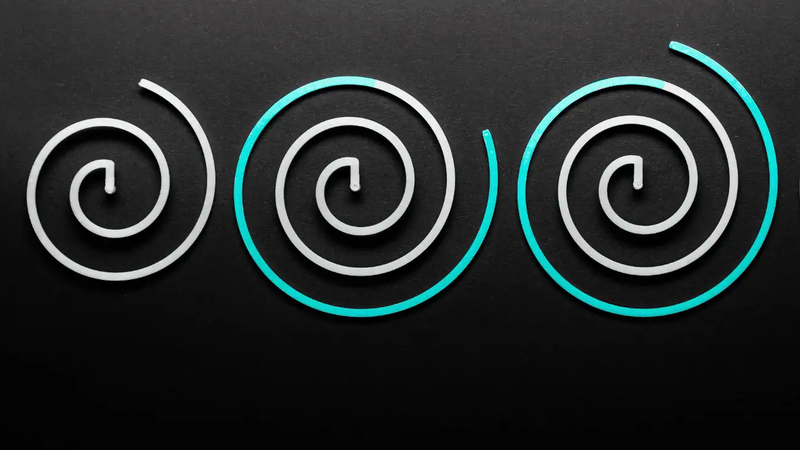
The goal of increased chain mobility is also pursued by the use of hyperbranched additives, which keep the structure of the target material intact and act only in the melt. Their tree-crown-like structure allows them to act as quasi-spherical structures—similar to a roller bearing—within the melt, thereby reducing friction between the polymer chains.
This reduces the melt viscosity while maintaining the other physical properties. Since the additives do not migrate, this effect remains intrinsically present in future melting processes. They do not compete with other processing aids (e.g., impact modifiers) and do not diminish their effects on the final product. Rather, they promote melt homogeneity and also ensure complete mold filling.
Recycling of Bumper as a Case Study
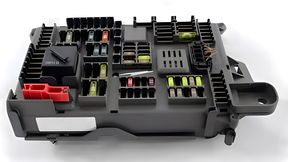
Here is a case study to illustrate this: Under the EU End-of-Life Vehicles Directive, it is conceivable to recycle, for example, bumpers made of polypropylene (PP) and ethylene-propylene-diene rubber (EPDM). If such a bumper is to be processed into recycled material, it is first stripped of its paint and then treated with peroxides, which degrade the polymer chains. This makes the PP component more fluid, while the EPDM component cross-links and becomes more viscous. The heterogeneous flow profiles make it difficult to effectively combine them as recycled material. A hyperbranched additive—ultimately a polymer—makes the use of peroxides unnecessary.
Regardless of the material, the use of such specialized additives to achieve well-defined viscosity profiles leads to an expanded process window, as injection pressures can be reduced due to improved flowability. A reduction in processing temperatures is also consistently observed across a wide variety of scenarios. Depending on the process control and objectives, both of these factors result in lower energy consumption and shorter cycle times. By expanding the process window, new materials can become available for applications that were previously outside the scope of consideration.
As a general rule, thanks to their integrative nature, the use of hyperbranched additives adds value to virgin materials as well as PCR and PIR materials. However, particularly in materials such as rPET or rPMMA, a well-structured additive can compensate for differences in thermal processing by homogenizing the material and lower high melting points by increasing the flexibility of the polymer chains.
Date: 08.12.2025
Naturally, we always handle your personal data responsibly. Any personal data we receive from you is processed in accordance with applicable data protection legislation. For detailed information please see our privacy policy.
Consent to the use of data for promotional purposes
I hereby consent to Vogel Communications Group GmbH & Co. KG, Max-Planck-Str. 7-9, 97082 Würzburg including any affiliated companies according to §§ 15 et seq. AktG (hereafter: Vogel Communications Group) using my e-mail address to send editorial newsletters. A list of all affiliated companies can be found here
Newsletter content may include all products and services of any companies mentioned above, including for example specialist journals and books, events and fairs as well as event-related products and services, print and digital media offers and services such as additional (editorial) newsletters, raffles, lead campaigns, market research both online and offline, specialist webportals and e-learning offers. In case my personal telephone number has also been collected, it may be used for offers of aforementioned products, for services of the companies mentioned above, and market research purposes.
Additionally, my consent also includes the processing of my email address and telephone number for data matching for marketing purposes with select advertising partners such as LinkedIn, Google, and Meta. For this, Vogel Communications Group may transmit said data in hashed form to the advertising partners who then use said data to determine whether I am also a member of the mentioned advertising partner portals. Vogel Communications Group uses this feature for the purposes of re-targeting (up-selling, cross-selling, and customer loyalty), generating so-called look-alike audiences for acquisition of new customers, and as basis for exclusion for on-going advertising campaigns. Further information can be found in section “data matching for marketing purposes”.
In case I access protected data on Internet portals of Vogel Communications Group including any affiliated companies according to §§ 15 et seq. AktG, I need to provide further data in order to register for the access to such content. In return for this free access to editorial content, my data may be used in accordance with this consent for the purposes stated here. This does not apply to data matching for marketing purposes.
Right of revocation
I understand that I can revoke my consent at will. My revocation does not change the lawfulness of data processing that was conducted based on my consent leading up to my revocation. One option to declare my revocation is to use the contact form found at https://contact.vogel.de. In case I no longer wish to receive certain newsletters, I have subscribed to, I can also click on the unsubscribe link included at the end of a newsletter. Further information regarding my right of revocation and the implementation of it as well as the consequences of my revocation can be found in the data protection declaration, section editorial newsletter.
Polytives relies on polymeric additives. How do your solutions differ from traditional masterbatches or low-molecular-weight additives in terms of technology and mechanism of action?
Measurable Results: Higher Quality, Less Waste
The company Polytives is a leader in the production of hyperbranched polymers and has demonstrated process and material optimization with its additives in several case studies. Two of these studies will be examined below:
In collaboration with Pekutherm Kunststoffe, Sitraplas and Polytives, the melt volume rate (MVR) of PMMA sheets for a consumer application was significantly increased. While the rPMMA compound was suitable only for extrusion without the addition of the additive bFI A 3745, injection molding quality was achieved after adding the additive (dosage: 3–5%). Strictly speaking, this was not merely recycling but upcycling—an approach that is particularly efficient when the CO2 footprint of a plastic product needs to be minimized through the use of recycled content.
In a study conducted by partners Brac-Werke, Nordmann, Rassmann and Polytives, an existing mold was successfully adapted for use with rPET. Under standard conditions, the mold was not completely filled. Increasing the pressure was not an option, as significant flash was observed at the gate in some cases. Here, too, a low single-digit dosage of the hyperbranched polymer was sufficient to make the molten material fluid enough that—while maintaining all other parameters—the injection pressure could be reduced by up to 25%.
The shift toward recycled materials as a source of raw materials will accelerate significantly in the coming years. Hyperbranched polymers can provide processors with a decisive advantage in this regard: expanded processing windows due to lower pressures and temperatures—enabling gentler, more energy-efficient processes with less scrap. Through the interplay of plastic, additives, and the manufacturing process, it is thus possible to develop and manufacture sustainable and economically profitable products.
Oliver Guntner Oliver Guntner garantiert bei Polytives die Einhaltung höchster industrieller Standards und regulatorischer Anforderungen. Der Diplom-Chemiker verantwortet die präzise Umsetzung der Qualitätsvorgaben und entwickelt mit der R&D-Abteilung die Sustainability-Sparte des Unternehmens weiter. Seit 2020 bereitet Polytives mit neuartigen Kunststoffadditiven den Weg für effizientere Produktionsprozesse.
Bildquelle: Polytives
Our additives are polymers themselves
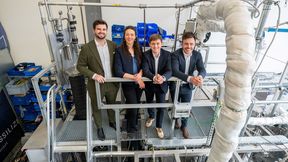
The leadership team at Polytives (from left): Steffen Felzer (Sales Director), Viktoria Rothleitner (Founder & Managing Director), and Oliver Eckardt (Founder & Managing Director)
(Source: Polytives)
Interview with Viktoria Rothleitner, Founder and CEO of Polytives
Polytives relies on polymeric additives. How do your solutions differ from traditional masterbatches or low-molecular-weight additives in terms of technology and mechanism of action?
Viktoria Rothleitner: Our polymeric additives are themselves high-molecular-weight materials and exert their effect physically by specifically influencing melt viscosity—not through chemical reactions. Unlike traditional masterbatches, they do not require a carrier system, do not migrate, and fully preserve the material properties.
When does the use of your additives make financial sense for a medium-sized injection molder or extruder?
Rothleitner: The only answer to that is “it depends,” since each manufacturer’s cost calculations are very specific. In practice, however, an advantage in unit costs quickly becomes apparent—for example, through cycle time reductions of 20–30%, or when materials can be processed economically for the first time or can be processed using existing machines and tools.
The rPMMA/rPET Challenge: These materials are considered the “divas” of recycling. What is the key factor in achieving process stability here that comes close to that of virgin material?
Rothleitner: The key factor is the targeted reduction of melt viscosity during processing—without degrading the material itself. This allows for the stable processing of inconsistent batches, reduces pressures and temperatures, and not only significantly increases process robustness but also enables applications that were previously considered unprocessable.
Critics often argue that additives could contaminate the recycled material stream. How do you ensure that products optimized with Polytives additives do not themselves become a problem in the next recycling cycle?
Rothleitner: Our additives are polymers themselves; they are migration-stable and compatible with the matrix, so they behave in a non-critical manner within existing recycling streams. The additives do not introduce any low-molecular-weight substances into the mixture and do not react within the system—that is their major advantage.
With regard to the PRSE: What are the latest developments in the technological capabilities for processing recycled materials?
Rothleitner: In our view, the trend is clearly moving away from pure material optimization toward process-based control of recycled materials: Fluctuations in viscosity and quality are increasingly being compensated for through the process rather than eliminated. In certain applications, this makes the use of recycled materials stable and economically viable for the first time.