There has already been a lot of coverage of the industrial electricity price, and now all the details have been finalized. For companies in the plastics industry, this means that anyone who wants to benefit from the relief for the 2026 consumption year should take action now.
Industrial Electricity Price in Effect: What Should Plastics Companies Be Preparing for Now?
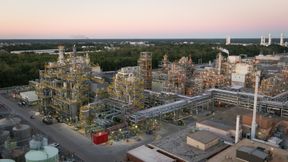
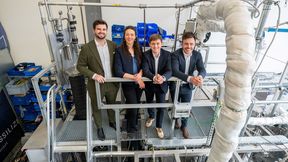
(Bild: BFE)
Electricity is a significant cost factor for plastics manufacturers and processors. Consequently, the industrial electricity price is of great interest to many companies in the industry. It applies to the years 2026, 2027, and 2028.
Which companies can benefit?
Companies in economic sectors (WZ) classified under Part 1 of the so-called KUEBLL list are eligible to apply. The classification of the respective point of delivery according to WZ 2008 is decisive.
In the plastics industry, these primarily include:
Manufacturers of plastics in primary forms (Industrial Classification No. 2016)
Manufacturers of synthetic rubber in primary forms (HS Code 2017)
Manufacturers of synthetic fibers (Industrial Classification No. 2060)
Manufacturers of other rubber goods (HS Code 2219)
Manufacturers of plastic sheets, films, tubes, and profiles (HS Code 2221)
Manufacturers of plastic packaging materials (Industrial Classification No. 2222)
Manufacturers of other plastic products (NA 2229)
There is no minimum threshold for electricity consumption; only companies experiencing financial difficulties are excluded from eligibility.
How much is the tax relief?
The specific amount of aid for the industrial electricity price is calculated based on the average base price from the previous year. It has already been set for 2026 at 18,700 euros per gigawatt-hour of eligible electricity consumption. This applies regardless of the terms under which a company actually procures its electricity.
For a plastics manufacturer with 30 gigawatt-hours of eligible electricity consumption this year, this results in a calculated subsidy of approximately 561,000 euros. In principle, the total electricity consumption at a supply point is taken into account, including self-generated and transmitted electricity, provided that it is not sold to third parties.
The amounts of electricity for which compensation is provided through the electricity price compensation program must be deducted. Although the European Commission has created the option to combine the industrial electricity price and the electricity price compensation for the year 2026, it is currently (as of the editorial deadline at the end of August) still unclear whether the German government will make use of this option.
What obligations do companies face?
Receiving the industrial electricity subsidy also comes with an obligation: Companies must reinvest 50 percent of the subsidy amount in decarbonization measures.
Eligible measures include:
Expansion of Renewable Energy
Improving Energy Efficiency and Its Impact on Electricity Demand
Increasing demand-side flexibility, for example through battery storage or a load management system
Modernization or Expansion of Electricity-Related Infrastructure
For the plastic manufacturer mentioned above, with 30 gigawatt-hours of eligible electricity consumption and 561,000 euros in aid, this means it would have to reinvest at least 280,500 euros in corresponding measures.
House of WIN
Renewable, climate-friendly, digital—and affordable: These are the requirements for future energy use in businesses and government agencies. Our sister portal www.r-energy.eu provides all the information you need to successfully navigate the transition to renewable energy.
When can the application be submitted?
The timeframe for implementing the measures is relatively long, as the deadline expires 48 months after the aid is granted. If, for example, the aid amount for the year 2026 is approved and disbursed in mid-2027, the deadline will be mid-2031. Under certain conditions, larger investments may also be counted toward the reinvestment requirement over a period of several years.
Nevertheless, it is advisable for companies not to wait until after the aid has been disbursed to consider how they will meet the reinvestment requirement. This is because if the required reinvestment cannot be proven later—or cannot be proven in full—the aid must be repaid in whole or in part, plus five percentage points above the base interest rate.
It is best to review planned investments now and determine which of them can be credited toward the industrial electricity rate. It is essential to document the appropriate measures so that they can be verified later.
It should be noted that decarbonization measures may not be funded through subsidy programs that are classified as state aid, such as the EEG (Renewable Energy Act). Funding programs that are not considered state aid—including, among others, the BEG (Federal Funding for Efficient Buildings)—may be used. However, the amount of funding received may not be included in the reinvestment amount.
Date: 08.12.2025
Naturally, we always handle your personal data responsibly. Any personal data we receive from you is processed in accordance with applicable data protection legislation. For detailed information please see our privacy policy.
Consent to the use of data for promotional purposes
I hereby consent to Vogel Communications Group GmbH & Co. KG, Max-Planck-Str. 7-9, 97082 Würzburg including any affiliated companies according to §§ 15 et seq. AktG (hereafter: Vogel Communications Group) using my e-mail address to send editorial newsletters. A list of all affiliated companies can be found here
Newsletter content may include all products and services of any companies mentioned above, including for example specialist journals and books, events and fairs as well as event-related products and services, print and digital media offers and services such as additional (editorial) newsletters, raffles, lead campaigns, market research both online and offline, specialist webportals and e-learning offers. In case my personal telephone number has also been collected, it may be used for offers of aforementioned products, for services of the companies mentioned above, and market research purposes.
Additionally, my consent also includes the processing of my email address and telephone number for data matching for marketing purposes with select advertising partners such as LinkedIn, Google, and Meta. For this, Vogel Communications Group may transmit said data in hashed form to the advertising partners who then use said data to determine whether I am also a member of the mentioned advertising partner portals. Vogel Communications Group uses this feature for the purposes of re-targeting (up-selling, cross-selling, and customer loyalty), generating so-called look-alike audiences for acquisition of new customers, and as basis for exclusion for on-going advertising campaigns. Further information can be found in section “data matching for marketing purposes”.
In case I access protected data on Internet portals of Vogel Communications Group including any affiliated companies according to §§ 15 et seq. AktG, I need to provide further data in order to register for the access to such content. In return for this free access to editorial content, my data may be used in accordance with this consent for the purposes stated here. This does not apply to data matching for marketing purposes.
Right of revocation
I understand that I can revoke my consent at will. My revocation does not change the lawfulness of data processing that was conducted based on my consent leading up to my revocation. One option to declare my revocation is to use the contact form found at https://contact.vogel.de. In case I no longer wish to receive certain newsletters, I have subscribed to, I can also click on the unsubscribe link included at the end of a newsletter. Further information regarding my right of revocation and the implementation of it as well as the consequences of my revocation can be found in the data protection declaration, section editorial newsletter.
Tip I: Flexibility Pays Off
The so-called “Flex Bonus” may also be of interest to companies in the plastics industry. Companies can apply for this additional bonus—equal to 10 percent of the original grant—if they invest 80 percent of the original grant in flexibility measures. These are measures that enable more flexible electricity procurement, such as battery storage. However, three-quarters of the Flex Bonus must, in turn, be allocated to decarbonization measures.
Greater flexibility in electricity procurement can offer strategic advantages to plastics companies, even regardless of industrial electricity prices. This is because when generators or storage capacities can be controlled more freely, companies can better align their loads with electricity prices and grid conditions, thereby benefiting more from periods of low prices. The foundation for this is systematic load management.
Where do you apply for the industrial electricity rate?
For electricity consumption in 2026, the application must be submitted to the Federal Office for Economic Affairs and Export Control (BAFA) by March 31, 2027. An exception applies to companies that are also applying for electricity price compensation. They are granted an extended deadline until July 15, 2027.
The application must, above all, provide evidence of eligible electricity consumption and classification within the sector eligible for aid. If the eligible electricity consumption exceeds ten gigawatt-hours, the application must be certified by a certified public accountant. This audit opinion may be submitted retroactively by May 31, 2027.
Larger plastics manufacturers, in particular, are likely to exceed this consumption limit. It is advisable for them to begin the process early and to involve the relevant internal departments—as well as auditors and external consultants, if necessary—from the outset.
Tip II: Consider electricity price compensation
Companies with WZ numbers 2016, 2017, and 2060 are eligible for both the industrial electricity price and the electricity price compensation. This raises the question for them: Which subsidy makes more sense for which supply point?
This question is usually not easy to answer. That’s because the subsidy amounts can vary significantly depending on the specific consumption situation. Many manufacturers have complex utility infrastructure, including their own power generation, multiple production lines, and numerous auxiliary facilities. This makes it all the more important to conduct a thorough comparative analysis early on.
Added to this is political uncertainty: As things stand, the industrial electricity rate and the electricity price compensation cannot be applied to the same consumption. However, the federal government plans to introduce an exemption for the year 2026.
Although the application deadline for this year’s electricity price compensation has already passed—it is June 30 each year—it may still be worth considering the industrial electricity price before submitting an application for 2027.
Industrial Electricity Rates and Electricity Price Compensation – Differences
Industriestrompreis
Strompreiskompensation
neue, befristete Entlastungsregelung
bestehendes Instrument gegen indirekte CO₂-Kosten
Zuständigkeit grundsätzlich BAFA
Zuständigkeit prinzipiell DEHSt
abhängig von den Vorgaben des neuen Fördermodells
auf bestimmte Sektoren und CO₂-Kosten ausgerichtet
mit Investitions- und Nachweispflichten
eigene Antrags- und Effizienzkriterien
nicht mit einem allgemeinen Stromtarif gleichzusetzen
keine vollständige Erstattung des Strompreises
How much is the electricity price compensation?
In the case of electricity price compensation, the amount of the subsidy can only be roughly determined in advance. This is because, unlike the industrial electricity price, it is not granted on the total volume of electricity, but exclusively on the volume used for the production of eligible products. Consumption for other purposes—such as non-production-related infrastructure, buildings, or ineligible products—is not taken into account. In addition, different products are associated with different subsidy amounts, which range from three to four cents per kilowatt-hour.
If we return to the example of the plastics manufacturer mentioned above and therefore assume a lower eligible electricity consumption of 20 gigawatt-hours per year, this results in a potential subsidy of approximately 740,000 euros per year. For the remaining 10 gigawatt-hours, the company could receive an additional 187,000 euros through the industrial electricity rate—for a total of 927,000 euros.
Receiving electricity price compensation also requires certain conditions to be met. In this case, companies must reinvest up to 100 percent of the subsidy amount in measures to improve energy efficiency or address climate change. Alternatively, companies may provide green electricity in lieu of these measures or submit a declaration stating that all economically viable efficiency or climate protection measures have already been implemented.
Info
Text
Marek Fritz is the team leader for commercial energy optimization at the BFE Institute for Energy and the Environment.
Profile
BFE is a management consulting firm specializing in energy efficiency and sustainability. Founded in 1979, it is one of the leading companies in our industry and has helped countless businesses maximize their energy efficiency, reduce costs, and improve their CO2 footprint. The interdisciplinary team of experts develops innovative, customized energy solutions.