An interactive map from Fraunhofer Umsicht provides information on the state of chemical recycling in Europe. In an interview with Prof. Matthias Franke, it becomes clear that Germany is in a better position than is sometimes assumed, both in terms of facilities already in operation and those planned.
(Bild: Canva)
The Fraunhofer Institute for Environmental, Safety, and Energy Technology (Umsicht) has created an interactive map of chemical recycling activities in Europe that covers installed facilities, technologies, capacities, and project status across the entire continent. But what is the situation specifically in Germany? Which technologies dominate the market, and how does Germany compare to its European neighbors? PlastXnow spoke with Prof. Matthias Franke, director of the Fraunhofer Umsicht division in Sulzbach-Rosenberg, about these issues.
About the Person
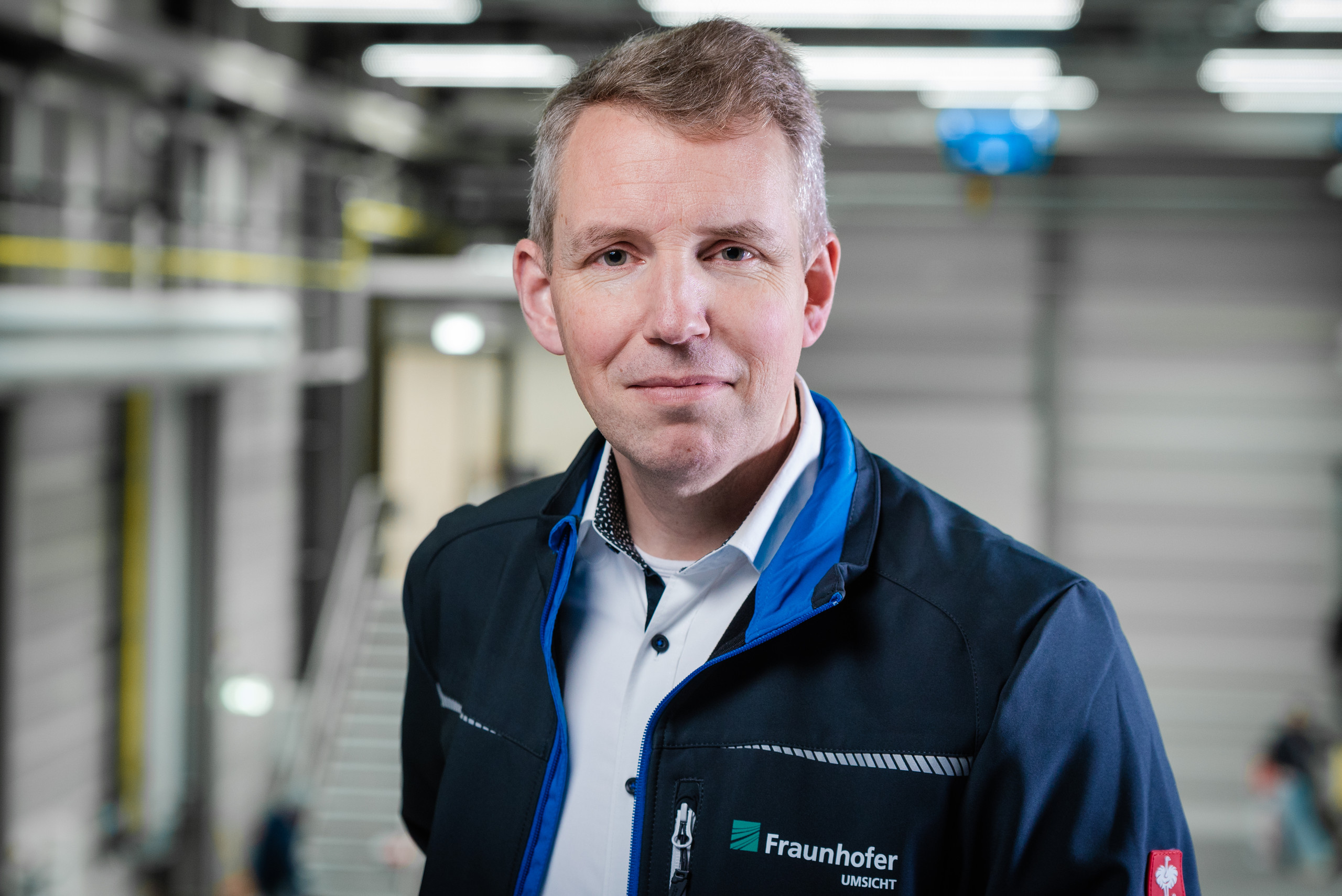
(Source: Fraunhofer Umsicht)
Prof. Dr.-Ing. Matthias Franke is the director of Fraunhofer Umsicht, Sulzbach-Rosenberg division. He is a member of the Fraunhofer Cluster of Excellence Circular Plastics Economy, the National Advisory Group on Chemical Recycling of the ThinkTank Industrial Resource Strategies, and the Bavarian Bioeconomy Council. Franke holds an honorary professorship at the University of Birmingham, UK, and is a lecturer in circular economy at the Technical University of Munich. His areas of expertise include the chemical recycling of plastic waste and composite materials, as well as the conversion of biomass and biogenic residues into fuels, basic chemicals, and biocarbonates using thermochemical processes.
PlastXnow: What are the key findings regarding the current state of chemical recycling in Europe?
Prof. Matthias Franke: From a technological standpoint, pyrolysis is the dominant process in both existing and planned projects. Due to the plant sizes required for economical operation, gasification processes come in second place—even though there are only two such projects currently in the planning stage. Projects in the area of solvent-based recycling or solvolysis lag far behind. In terms of the number of projects and planned capacities, Germany, Spain, the Netherlands, and Belgium lead the way, with planned capacities ranging from 250 to 720 kT.
For now, we're focusing on Germany. What are the key findings here?
Compared to all other EU countries, Germany currently has the largest number of planned projects and also leads in terms of total planned capacity, at approximately 720 kT. This is due to the significant role played by the chemical industry and the plastics manufacturing and processing industries in Germany. Pyrolysis is the dominant technology in this sector in Germany, accounting for approximately 690 kT of the total capacity.
With five projects, North Rhine-Westphalia is the federal state with the most chemical recycling projects. How can this be explained?
With sales of just under 30 billion euros and more than 120,000 employees, North Rhine-Westphalia is the leading federal state in the production and processing of plastics. Accordingly, the region also has the greatest demand for recycled materials to meet certain requirements for their use, such as those set by the PPWR.
In addition, with three steam crackers having a combined processing capacity of approximately three million metric tons of naphtha, North Rhine-Westphalia also has the largest capacity in Germany for further processing the oils produced through plastic pyrolysis. Accordingly, the largest chemical recycling projects are also being planned at the sites of—and with the participation of—the operators of these petrochemical plants (Editor’s note: BP in Gelsenkirchen, Ineos in Cologne-Worringen, LyondellBasell in Wesseling).
Another striking point is that, rather than processing individual materials, most facilities are designed to process mixed plastic waste. Why?
Chemical recycling of plastic waste makes sense only under two conditions. First, the plastic waste must consist of materials that cannot be recycled to the required quality. Second, economic constraints require material flows of at least several tens of thousands of metric tons per year per facility. In the case of individual materials or mono-fractions of specific polymer types, material-based recycling processes should be preferred.
When will that change?
This applies to material streams that are difficult or impossible to recycle mechanically, such as sorting residues, heavily mixed and contaminated mixed plastics, or composite materials. Chemical recycling can also offer advantages over mechanical recycling when it comes to thermosets and fiber-reinforced plastics. In the case of mixed plastics or sorting residues—such as LVP plastics—the established collection systems can simultaneously generate the volume streams required for economically viable operations.
Let's return to the individual processes: There are only two facilities in all of Europe that use a hydrothermal process—one of which was located in Böhlen. Why is this type of chemical recycling so uncommon?
The various technology providers in the field of chemical recycling have developed a wide range of innovative processes that differ from one another to a greater or lesser extent in their details. Due to the nature of their process operation, most of them can be classified under the umbrella category of pyrolysis processes, which produce a liquid phase as their main product.
In hydrothermal processes, too, a liquid phase is produced from the treated plastic waste. However, a unique feature of this process compared to the others is the use of supercritical water as a reaction aid.
The plant in Böhlen (Dow) mentioned above is one of two projects in Germany that have been shelved. Why did these plants fail?
The shutdown of Dow’s steam cracker in Böhlen is the reason why the project for the chemical recycling of plastic waste will not be pursued further. Without buyers for the products it would produce and without the synergies with the site’s petrochemical infrastructure, building the recycling plant there no longer makes sense. According to Dow, high energy and operating costs, combined with declining demand for the basic chemicals produced there, are the reasons for the site’s shutdown.
What lessons can we learn from this to ensure that future projects aren't canceled?
Investments in chemical recycling first require stable demand and corresponding off-take agreements, for example for the naphtha substitutes produced. This demand arises from the regulatory framework, which sets recycling quotas in areas such as plastic packaging. However, there are still uncertainties in the regulatory framework, for example regarding mass balance, the end-of-waste status, or the general status of chemical recycling under the German Packaging Act.
So, is it a regulatory issue?
No, the example of Böhlen highlights yet another structural problem facing the upstream raw materials industry in Germany and Europe. Among other things, high energy costs lead to higher production costs for the necessary raw materials and, consequently, to reduced competitiveness among plastics manufacturers and processors. If the petrochemical industry in Germany and Europe relocates to non-EU countries due to these adverse conditions, this will affect the entire industry and, ultimately—as in Böhlen—also impact chemical recycling.
How can this be prevented?
Creating and maintaining a level playing field is an essential prerequisite for the long-term viability of chemical recycling. The regulatory framework must provide sufficient investment security and protect the European market against unfair competitive practices. One example worth mentioning here is the import of government-subsidized recycled materials from China.
The data also shows that, in terms of volume, chemical recycling still plays a minor role in Germany. What is possible in the future—given the current pace of development and if we really step on the gas?
In addition to the challenging investment conditions described above, regulatory provisions give material recycling priority over chemical recycling processes. In the current draft of the Packaging Law Implementation Act, the recycling rate for plastic packaging is set to increase to 75 percent in 2028 and to 80 percent in 2030. However, the share of chemical recycling in meeting these targets is limited to five percent.
INFO
Chemical Recycling in Germany: Projects, Capacities, and Status
There are currently 15 chemical recycling projects in Germany with a total capacity of 862.5 kt/a
Currently in operation: Plants with a total capacity of 74 kt/a (pyrolysis 51 kt/a; solvolysis 15 kt/a; solvent-based 8 kt/a). There are no gasification plants in operation.
Technology mix of announced and under-construction facilities: Pyrolysis 640.5 kt/a; Solvolysis 10 kt/a
Discontinued Projects: Two chemical recycling projects (138 kt/a) were officially discontinued.
So there’s certainly no question of a “turbo boost.” Even though it is generally encouraging that chemical recycling processes are now being incorporated into the legislation in a legally sound manner. However, given the looming recycling gap in Germany and Europe, it remains to be seen whether material-based recycling processes alone will be able to meet the quota targets.
Let's assume the turbo does kick in after all. What role will chemical recycling play in the circular economy in the future?
Chemical recycling is ideally suited for producing high-quality recycled materials from plastics that cannot be recycled by material type and from mixed plastic fractions. In addition to mixed plastics and sorting residues from the packaging sector, it can also be used in many other application areas, such as the automotive, medical, and electronics industries, as well as for the recycling of fiber-reinforced plastics.
That sounds like a "but."
As long as the production of recycled plastics is more expensive than that of fossil-based virgin materials, not only chemical recycling but every recycling technology will depend on a regulatory framework that ensures market demand for recycled materials and the associated investments.
Thank you very much for the interview!
Date: 08.12.2025
Naturally, we always handle your personal data responsibly. Any personal data we receive from you is processed in accordance with applicable data protection legislation. For detailed information please see our privacy policy.
Consent to the use of data for promotional purposes
I hereby consent to Vogel Communications Group GmbH & Co. KG, Max-Planck-Str. 7-9, 97082 Würzburg including any affiliated companies according to §§ 15 et seq. AktG (hereafter: Vogel Communications Group) using my e-mail address to send editorial newsletters. A list of all affiliated companies can be found here
Newsletter content may include all products and services of any companies mentioned above, including for example specialist journals and books, events and fairs as well as event-related products and services, print and digital media offers and services such as additional (editorial) newsletters, raffles, lead campaigns, market research both online and offline, specialist webportals and e-learning offers. In case my personal telephone number has also been collected, it may be used for offers of aforementioned products, for services of the companies mentioned above, and market research purposes.
Additionally, my consent also includes the processing of my email address and telephone number for data matching for marketing purposes with select advertising partners such as LinkedIn, Google, and Meta. For this, Vogel Communications Group may transmit said data in hashed form to the advertising partners who then use said data to determine whether I am also a member of the mentioned advertising partner portals. Vogel Communications Group uses this feature for the purposes of re-targeting (up-selling, cross-selling, and customer loyalty), generating so-called look-alike audiences for acquisition of new customers, and as basis for exclusion for on-going advertising campaigns. Further information can be found in section “data matching for marketing purposes”.
In case I access protected data on Internet portals of Vogel Communications Group including any affiliated companies according to §§ 15 et seq. AktG, I need to provide further data in order to register for the access to such content. In return for this free access to editorial content, my data may be used in accordance with this consent for the purposes stated here. This does not apply to data matching for marketing purposes.
Right of revocation
I understand that I can revoke my consent at will. My revocation does not change the lawfulness of data processing that was conducted based on my consent leading up to my revocation. One option to declare my revocation is to use the contact form found at https://contact.vogel.de. In case I no longer wish to receive certain newsletters, I have subscribed to, I can also click on the unsubscribe link included at the end of a newsletter. Further information regarding my right of revocation and the implementation of it as well as the consequences of my revocation can be found in the data protection declaration, section editorial newsletter.


:quality(80)/p7i.vogel.de/wcms/8d/fd/8dfdc63153cce5816e7a371257b6bdff/nexofoam-epla-schaumv1.png "From compact EPLA granules to fully foamed insulation boards: This bio-based particle foam material can be processed as a drop-in solution on existing EPS molding machines. (Bild: Nexofoam)")
:quality(80)/p7i.vogel.de/wcms/91/39/91397ac53b2ca4d65d65f563ebdc12ea/nexofoam-epla-schaumv1.png "From compact EPLA granules to fully foamed insulation boards: This bio-based particle foam material can be processed as a drop-in solution on existing EPS molding machines. (Bild: Nexofoam)")
:quality(80)/p7i.vogel.de/wcms/2b/37/2b37601930b643d709629fa8005aade0/nexofoam-epla-schaumv1.png "From compact EPLA granules to finished foam insulation boards: This bio-based particle foam material can be processed as a drop-in solution on existing EPS molding machines. (Bild: Nexofoam)")
:quality(80)/p7i.vogel.de/wcms/97/0c/970c52fd142e10a3c4566168037ca637/materialloesungen-pressefoto-1890x1329v1.jpeg "rPET pellets: At Fraunhofer IAP, terephthalic acid is recovered from PET to produce new polymers for bottles, fibers, and films. The yellowish to grayish hues are due to the recycled raw material. Through the targeted addition of additives, the color can be adjusted to produce even colorless material. (Bild: Fraunhofer IAP / Romina Schönefeld)")
:quality(80)/p7i.vogel.de/wcms/ce/ee/ceeeef086bfb174ebdda31c0dfccaf9a/2-weiss-blick-in-produktion-dji-0095-kopiev1.jpeg "A look inside the injection molding shop at Weiss Kunststoffverarbeitung in Illertissen, Bavaria. (Bild: White)")
:quality(80)/p7i.vogel.de/wcms/33/08/3308710c85715e917ec1baf9767fe4a7/2026-ewikon-wago-hei-kanalv1.png "Ewikon's 48-cavity hot runner as a production mold. (Bild: Ewikon)")
:quality(80)/p7i.vogel.de/wcms/a2/a5/a2a516dc69b4c8f8ad6f475ae6746a08/sxkh-bei-hpf-gesamtwerkzeugv1.png "The HMG 70XS1510 trimming press from the Chinese manufacturer SXKH combines all the functions required by toolmakers at HPF in a very compact design. The deciding factors in the purchase were the purchase price—and confidence in the quality of established international key components. (Bild: Pergler Media)")
:quality(80)/p7i.vogel.de/wcms/19/5f/195fdb6e09629994f1d6e3cf94dac8d8/bild-1-exam510-ultem9085v1.jpeg "Granular printing (FGF) makes it cost-effective to produce large-format functional parts from high-performance polymers such as Ultem 9085. (Bild: NEW AIM3D)")
:quality(80)/p7i.vogel.de/wcms/d5/c4/d5c46d40e1ae062370d058e2c006c376/dimitrisvetsikas1969-belgium-3595351v1.jpeg "European Plastics Industry Calls for Immediate Action to Address the Industry Crisis (Bild: dimitrisvetsikas1969)")
:quality(80)/p7i.vogel.de/wcms/e6/63/e663f0e1dd8818fc501c6fb5c5d33712/19-5689-circular-economy-of-resourcesv1.jpeg "Plastic waste from the average household is very heterogeneous. Only the right mix of technologies can turn all types of plastic waste into a new source of raw materials. (Bild: BASF)")
:quality(80)/p7i.vogel.de/wcms/31/5b/315b714f653484179232fbc4d6d79543/sesotec-img-andreas-hanus-25-20-281-29v1.jpeg "Andreas Hanus, Head of AI Development at Sesotec: “AI will not replace traditional sorting technology, but will intelligently enhance it.” (Bild: Sesotec)")
:quality(80)/p7i.vogel.de/wcms/74/5f/745f512239689819275af39a82f59860/b-brenkenv1.jpeg "Dr. Benedikt Brenken, Director of R-Cycle: \"The digital product passport will fundamentally change plastic recycling.\" (Bild: R-Cycle)")
:quality(80)/p7i.vogel.de/wcms/40/6d/406d05534ab4d28194bd29699e023e67/2026-09-09-uni-kiel-aufmacherv1.jpeg "These self-polarizing polymer coatings could be used in a wide variety of electronic components in the future. (Bild: University of Kiel/C. Anders)")
:quality(80)/p7i.vogel.de/wcms/5d/46/5d46e098a7cfaebdd9643df47153c5af/aufmacherv1.png "The PPWR imposes new requirements on packaging: What impact does this have on mechanical engineering? (Bild: KI-generiert / Dall-E)")
:quality(80)/p7i.vogel.de/wcms/70/13/7013fe202fb4790708f62f69cd0c83d4/aufmacher-st-c3-a4rkeschaumfoliev1.png "Using thermoplastic starch as a base, researchers at the IKV successfully produced a flexible foam film using physical blowing agents. (Bild: IKV)")
:quality(80)/p7i.vogel.de/wcms/d1/2b/d12b536ba3b382d0d138e342ac1038e6/03--20pm-imm-mgsv1.jpeg "MGS Richfield Site (Bild: MGS)")
:quality(80)/p7i.vogel.de/wcms/90/9c/909cf6eb1b91a9a84ff535033ea9b048/honeycombv1.jpeg "The composite material made of epoxy and glass fibers not only protects against flames but is also fully recyclable. (Bild: Empa)")
:quality(80)/p7i.vogel.de/wcms/6a/d5/6ad5980b0c965409c71582fc59145e13/1920-covestro-new-covestro-headquartersv1.jpeg "Covestro's corporate headquarters in Leverkusen (Bild: Covestro)")
:quality(80)/p7i.vogel.de/wcms/db/74/db741079d26ad9e7a69278fde45e79c7/aufmacherv1.png "(Bild: KI-generiert / Dall-E)")
:quality(80)/p7i.vogel.de/wcms/b3/65/b3654df434f4d31e1fda3c79bc7bb4b0/nakura-20kunstrasenteppich-20ohne-20verf-c3-bcllungv1.jpeg "Tecnaro has developed synthetic turf fibers using a specially formulated Arboblend blend that offers high resistance to heat, UV rays, and weathering, and, because it is niobium-based, sequesters CO₂ over the long term. (Bild: Tecnaro)")
:quality(80)/p7i.vogel.de/wcms/de/45/de45cf5cf3a633eb558dacd7e82a2da1/philippherfortphotography-matterr-k-messe-3579-20--20kopiev1.jpeg "Polyester Recycling: From Textile to Monomer and Back Again — The startup Matterr breaks down complex polyester-containing textile and packaging waste back into monomers of virgin quality. (Bild: Philipp Herfort Photography/Matterr)")
:quality(80)/p7i.vogel.de/wcms/66/28/662857f9d4e1d5572f83992b647190e7/aufmacherv1.jpeg "Melanie Ehrhardt (left) and Ingemar Bühler (right) during the recording of “WINe O’Clock”: A Circular Economy Straight from the Drawing Board? (Bild: PlastXNow/sl)")