Second Place at the 2026 Biopolymer Innovation AwardBioplastic at the Price of Petroleum
From
Alex Braun, Snow Polymers | Translated by AI
6 min Reading Time
Bioplastic at no extra cost: Snow Polymers is bringing waste-based, biodegradable polymers down to the cost level of polyethylene and polypropylene. The material can be processed directly on existing equipment. The startup received second prize at the Biopolymer Award for this achievement.
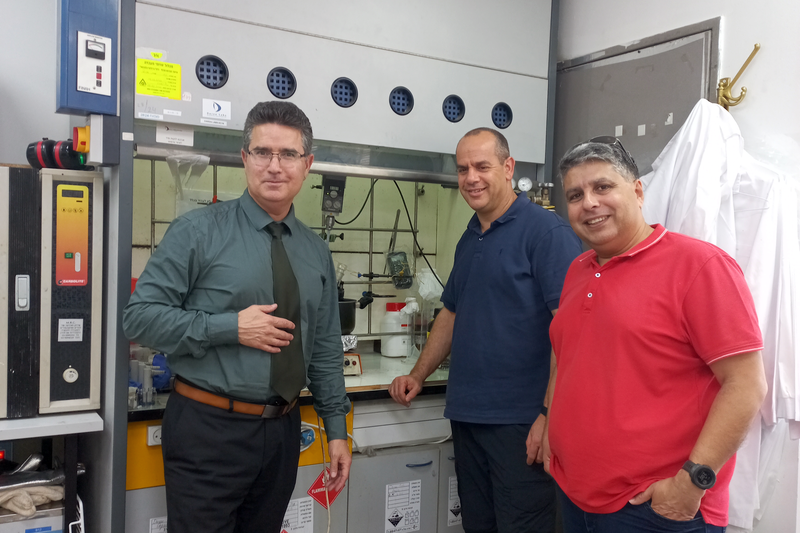
The founders of Snow Polymers (from left): Alex Braun, Dr. Shai Garty, Sharon Raymond. The startup develops biodegradable plastics from organic waste.
(Bild: Snow Polymers)
The Israeli startup Snow Polymers is developing a biodegradable thermoplastic polymer platform designed to reduce or replace the use of conventional petroleum-based plastics—particularly polyethylene (PE) and polypropylene (PP)—in high-volume plastic applications. The company’s approach is based on using industrial organic waste as a raw material, leveraging existing plastic production facilities, and maintaining a competitive cost structure. The company is developing a material platform that serves two industrial applications: as an additive or a high-volume biodegradable component for existing plastic systems, and as the basis for fully biodegradable product types.
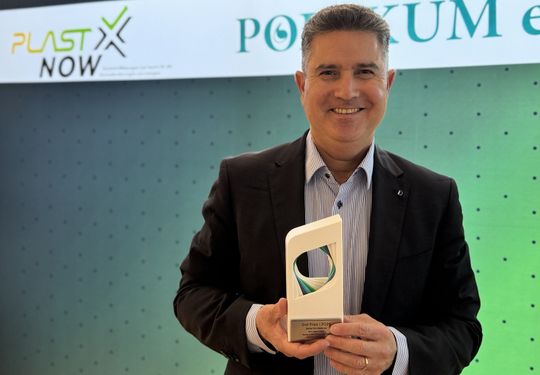
Alex Braun, co-founder of Snow Polymers, has been awarded second prize in the Biopolymer Innovation Award.
(Bild: PlastXnow/Stefan Lenz)
For this innovation, Snow Polymers was named a winner at the Biopolymer Innovation Award 2026. The company was initially selected by the jury as one of the five finalists and presented its technology at the Biopolymer Congress in Halle. This recognition highlights a challenge: The plastics market needs sustainable alternatives, but most options are not yet competitive, are limited in performance, or are difficult to integrate into existing manufacturing systems.
Sustainability Requires Industrial Acceptance
The global plastics industry is under pressure from regulators, customers, and end users to reduce the environmental impact of its products and prepare for stricter circular economy requirements. At the same time, the fundamental economic principles remain unchanged: materials must be affordable, available, processable, and technically reliable.
Since many biodegradable or bio-based materials are significantly more expensive than conventional polymers or require new equipment and modified processing conditions, the transition often remains blocked for high-volume processors. There is a gap between sustainability goals and industrial reality. Snow Polymers was founded to bridge this gap by ensuring that sustainable plastics meet three criteria simultaneously: competitive costs, compatibility with existing processing equipment, and a clear advantage at the end of the life cycle.
The Innovation: Waste-Based, Biodegradable Thermoplastics
The innovation begins with the conversion of industrial organic waste streams—such as polysaccharide-rich industrial byproducts—into biodegradable thermoplastic polymer materials. The technological challenge lies in converting these low-value organic byproducts into polymer materials that allow for precise control over melt flow, thermal behavior, mechanical properties, processing stability, and compatibility with manufacturing processes.
Snow Polymers develops biodegradable thermoplastics designed for compounding, pelletizing, and processing on existing plastic processing equipment. The technology is designed to work with established industrial processes such as extrusion, blown film extrusion, cast film extrusion, melt spinning, and molding. The platform’s goal is to provide materials that can be directly integrated into real-world industrial value chains.
Two Paths to the Market
Snow Polymers' market entry is based on two key strategies:
The first approach is to use it as an additive or as a biodegradable component with a high content within conventional plastic systems. This is relevant for manufacturers who need to increase the sustainable or renewable content of their products using existing production facilities. A cost-effective, biodegradable additive serves as a practical bridge to future material requirements.
The second approach involves developing specialized grades for fully biodegradable products. In this context, the materials serve as the primary basis for products where end-of-life considerations and biodegradability are key.
These two approaches are not contradictory; rather, they reflect the reality of the market, which is moving toward both incremental hybrid systems and product formats that are fully biodegradable from the outset.
Focus on PE and PP Applications
Polyethylene and polypropylene dominate the global plastics market due to their cost, processability, and performance. Replacing or reducing the use of PE and PP therefore requires an economically and industrially viable alternative. The potential of Snow Polymers is therefore not limited to agricultural mulch films. The greater opportunity lies in high-volume applications currently served by conventional plastics. Potential application areas include agricultural films, flexible packaging, select single-use applications, nonwovens, and textile products, as well as specialty industrial grades for manufacturers who do not wish to retrofit their production infrastructure.
Date: 08.12.2025
Naturally, we always handle your personal data responsibly. Any personal data we receive from you is processed in accordance with applicable data protection legislation. For detailed information please see our privacy policy.
Consent to the use of data for promotional purposes
I hereby consent to Vogel Communications Group GmbH & Co. KG, Max-Planck-Str. 7-9, 97082 Würzburg including any affiliated companies according to §§ 15 et seq. AktG (hereafter: Vogel Communications Group) using my e-mail address to send editorial newsletters. A list of all affiliated companies can be found here
Newsletter content may include all products and services of any companies mentioned above, including for example specialist journals and books, events and fairs as well as event-related products and services, print and digital media offers and services such as additional (editorial) newsletters, raffles, lead campaigns, market research both online and offline, specialist webportals and e-learning offers. In case my personal telephone number has also been collected, it may be used for offers of aforementioned products, for services of the companies mentioned above, and market research purposes.
Additionally, my consent also includes the processing of my email address and telephone number for data matching for marketing purposes with select advertising partners such as LinkedIn, Google, and Meta. For this, Vogel Communications Group may transmit said data in hashed form to the advertising partners who then use said data to determine whether I am also a member of the mentioned advertising partner portals. Vogel Communications Group uses this feature for the purposes of re-targeting (up-selling, cross-selling, and customer loyalty), generating so-called look-alike audiences for acquisition of new customers, and as basis for exclusion for on-going advertising campaigns. Further information can be found in section “data matching for marketing purposes”.
In case I access protected data on Internet portals of Vogel Communications Group including any affiliated companies according to §§ 15 et seq. AktG, I need to provide further data in order to register for the access to such content. In return for this free access to editorial content, my data may be used in accordance with this consent for the purposes stated here. This does not apply to data matching for marketing purposes.
Right of revocation
I understand that I can revoke my consent at will. My revocation does not change the lawfulness of data processing that was conducted based on my consent leading up to my revocation. One option to declare my revocation is to use the contact form found at https://contact.vogel.de. In case I no longer wish to receive certain newsletters, I have subscribed to, I can also click on the unsubscribe link included at the end of a newsletter. Further information regarding my right of revocation and the implementation of it as well as the consequences of my revocation can be found in the data protection declaration, section editorial newsletter.
Agricultural film as the first validation case
Agricultural films must be thin, easy to process, mechanically functional, and economically viable. Since conventional polyethylene films are often heavily contaminated with soil and plant residues after use and are difficult to recover, biodegradability offers direct operational and environmental benefits.
Snow Polymers has developed the biodegradable compound SNP 100 for this market. The accompanying technical data sheet defines relevant material and film properties for film extrusion, including melt flow, density, melt behavior, and typical mechanical properties of blown films. SNP 100 marks the successful transition from a general material concept to a defined industrial product line.
From Laboratory Materials to Industrial Processing
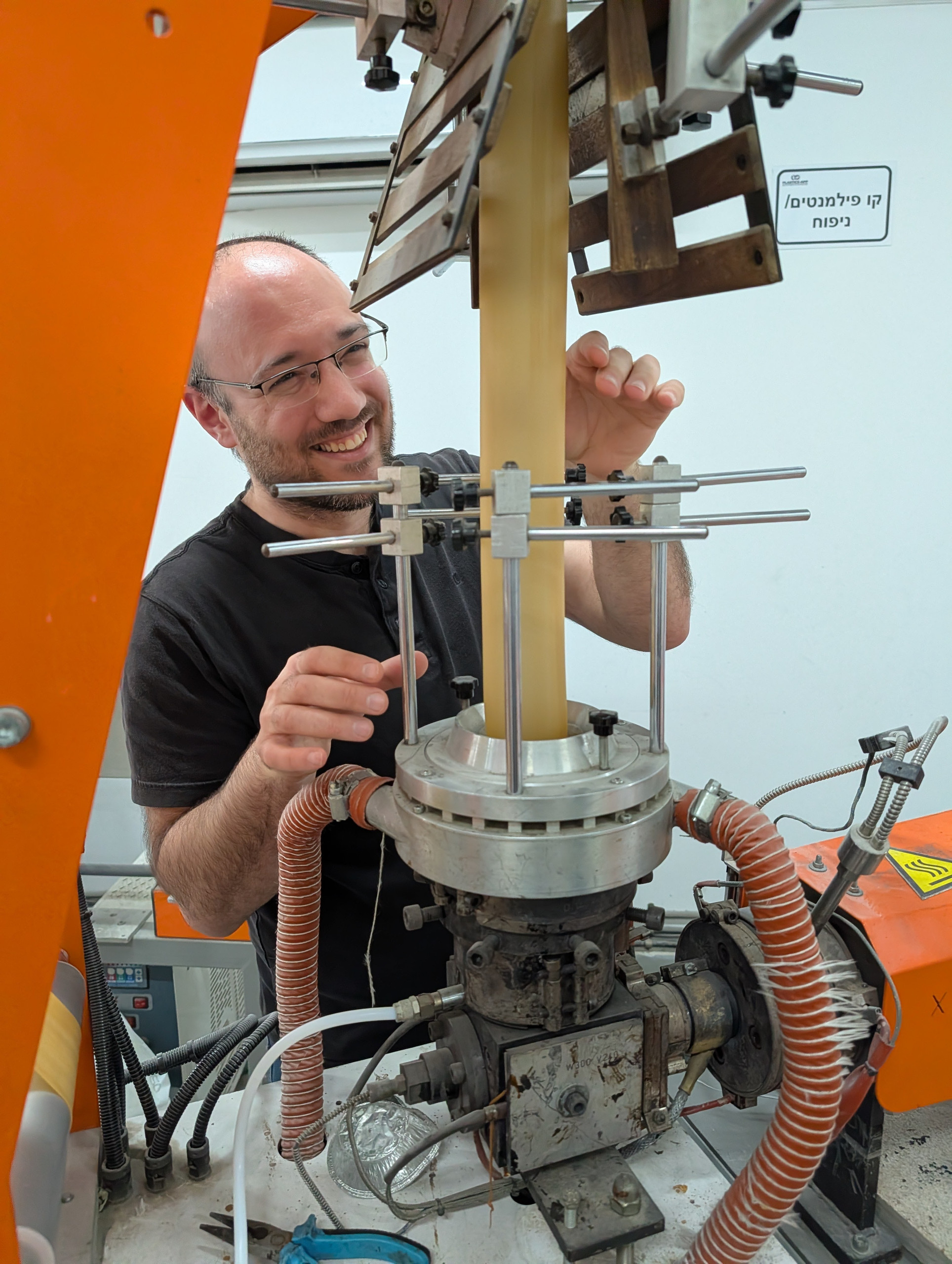
Dr. Naftali Kanovsky, chief chemist at Snow Polymers, is testing the processing of the biodegradable compound SNP 100 into agricultural films on a pilot blow-molding line.
(Source: Snow Polymers)
The transition from laboratory development to industrial processing is critical, as feed-in behavior, melt stability, bubble formation, and film continuity only become decisive factors at actual production scale. Snow Polymers has successfully completed a production run on the pilot blown film line of an international agricultural film manufacturer.
This milestone demonstrates the progress made from the laboratory phase to practical processing conditions, enabling industrial partners to begin evaluating the processing, performance, and type adaptation in concrete terms.
Biodegradability at no extra charge
Conventional petroleum-based polymers benefit from global economies of scale and well-established supply chains, which is why many biodegradable alternatives remain limited to expensive, high-end applications. Snow Polymers addresses this barrier by using industrial organic waste as a cost-effective feedstock to bring biodegradable materials close to the price level of conventional plastics.
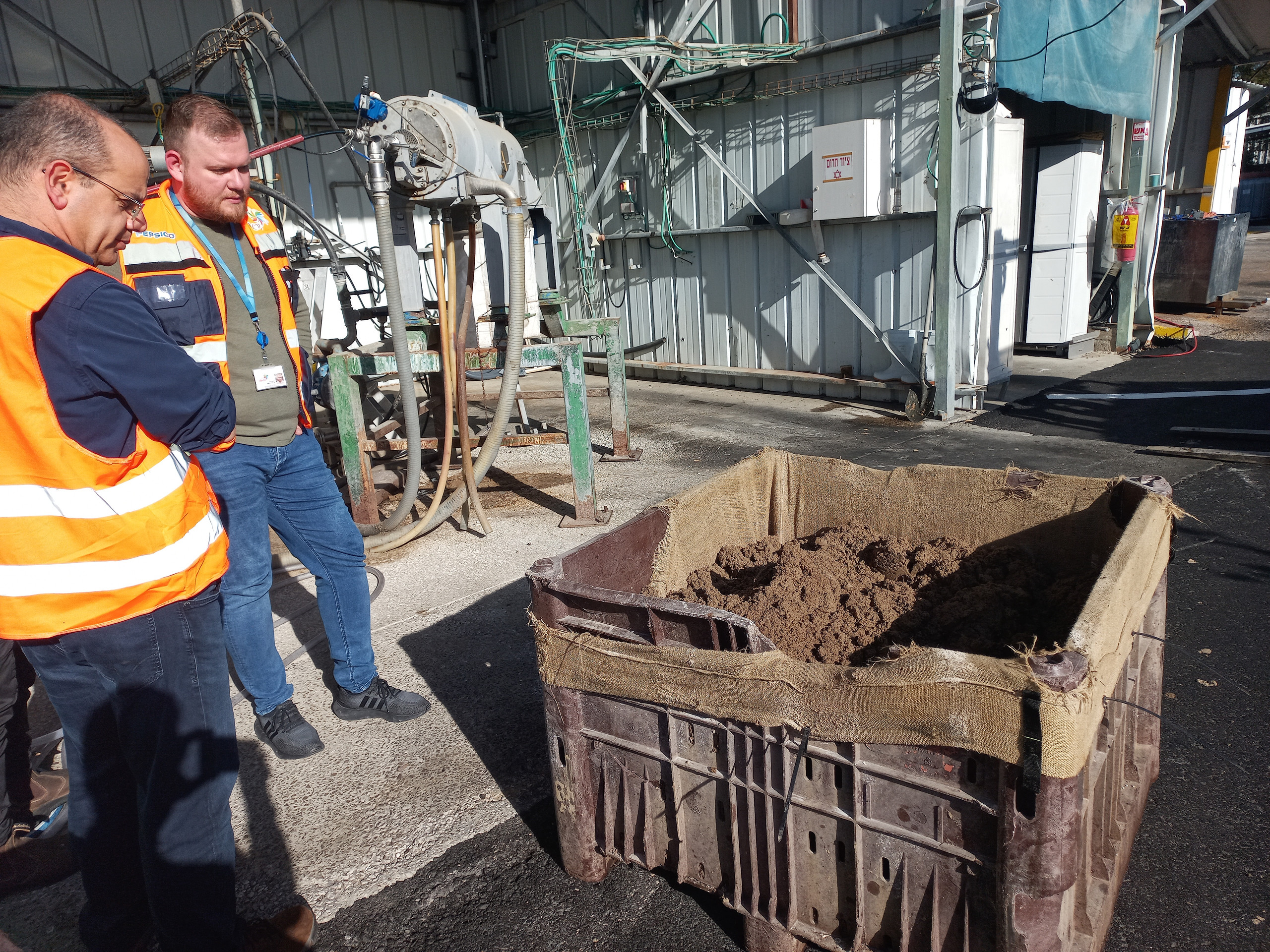
Using organic waste streams as raw materials. Left: Dr. Shai Garty, co-founder and CTO of Snow Polymers.
(Source: Snow Polymers)
When a material achieves near-price parity and can be processed on existing equipment, it becomes relevant to a much broader range of manufacturers. Here, too, additives offer a fast and cost-effective approach to meeting sustainability and regulatory requirements without having to completely replace the material system.
The Dual Circular Economy
Snow Polymers' approach is based on a dual-cycle property:
Upstream cycle: the use of industrial organic waste streams as raw materials, rather than competing with food resources or relying solely on native bio-based inputs.
Downstream cycle: the targeted biodegradability of the final polymer materials at the end of their life cycle.
This model also supports regional production structures, as it allows for the efficient integration of local waste, local compounding, and regional manufacturing partners.
Protecting Technology While Maintaining Dialogue
Since Snow Polymers’ core technology is still under development, confidential parameters regarding formulation, processing, and molecular architecture remain protected. Nevertheless, the message for industrial dialogue is clearly defined: Biodegradable thermoplastic materials are being developed from industrial organic waste for use in existing plastic processing facilities; these materials are suitable for both additive applications and fully degradable product types. This allows processors, compounders, and investors to assess the potential without disclosing proprietary know-how.
The company focuses on collaborating with three strategic groups: First, processors seeking a cost-effective way to increase the sustainable or biodegradable content in existing products through additives or hybrid components; second, companies that require customized, fully biodegradable grades for specific product applications and regulatory requirements; and third, industrial waste producers whose organic byproducts can serve as a raw material base.
Future Potential
The future potential lies in the strategic combination of cost, compatibility, and biodegradability. The company’s vision is to support the transition from petroleum-based plastics to sustainable material systems by enabling manufacturers to utilize their existing infrastructure.
Winning second place at the 2026 Biopolymer Innovation Award underscores this practical focus. Biodegradable plastics should not remain a premium exception, but rather become an economical, industrial alternative. The next steps include the ongoing development of application-specific grades, their comprehensive implementation in plastics processing, and the regulatory validation of biodegradability through international collaborations.
Snow Polymers
The startup Snow Polymers is headquartered in Israel and is supported by the deep-tech incubator InNegev in the south of the country, which ensures its scaling, industrial validation, and international expansion. The company develops biodegradable plastics from organic waste and plans to establish future production facilities in Europe and Asia.
Snow Polymers was founded by Sharon Raymond, Dr. Shai Garty, and Alex Braun. Dr. Shai Garty (co-founder and CTO) leads technology development alongside Chief Chemist Dr. Naftali Kanovsky.



:quality(80)/p7i.vogel.de/wcms/8d/fd/8dfdc63153cce5816e7a371257b6bdff/nexofoam-epla-schaumv1.png "From compact EPLA granules to fully foamed insulation boards: This bio-based particle foam material can be processed as a drop-in solution on existing EPS molding machines. (Bild: Nexofoam)")
:quality(80)/p7i.vogel.de/wcms/91/39/91397ac53b2ca4d65d65f563ebdc12ea/nexofoam-epla-schaumv1.png "From compact EPLA granules to fully foamed insulation boards: This bio-based particle foam material can be processed as a drop-in solution on existing EPS molding machines. (Bild: Nexofoam)")
:quality(80)/p7i.vogel.de/wcms/2b/37/2b37601930b643d709629fa8005aade0/nexofoam-epla-schaumv1.png "From compact EPLA granules to finished foam insulation boards: This bio-based particle foam material can be processed as a drop-in solution on existing EPS molding machines. (Bild: Nexofoam)")
:quality(80)/p7i.vogel.de/wcms/97/0c/970c52fd142e10a3c4566168037ca637/materialloesungen-pressefoto-1890x1329v1.jpeg "rPET pellets: At Fraunhofer IAP, terephthalic acid is recovered from PET to produce new polymers for bottles, fibers, and films. The yellowish to grayish hues are due to the recycled raw material. Through the targeted addition of additives, the color can be adjusted to produce even colorless material. (Bild: Fraunhofer IAP / Romina Schönefeld)")
:quality(80)/p7i.vogel.de/wcms/ce/ee/ceeeef086bfb174ebdda31c0dfccaf9a/2-weiss-blick-in-produktion-dji-0095-kopiev1.jpeg "A look inside the injection molding shop at Weiss Kunststoffverarbeitung in Illertissen, Bavaria. (Bild: White)")
:quality(80)/p7i.vogel.de/wcms/33/08/3308710c85715e917ec1baf9767fe4a7/2026-ewikon-wago-hei-kanalv1.png "Ewikon's 48-cavity hot runner as a production mold. (Bild: Ewikon)")
:quality(80)/p7i.vogel.de/wcms/a2/a5/a2a516dc69b4c8f8ad6f475ae6746a08/sxkh-bei-hpf-gesamtwerkzeugv1.png "The HMG 70XS1510 trimming press from the Chinese manufacturer SXKH combines all the functions required by toolmakers at HPF in a very compact design. The deciding factors in the purchase were the purchase price—and confidence in the quality of established international key components. (Bild: Pergler Media)")
:quality(80)/p7i.vogel.de/wcms/19/5f/195fdb6e09629994f1d6e3cf94dac8d8/bild-1-exam510-ultem9085v1.jpeg "Granular printing (FGF) makes it cost-effective to produce large-format functional parts from high-performance polymers such as Ultem 9085. (Bild: NEW AIM3D)")
:quality(80)/p7i.vogel.de/wcms/d5/c4/d5c46d40e1ae062370d058e2c006c376/dimitrisvetsikas1969-belgium-3595351v1.jpeg "European Plastics Industry Calls for Immediate Action to Address the Industry Crisis (Bild: dimitrisvetsikas1969)")
:quality(80)/p7i.vogel.de/wcms/e6/63/e663f0e1dd8818fc501c6fb5c5d33712/19-5689-circular-economy-of-resourcesv1.jpeg "Plastic waste from the average household is very heterogeneous. Only the right mix of technologies can turn all types of plastic waste into a new source of raw materials. (Bild: BASF)")
:quality(80)/p7i.vogel.de/wcms/31/5b/315b714f653484179232fbc4d6d79543/sesotec-img-andreas-hanus-25-20-281-29v1.jpeg "Andreas Hanus, Head of AI Development at Sesotec: “AI will not replace traditional sorting technology, but will intelligently enhance it.” (Bild: Sesotec)")
:quality(80)/p7i.vogel.de/wcms/74/5f/745f512239689819275af39a82f59860/b-brenkenv1.jpeg "Dr. Benedikt Brenken, Director of R-Cycle: \"The digital product passport will fundamentally change plastic recycling.\" (Bild: R-Cycle)")
:quality(80)/p7i.vogel.de/wcms/40/6d/406d05534ab4d28194bd29699e023e67/2026-09-09-uni-kiel-aufmacherv1.jpeg "These self-polarizing polymer coatings could be used in a wide variety of electronic components in the future. (Bild: University of Kiel/C. Anders)")
:quality(80)/p7i.vogel.de/wcms/5d/46/5d46e098a7cfaebdd9643df47153c5af/aufmacherv1.png "The PPWR imposes new requirements on packaging: What impact does this have on mechanical engineering? (Bild: KI-generiert / Dall-E)")
:quality(80)/p7i.vogel.de/wcms/70/13/7013fe202fb4790708f62f69cd0c83d4/aufmacher-st-c3-a4rkeschaumfoliev1.png "Using thermoplastic starch as a base, researchers at the IKV successfully produced a flexible foam film using physical blowing agents. (Bild: IKV)")
:quality(80)/p7i.vogel.de/wcms/d1/2b/d12b536ba3b382d0d138e342ac1038e6/03--20pm-imm-mgsv1.jpeg "MGS Richfield Site (Bild: MGS)")
:quality(80)/p7i.vogel.de/wcms/90/9c/909cf6eb1b91a9a84ff535033ea9b048/honeycombv1.jpeg "The composite material made of epoxy and glass fibers not only protects against flames but is also fully recyclable. (Bild: Empa)")
:quality(80)/p7i.vogel.de/wcms/6a/d5/6ad5980b0c965409c71582fc59145e13/1920-covestro-new-covestro-headquartersv1.jpeg "Covestro's corporate headquarters in Leverkusen (Bild: Covestro)")
:quality(80)/p7i.vogel.de/wcms/db/74/db741079d26ad9e7a69278fde45e79c7/aufmacherv1.png "(Bild: KI-generiert / Dall-E)")
:quality(80)/p7i.vogel.de/wcms/b3/65/b3654df434f4d31e1fda3c79bc7bb4b0/nakura-20kunstrasenteppich-20ohne-20verf-c3-bcllungv1.jpeg "Tecnaro has developed synthetic turf fibers using a specially formulated Arboblend blend that offers high resistance to heat, UV rays, and weathering, and, because it is niobium-based, sequesters CO₂ over the long term. (Bild: Tecnaro)")
:quality(80)/p7i.vogel.de/wcms/1a/dd/1add7f85f1c8fdb5dc4b86c224c8010b/bio-20net-2c-20plastrans-2c-20meshpack-2c-20biologiq-20-285-29v1.png "The Bio-Net thus combines key characteristics of conventional plastic nets—particularly mechanical performance and efficient use of materials—with the advantages of biodegradability and compostability. (Bild: Plastrans)")
:quality(80)/p7i.vogel.de/wcms/db/74/db741079d26ad9e7a69278fde45e79c7/aufmacherv1.png "aufmacherv1 (Bild: KI-generiert / Dall-E)")