PlastXnow Explains – High-Performance Plastics Properties, Materials, and Applications
From
Melanie Ehrhardt
8 min Reading Time
High-performance plastics are characterized by their exceptional mechanical, thermal, and chemical properties. They are designed for demanding applications and are widely used in the automotive, medical technology, and electronics industries.
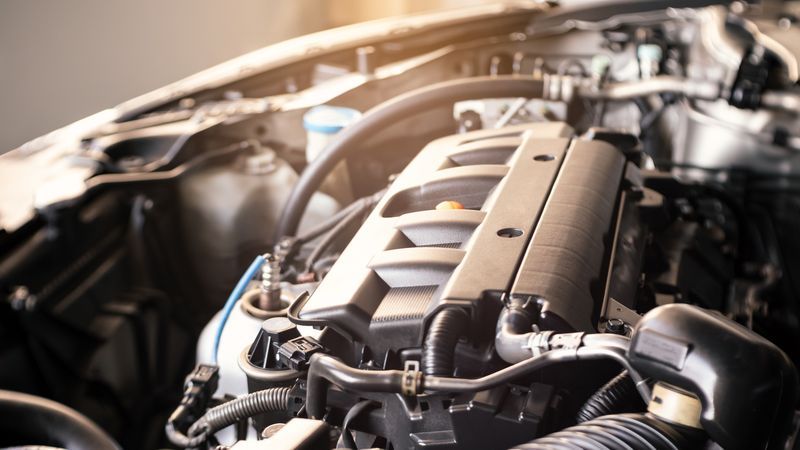
High-performance plastics are frequently used in the automotive industry.
(Bild: happycreator - stock.adobe.com)
High-performance plastics are not just plastics—they represent the premier class of plastics. Their unique properties, such as high temperature and chemical resistance, open up new possibilities and significantly improve the efficiency and safety of products. In this article, we take a closer look at the special characteristics of high-temperature plastics, their versatile applications, and the challenges involved in processing and recycling them.
What are high-performance plastics?
High-performance plastics are a special class of thermoplastics characterized by exceptionally high mechanical, thermal, and chemical resistance. They retain their properties even under extreme conditions such as high temperatures, exposure to chemicals, pressure, or mechanical stress.
Compared to conventional plastics, high-performance polymers offer improved performance in demanding environments and under extreme conditions. When it comes to engineering plastics, they differ in terms of temperature resistance, mechanical performance, and price. High-performance plastics are designed for more extreme operating conditions, while engineering plastics are also found in everyday applications.
Because of their properties, these materials are also referred to as high-performance polymers, high-performance thermoplastics, high-temperature plastics, or high-tech plastics.
Properties of High-Performance Plastics
High-performance plastics are a subset of thermoplastics. This classification is also reflected in their property profile. However, compared to standard thermoplastics and engineering thermoplastics, they are in a league of their own—particularly in terms of temperature resistance, chemical resistance, and mechanical properties.
Key features include:
Temperature resistance: They can withstand high temperatures, often above 150 °C, without losing their physical properties.
Mechanical strength: They have high tensile, compressive, and flexural strength, making them ideal for structural applications.
Chemical resistance: High-performance plastics are resistant to aggressive chemicals, oils, and solvents.
Low moisture absorption: They are less prone to absorbing moisture, which optimizes their performance in humid environments.
Good insulators: Many of these plastics are extremely effective electrical and thermal insulators.
Thanks to their combination of strength, stability, and durability, high-performance plastics are used in industries that require long-lasting materials capable of withstanding extreme conditions. Industry-specific innovations in materials science continue to drive the development of high-performance plastics to meet the demands of modern technological applications.
An Overview of Key Figures
While there is no exact number indicating how many high-performance plastics exist, in practice, there are generally considered to be about 10 to 20 established high-performance polymers that are industrially relevant. Among the most important are polyetheretherketone (PEEK), polytetrafluoroethylene (PTFE), and polyphenylene sulfide (PPS).
Polyetheretherketone (PEEK)
This high-performance thermoplastic is best known for its exceptional strength, stiffness, and heat resistance. It is chemically resistant to a wide range of acids, alkalis, and solvents, making it ideal for demanding environments.
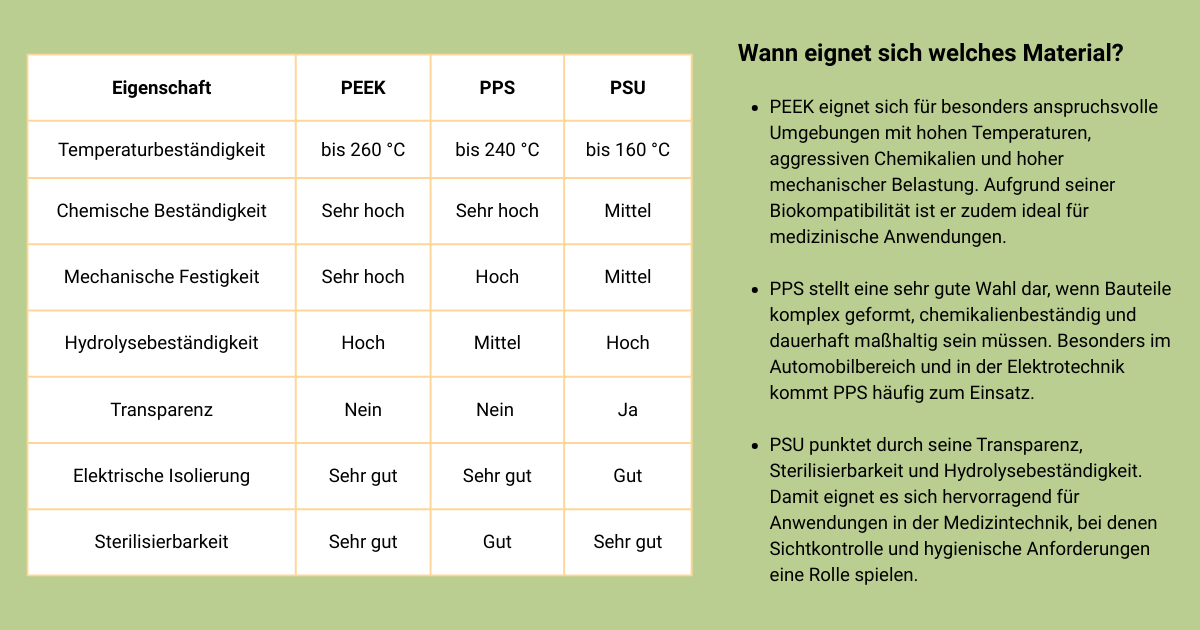
PEEK can withstand high temperatures of up to 260 °C without losing its structural properties. Because of these properties, PEEK is one of the plastics frequently used in the aerospace, automotive, and medical technology industries.
Polytetrafluoroethylene (PTFE)
The fluoropolymer PTFE (Polytetrafluoroethylene), also known by the brand name Teflon, is characterized by its outstanding chemical resistance and extreme temperature tolerance, as it can withstand temperatures ranging from -200 °C to 260 °C.
PTFE is also non-stick and has excellent dielectric properties, making it widely used in electrical insulation materials and non-stick coatings. Due to its versatility and durability, PTFE is the plastic of choice in environments where other plastics would fail.
Polyphenylene sulfide (PPS)
PPS is known for its excellent chemical resistance and thermal stability. This high-performance polymer can withstand temperatures of up to 240 °C while maintaining its structural integrity.
Date: 08.12.2025
Naturally, we always handle your personal data responsibly. Any personal data we receive from you is processed in accordance with applicable data protection legislation. For detailed information please see our privacy policy.
Consent to the use of data for promotional purposes
I hereby consent to Vogel Communications Group GmbH & Co. KG, Max-Planck-Str. 7-9, 97082 Würzburg including any affiliated companies according to §§ 15 et seq. AktG (hereafter: Vogel Communications Group) using my e-mail address to send editorial newsletters. A list of all affiliated companies can be found here
Newsletter content may include all products and services of any companies mentioned above, including for example specialist journals and books, events and fairs as well as event-related products and services, print and digital media offers and services such as additional (editorial) newsletters, raffles, lead campaigns, market research both online and offline, specialist webportals and e-learning offers. In case my personal telephone number has also been collected, it may be used for offers of aforementioned products, for services of the companies mentioned above, and market research purposes.
Additionally, my consent also includes the processing of my email address and telephone number for data matching for marketing purposes with select advertising partners such as LinkedIn, Google, and Meta. For this, Vogel Communications Group may transmit said data in hashed form to the advertising partners who then use said data to determine whether I am also a member of the mentioned advertising partner portals. Vogel Communications Group uses this feature for the purposes of re-targeting (up-selling, cross-selling, and customer loyalty), generating so-called look-alike audiences for acquisition of new customers, and as basis for exclusion for on-going advertising campaigns. Further information can be found in section “data matching for marketing purposes”.
In case I access protected data on Internet portals of Vogel Communications Group including any affiliated companies according to §§ 15 et seq. AktG, I need to provide further data in order to register for the access to such content. In return for this free access to editorial content, my data may be used in accordance with this consent for the purposes stated here. This does not apply to data matching for marketing purposes.
Right of revocation
I understand that I can revoke my consent at will. My revocation does not change the lawfulness of data processing that was conducted based on my consent leading up to my revocation. One option to declare my revocation is to use the contact form found at https://contact.vogel.de. In case I no longer wish to receive certain newsletters, I have subscribed to, I can also click on the unsubscribe link included at the end of a newsletter. Further information regarding my right of revocation and the implementation of it as well as the consequences of my revocation can be found in the data protection declaration, section editorial newsletter.
PPS also offers excellent dimensional stability and low moisture absorption, making it ideal for use in high-precision components. Because of these properties, PPS is a popular plastic in the automotive and electronics industries. Its inherent flame resistance also makes it an attractive choice for applications that must meet strict fire safety requirements.
What other high-performance plastics are there?
Polyimides (PI) are heterocyclic polymers that are stable up to 550 °C. They offer excellent chemical resistance and are suitable for use as components in mechanical engineering (valves, bearings) and in electrical engineering for coil forms, as well as for cable insulation and as substrates for printed circuit boards.
Another class of materials, polyetherimides (PEI), has a lower softening point (approximately 360 °C) and can be processed using standard plastics industry processes.
Liquid-crystal polymers (LCPs) are frequently used in electronics because of their good processability and strength.
Polyaryletherketones (PEKK) are characterized by exceptional mechanical, thermal, and chemical properties and are therefore used in numerous industries and applications.
Another important type of fluoropolymer is perfluoroalkoxylalkane (PFA), which can withstand temperatures up to 260 °C. Important: However, fluoropolymers are classified as high-performance plastics only in certain cases.
Polysulfone (PSU) is an amorphous plastic with high transparency and good impact strength. It can withstand temperatures up to about 160 °C and offers good hydrolytic stability, which is why it is frequently used in medical technology and food processing.
IN DETAIL
Comparison of High-Performance Plastics: PEEK, PPS, and PSU
High-performance plastics can be processed using a variety of methods that are specifically tailored to their unique properties and requirements. Here are the most common processing methods:
Injection molding is widely used and enables the production of precise and complex components in large quantities. Especially when working with high-performance polymers, the injection molding machines must withstand high temperatures.
In the extrusion process, plastic pellets are heated and forced through a shaping die to produce continuous shapes such as tubes or profiles. This technique is particularly well-suited for thermoplastics.
Pressing and sintering is a specialized manufacturing process used primarily for polymers that are difficult to process by melting. In this process, plastic powder is pressed into a mold under high pressure and then compacted in an oven at a temperature below (or slightly above) the melting point.
In thermoforming, a plastic sheet is heated and drawn over a mold to create large 3D structures. This method is less common with high-performance plastics, but is used for certain applications.
High-performance polymers can also be machined by turning, milling, and drilling. These techniques are often used in the manufacture of custom-made or precision components.
Additive manufacturing of heat-resistant plastics enables the production of complex, lightweight, and heat-resistant components (up to >260°C) using FDM/FFF or SLS processes.
Each of these methods requires specific adjustments to the machinery and processes in order to meet the high demands of the materials.
In detail
About Us
The cover story of the upcoming issue of *Plastverarbeiter* (Issue 4-5/2026, Publication Date: April 29, 2026) is “Processing High-Performance Plastics—Precision Under Extreme Conditions.” In this issue, we take a closer look at the various processes and provide insights into real-world applications.
Don't want to miss this issue? Then sign up for our free newsletter and get the e-paper delivered right to your inbox. Sign up now!
Areas of Use and Applications
High-performance plastics are used in applications where components must withstand very high temperatures, heavy mechanical loads, or corrosive chemicals. They often replace metals because they are lighter and corrosion-resistant.
Einsatzbereich
Produktbeispiele
Luft- und Raumfahrt
Leichte Strukturbauteile, Lager und Gleitflächen, Isolationsmaterialien sowie Bauteile in Triebwerken
Automobilindustrie
Motor- und Getriebeteile, Dichtungen, Lager und Zahnräder sowie Bauteile im Kraftstoffsystem
Elektro- und Elektronikindustrie
Isolatoren, Steckverbinder, Leiterplattenbauteile und Bauteile für Halbleitertechnik
Medizintechnik
Implantate, chirurgische Instrumente sowie sterilisierbare Bauteile
Maschinen- und Anlagenbau
Gleitlager, Dichtungen, Pumpen- und Ventilteile sowie verschleißfeste Maschinenteile
High-performance plastics are primarily used in high-tech industries such as aviation, automotive manufacturing, electronics, medical technology, and mechanical engineering, where materials must be particularly durable and temperature-resistant.
In Detail
High-Performance Plastics for Medical Technology
High-performance plastics are revolutionizing medical technology thanks to their extreme temperature resistance, outstanding chemical resistance, high mechanical strength, and biocompatibility. They are ideal for surgical instruments, implants, and diagnostic devices because they can withstand repeated sterilization (steam, gamma) and, in some cases, replace metal.
High-Performance Plastics for Mechanical Engineering
High-performance plastics are essential for modern mechanical engineering because they replace metal, reduce weight, and withstand extreme conditions. They offer high temperature resistance (>200 °C), excellent chemical resistance, low wear, and high strength. Major applications include plain bearings, gears, seals, and insulating components.
What are the most important selection criteria?
When selecting high-performance plastics, it is important to ensure that the plastic meets the requirements of the specific application. The most important selection criteria are:
Temperature Resistance
maximum continuous operating temperature
What to Do When Temperatures Rise Very High for a Short Time
Heat-Forming Resistance
The plastic must retain its properties even at high temperatures.
Mechanical Properties
Strength
Stiffness
Toughness
Wear resistance
These properties determine how well the plastic withstands stress, friction, or pressure.
Chemical Resistance (to)
Acids
Lye
Solvent
Oils
This is important, for example, in the chemical industry or in the automotive sector.
Electrical Properties
Insulation capacity
Dielectric Strength
Particularly relevant for electronics and electrical engineering applications.
Weight and Density
High-performance plastics are often lighter than metals, which is particularly important in the aircraft and automotive industries.
Can high-performance plastics be recycled?
Generally speaking, yes! However, the process is often more complex than with conventional plastics. Their specific properties and applications require careful handling during recycling.
Methods that can also be used for recycling high-performance plastics generally include:
Mechanical recycling: In this method, plastics are shredded and reprocessed into new products. However, this process can compromise the properties of the materials.
Chemical Recycling: In this process, plastics are broken down into their chemical components and can then be used to manufacture new high-performance plastics. This method can help preserve the original properties of the plastics.
Energy recovery: If the material cannot be recycled directly, it can be incinerated to generate energy.
The recyclability of high-performance plastics depends heavily on their composition, the recycling process used, and the infrastructure for collection and processing. However, technological advances and innovative recycling methods are increasingly improving their recyclability.
Conclusion
High-performance plastics are a special class of plastics characterized by their exceptional physical, chemical, and thermal properties. They are used in demanding applications where standard plastics often do not perform well enough.
Overall, high-performance plastics play an important role in technological development and offer innovative solutions across numerous industries, while at the same time, their recyclability and environmental sustainability are becoming an increasingly important focus.



:quality(80)/p7i.vogel.de/wcms/8d/fd/8dfdc63153cce5816e7a371257b6bdff/nexofoam-epla-schaumv1.png "From compact EPLA granules to fully foamed insulation boards: This bio-based particle foam material can be processed as a drop-in solution on existing EPS molding machines. (Bild: Nexofoam)")
:quality(80)/p7i.vogel.de/wcms/91/39/91397ac53b2ca4d65d65f563ebdc12ea/nexofoam-epla-schaumv1.png "From compact EPLA granules to fully foamed insulation boards: This bio-based particle foam material can be processed as a drop-in solution on existing EPS molding machines. (Bild: Nexofoam)")
:quality(80)/p7i.vogel.de/wcms/2b/37/2b37601930b643d709629fa8005aade0/nexofoam-epla-schaumv1.png "From compact EPLA granules to finished foam insulation boards: This bio-based particle foam material can be processed as a drop-in solution on existing EPS molding machines. (Bild: Nexofoam)")
:quality(80)/p7i.vogel.de/wcms/97/0c/970c52fd142e10a3c4566168037ca637/materialloesungen-pressefoto-1890x1329v1.jpeg "rPET pellets: At Fraunhofer IAP, terephthalic acid is recovered from PET to produce new polymers for bottles, fibers, and films. The yellowish to grayish hues are due to the recycled raw material. Through the targeted addition of additives, the color can be adjusted to produce even colorless material. (Bild: Fraunhofer IAP / Romina Schönefeld)")
:quality(80)/p7i.vogel.de/wcms/ce/ee/ceeeef086bfb174ebdda31c0dfccaf9a/2-weiss-blick-in-produktion-dji-0095-kopiev1.jpeg "A look inside the injection molding shop at Weiss Kunststoffverarbeitung in Illertissen, Bavaria. (Bild: White)")
:quality(80)/p7i.vogel.de/wcms/33/08/3308710c85715e917ec1baf9767fe4a7/2026-ewikon-wago-hei-kanalv1.png "Ewikon's 48-cavity hot runner as a production mold. (Bild: Ewikon)")
:quality(80)/p7i.vogel.de/wcms/a2/a5/a2a516dc69b4c8f8ad6f475ae6746a08/sxkh-bei-hpf-gesamtwerkzeugv1.png "The HMG 70XS1510 trimming press from the Chinese manufacturer SXKH combines all the functions required by toolmakers at HPF in a very compact design. The deciding factors in the purchase were the purchase price—and confidence in the quality of established international key components. (Bild: Pergler Media)")
:quality(80)/p7i.vogel.de/wcms/19/5f/195fdb6e09629994f1d6e3cf94dac8d8/bild-1-exam510-ultem9085v1.jpeg "Granular printing (FGF) makes it cost-effective to produce large-format functional parts from high-performance polymers such as Ultem 9085. (Bild: NEW AIM3D)")
:quality(80)/p7i.vogel.de/wcms/d5/c4/d5c46d40e1ae062370d058e2c006c376/dimitrisvetsikas1969-belgium-3595351v1.jpeg "European Plastics Industry Calls for Immediate Action to Address the Industry Crisis (Bild: dimitrisvetsikas1969)")
:quality(80)/p7i.vogel.de/wcms/e6/63/e663f0e1dd8818fc501c6fb5c5d33712/19-5689-circular-economy-of-resourcesv1.jpeg "Plastic waste from the average household is very heterogeneous. Only the right mix of technologies can turn all types of plastic waste into a new source of raw materials. (Bild: BASF)")
:quality(80)/p7i.vogel.de/wcms/31/5b/315b714f653484179232fbc4d6d79543/sesotec-img-andreas-hanus-25-20-281-29v1.jpeg "Andreas Hanus, Head of AI Development at Sesotec: “AI will not replace traditional sorting technology, but will intelligently enhance it.” (Bild: Sesotec)")
:quality(80)/p7i.vogel.de/wcms/74/5f/745f512239689819275af39a82f59860/b-brenkenv1.jpeg "Dr. Benedikt Brenken, Director of R-Cycle: \"The digital product passport will fundamentally change plastic recycling.\" (Bild: R-Cycle)")
:quality(80)/p7i.vogel.de/wcms/40/6d/406d05534ab4d28194bd29699e023e67/2026-09-09-uni-kiel-aufmacherv1.jpeg "These self-polarizing polymer coatings could be used in a wide variety of electronic components in the future. (Bild: University of Kiel/C. Anders)")
:quality(80)/p7i.vogel.de/wcms/5d/46/5d46e098a7cfaebdd9643df47153c5af/aufmacherv1.png "The PPWR imposes new requirements on packaging: What impact does this have on mechanical engineering? (Bild: KI-generiert / Dall-E)")
:quality(80)/p7i.vogel.de/wcms/70/13/7013fe202fb4790708f62f69cd0c83d4/aufmacher-st-c3-a4rkeschaumfoliev1.png "Using thermoplastic starch as a base, researchers at the IKV successfully produced a flexible foam film using physical blowing agents. (Bild: IKV)")
:quality(80)/p7i.vogel.de/wcms/d1/2b/d12b536ba3b382d0d138e342ac1038e6/03--20pm-imm-mgsv1.jpeg "MGS Richfield Site (Bild: MGS)")
:quality(80)/p7i.vogel.de/wcms/90/9c/909cf6eb1b91a9a84ff535033ea9b048/honeycombv1.jpeg "The composite material made of epoxy and glass fibers not only protects against flames but is also fully recyclable. (Bild: Empa)")
:quality(80)/p7i.vogel.de/wcms/6a/d5/6ad5980b0c965409c71582fc59145e13/1920-covestro-new-covestro-headquartersv1.jpeg "Covestro's corporate headquarters in Leverkusen (Bild: Covestro)")
:quality(80)/p7i.vogel.de/wcms/db/74/db741079d26ad9e7a69278fde45e79c7/aufmacherv1.png "(Bild: KI-generiert / Dall-E)")
:quality(80)/p7i.vogel.de/wcms/b3/65/b3654df434f4d31e1fda3c79bc7bb4b0/nakura-20kunstrasenteppich-20ohne-20verf-c3-bcllungv1.jpeg "Tecnaro has developed synthetic turf fibers using a specially formulated Arboblend blend that offers high resistance to heat, UV rays, and weathering, and, because it is niobium-based, sequesters CO₂ over the long term. (Bild: Tecnaro)")
:quality(80)/p7i.vogel.de/wcms/46/b1/46b1d912deadc250fc2f1ae14c6db626/variousphotography-mercedes-benz-2498295-1280v1.jpeg "Plastics are used in automobiles in various applications, including the center console. (Bild: Various Photography)")
:quality(80)/p7i.vogel.de/wcms/59/6c/596cdb5965ee6ac0d145531c4af4c1e2/aufmacher-20pp-20becherv1.jpeg "Polypropylene is often used to make plastic cups. (Bild: Canva)")