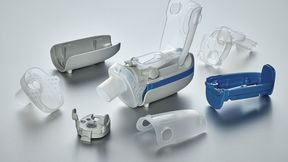
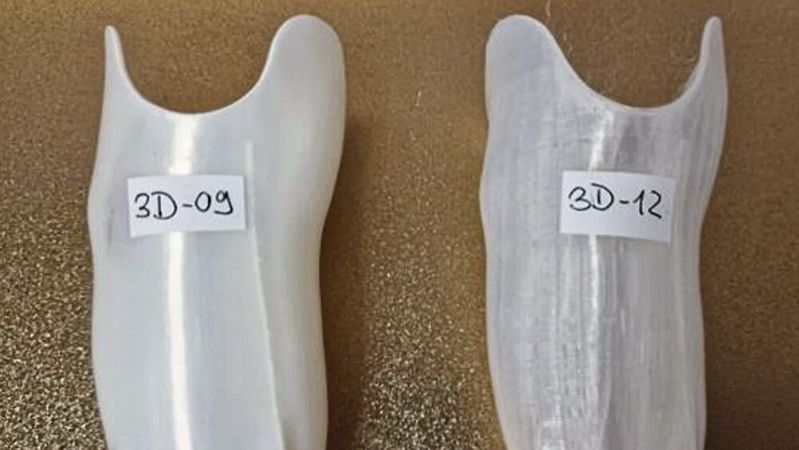
The NaRo-3D research project demonstrates how prosthetic stems can be manufactured in a more climate-friendly and efficient manner. Bio-based, 3D-printable materials and a fully digital manufacturing process separate the process of taking patient measurements from production, thereby offering benefits not only in areas where there is a shortage of qualified personnel.
It sounds like science fiction, but it's real. 3D-printed prosthetics can provide a sustainable solution to gaps in care.
(Image: DOI ortho-innovative)
According to ATscale, an organization affiliated with the WHO, approximately 65 million people worldwide live with a limb amputation. An estimated 1.5 million people—some of whom have undergone multiple amputations—are added to this number each year. Only a fraction of those affected receive care. In low- and middle-income countries, according to WHO data, only 5 to 15 percent of those in need have access to an adequate and properly fitted prosthesis. A key bottleneck is the shortage of trained specialists, who are often available only in major cities.
This is precisely where the NaRo-3D project comes in, a collaboration involving the Fraunhofer Institute for Manufacturing Engineering and Automation (IPA), the biomaterial manufacturer Tecnaro, and the orthopedic company DOI ortho-innovativ. The project was funded by the Federal Ministry of Agriculture, Food, and Home Affairs (BMLEH) through the project management agency Fachagentur Nachwachsende Rohstoffe (FNR).
High-Tech Biomaterials Straight from the Printer
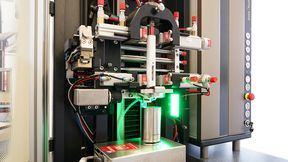
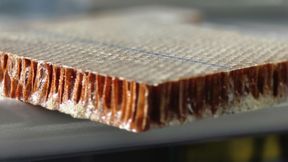
Tecnaro processed bio-polyolefins, bio-polyesters, bio-polyamides, bio-TPU, and cellulose derivatives with various fillers and additives to create 3D-printable composites. According to the manufacturer, these materials demonstrated good melt flow properties—which are important for the production of filament-shaped monofilament—as well as mechanical properties that, in some cases, exceeded those of comparable petroleum-based products. According to the project, two variants even achieved the properties of high-performance materials such as titanium or carbon fiber.
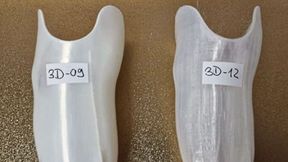
In DOI’s printing tests, two materials proved to be particularly suitable: a biopolyester with 78% bio-based carbon content and a 100% bio-based biopolyamide. A transparent filament made from cellulose derivatives and biopolyester, which has a bio-based carbon content of 46%, was also well-suited for the production of test shafts, according to the manufacturer.
From Imaging to Printing
The Fraunhofer IPA developed a virtual abutment design platform for seamless, digital design and manufacturing. This platform utilizes MRI, laser scanning, and ultrasound imaging techniques, and uses the data from these methods to create CAD and finite element models of the residual limb and the abutment. Using the finite element method, load-bearing capacity and comfort performance in interaction with the stump can be determined, and the geometry and wall thickness of the prosthesis can be optimized. The project describes the fact that, in addition to volumetric stresses, the shear stresses of the stump are also taken into account as a novelty in prosthetics. Feedback from long-term prosthesis wearers regarding prostheses made of bio-composites has also proven to be positive.
Digital manufacturing remains a niche market for now
Instead of making a plaster cast, pouring casting resins into it, and spending hours on manual labor, measurement data could theoretically be processed worldwide and would not depend on local expertise. This is particularly relevant in regions with a shortage of skilled workers.
However, the technology is not yet widely used. According to industry estimates, only about 10 to 20 percent of orthopedic technology companies in the DACH region operate at least partially digitally; less than 5 percent of prostheses are actually 3D-printed. According to its own statements, the federal government does not have reliable statistics on the use of this technology. In addition to regulatory requirements under medical device law and increased investment needs for scanners, software, and printers, reimbursement structures that remain unclear are also considered barriers to adoption.
Relevance for Health Care in the Global South
“We hope, not least, that the project results will help improve orthopedic care in many countries through optimized digital approaches,” says Karl-Heinz Trebbin, master orthopedic technician and DOI managing director. He himself has many years of experience in providing care to amputee patients in South America, Africa, and Asia. However, digital methods should “not replace orthopedic expertise, but rather complement it in a meaningful way.” Ideally, this would leave more time for individualized patient care.
The Fraunhofer IPA aims to make its virtual measurement platform available to users such as medical supply stores and orthopedic technology companies. “Since specialized programming knowledge is currently still required to use the platform, we are supporting medical supply stores with targeted pilot projects to help them successfully integrate these innovative digital processes into their internal workflows,” emphasizes project manager Dr.-Ing. Okan Avci of Fraunhofer IPA.
Date: 08.12.2025
Naturally, we always handle your personal data responsibly. Any personal data we receive from you is processed in accordance with applicable data protection legislation. For detailed information please see our privacy policy.
Consent to the use of data for promotional purposes
I hereby consent to Vogel Communications Group GmbH & Co. KG, Max-Planck-Str. 7-9, 97082 Würzburg including any affiliated companies according to §§ 15 et seq. AktG (hereafter: Vogel Communications Group) using my e-mail address to send editorial newsletters. A list of all affiliated companies can be found here
Newsletter content may include all products and services of any companies mentioned above, including for example specialist journals and books, events and fairs as well as event-related products and services, print and digital media offers and services such as additional (editorial) newsletters, raffles, lead campaigns, market research both online and offline, specialist webportals and e-learning offers. In case my personal telephone number has also been collected, it may be used for offers of aforementioned products, for services of the companies mentioned above, and market research purposes.
Additionally, my consent also includes the processing of my email address and telephone number for data matching for marketing purposes with select advertising partners such as LinkedIn, Google, and Meta. For this, Vogel Communications Group may transmit said data in hashed form to the advertising partners who then use said data to determine whether I am also a member of the mentioned advertising partner portals. Vogel Communications Group uses this feature for the purposes of re-targeting (up-selling, cross-selling, and customer loyalty), generating so-called look-alike audiences for acquisition of new customers, and as basis for exclusion for on-going advertising campaigns. Further information can be found in section “data matching for marketing purposes”.
In case I access protected data on Internet portals of Vogel Communications Group including any affiliated companies according to §§ 15 et seq. AktG, I need to provide further data in order to register for the access to such content. In return for this free access to editorial content, my data may be used in accordance with this consent for the purposes stated here. This does not apply to data matching for marketing purposes.
Right of revocation
I understand that I can revoke my consent at will. My revocation does not change the lawfulness of data processing that was conducted based on my consent leading up to my revocation. One option to declare my revocation is to use the contact form found at https://contact.vogel.de. In case I no longer wish to receive certain newsletters, I have subscribed to, I can also click on the unsubscribe link included at the end of a newsletter. Further information regarding my right of revocation and the implementation of it as well as the consequences of my revocation can be found in the data protection declaration, section editorial newsletter.
Tecnaro, for its part, intends to move quickly to bring the new composite materials to market, and its sights are set on more than just 3D-printed orthotic and prosthetic applications. The company also plans to offer injection-molded end products with high heat resistance and impact strength for other industries. The monofilaments are expected to be available shortly through the distribution partner Albis Distribution. The Final report of the project can be viewed on the website of the Agency for Renewable Resources (FNR).