New Plastic TaxMore recycling, more money—is it really that simple?
From
Melanie Ehrhardt (in charge) | Translated by AI
3 min Reading Time
The CDU/CSU and the SPD want to use a new tax to encourage companies to reduce their use of plastic. They also hope this will generate significant revenue for the budget. Business associations are criticizing the proposal.
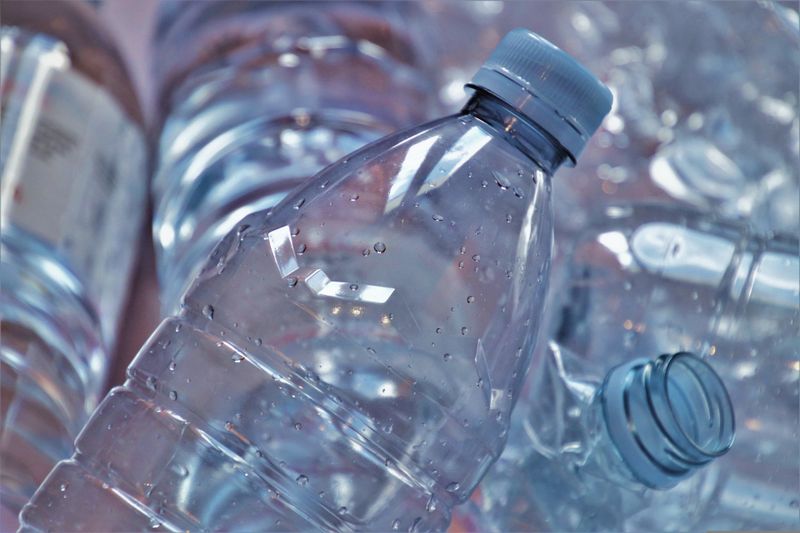
The new plastic tax would amount to 0.28 cents for a yogurt cup and 1.93 cents for a large PET bottle.
Recycling is important, and it’s well-received—and yet recycled materials have a major drawback: They are generally more expensive than virgin plastic. That is exactly what is now set to change. The federal government is planning to fast-track the introduction of a “plastic tax.” This is evident from a draft bill that has been made available to the editorial staff.
According to the plan, the fee will be 550 euros per metric ton of plastic in packaging. With prices ranging from 1,000 to 2,000 euros per metric ton of PET plastics, for example, this would make a real difference, according to a report in the Süddeutsche Zeitung (€), this would make a real difference.
Accordingly, the following are subject to tax: plastic packaging, plastic films, and composite packaging, provided that their plastic content exceeds five percent. The tax is to be levied on the manufacture, distribution, or import of the relevant packaging. For packaging made from recycled plastic, the tax may be waived upon request.
Associations Reject Expedited Procedures Without Ministry Involvement
In a letter to Minister of the Chancellor’s Office Nina Warken (CDU), business associations warned against introducing this tax “through a fast-track procedure” without the involvement of other ministries or a cabinet decision. In the letter, the associations stated that, “according to the information available to us,” the Ministry of Finance intended to forward draft wording for the introduction of the new tax to the Bundestag’s Budget Committee at short notice—it was then to be introduced as an amendment to the already ongoing proceedings on the 2027 Budget Accompanying Act.
“We urge you to work to ensure that a new excise tax of this magnitude is not introduced into the parliamentary process in this manner.” Instead, the associations called for a prior assessment of the economic, administrative, and environmental consequences—with the involvement of the National Regulatory Review Board—including the compliance burden on businesses, the personnel, IT, and enforcement needs of the customs administration, as well as potential impacts on material substitution, packaging weight, recyclability, and greenhouse gas emissions.
Billions in revenue projected, tax debtors unknown
The letter was signed by eight associations, including Plastics Europe Germany (PED). PED Executive Director Dr. Christine Bunte also stated: “The draft contains a striking contradiction: It estimates up to 1.5 billion euros in tax revenue and nearly 800 additional customs positions, but nowhere does it mention the number of companies that will actually be subject to the tax.”
Even more surprising is that the tax is linked to the so-called “production” of plastic packaging—a term that has not existed in packaging law until now. “Anyone introducing new taxes worth billions should first be able to clearly state who will pay them. Otherwise, the legislation risks turning into a national tax experiment,” Bunte continued.
Background: The bill is expected to generate approximately 1.485 billion euros annually for the federal government starting in 2028. At the same time, government costs for implementation are estimated at 283.5 million euros through 2029, along with 788 additional full-time positions at the customs administration. Businesses are expected to face additional administrative costs of approximately 44.1 million euros annually. The reported administrative costs are significantly lower than the figures discussed by the Federal Environment Agency in its research project 87/2025 for comparable packaging tax models. The draft does not explain the reason for this significantly lower estimate.
Support from Umwelthilfe
In contrast, the German Environmental Aid organization has expressed support. It supports the tax in principle, writes Der Spiegel. However, it calls for the tax to apply exclusively to single-use packaging—reusable packaging should not be subject to the tax. In addition, the levy should be extended to other packaging materials such as paper, cardboard, and metals to prevent companies from switching to alternative materials.
Date: 08.12.2025
Naturally, we always handle your personal data responsibly. Any personal data we receive from you is processed in accordance with applicable data protection legislation. For detailed information please see our privacy policy.
Consent to the use of data for promotional purposes
I hereby consent to Vogel Communications Group GmbH & Co. KG, Max-Planck-Str. 7-9, 97082 Würzburg including any affiliated companies according to §§ 15 et seq. AktG (hereafter: Vogel Communications Group) using my e-mail address to send editorial newsletters. A list of all affiliated companies can be found here
Newsletter content may include all products and services of any companies mentioned above, including for example specialist journals and books, events and fairs as well as event-related products and services, print and digital media offers and services such as additional (editorial) newsletters, raffles, lead campaigns, market research both online and offline, specialist webportals and e-learning offers. In case my personal telephone number has also been collected, it may be used for offers of aforementioned products, for services of the companies mentioned above, and market research purposes.
Additionally, my consent also includes the processing of my email address and telephone number for data matching for marketing purposes with select advertising partners such as LinkedIn, Google, and Meta. For this, Vogel Communications Group may transmit said data in hashed form to the advertising partners who then use said data to determine whether I am also a member of the mentioned advertising partner portals. Vogel Communications Group uses this feature for the purposes of re-targeting (up-selling, cross-selling, and customer loyalty), generating so-called look-alike audiences for acquisition of new customers, and as basis for exclusion for on-going advertising campaigns. Further information can be found in section “data matching for marketing purposes”.
In case I access protected data on Internet portals of Vogel Communications Group including any affiliated companies according to §§ 15 et seq. AktG, I need to provide further data in order to register for the access to such content. In return for this free access to editorial content, my data may be used in accordance with this consent for the purposes stated here. This does not apply to data matching for marketing purposes.
Right of revocation
I understand that I can revoke my consent at will. My revocation does not change the lawfulness of data processing that was conducted based on my consent leading up to my revocation. One option to declare my revocation is to use the contact form found at https://contact.vogel.de. In case I no longer wish to receive certain newsletters, I have subscribed to, I can also click on the unsubscribe link included at the end of a newsletter. Further information regarding my right of revocation and the implementation of it as well as the consequences of my revocation can be found in the data protection declaration, section editorial newsletter.



:quality(80)/p7i.vogel.de/wcms/78/ce/78ce24a7ba8343ef49bc3dbb49016443/pasja1000-the-bottle-5128607v1.jpeg "The new plastic tax would amount to 0.28 cents for a yogurt cup and 1.93 cents for a large PET bottle. (Bild: pasja1000)")
:quality(80)/p7i.vogel.de/wcms/cc/db/ccdb09d1d9b3fcabf147abba7fd9e3c5/pasja1000-the-bottle-5128607v1.jpeg "The new plastic tax would amount to 0.28 cents for a yogurt cup and 1.93 cents for a large PET bottle. (Bild: pasja1000)")
:quality(80)/p7i.vogel.de/wcms/b6/fe/b6fe83997fc68192cf8cd8a89b0bab5f/pasja1000-the-bottle-5128607v1.jpeg "The new plastic tax would amount to 0.28 cents for a yogurt cup and 1.93 cents for a large PET bottle. (Bild: pasja1000)")
:quality(80)/p7i.vogel.de/wcms/be/0a/be0a2864a5f59b0c9bca685dd23bdf79/pasja1000-the-bottle-5128607v1.jpeg "The new plastic tax would amount to 0.28 cents for a yogurt cup and 1.93 cents for a large PET bottle. (Bild: pasja1000)")
:quality(80)/p7i.vogel.de/wcms/cc/db/ccdb09d1d9b3fcabf147abba7fd9e3c5/pasja1000-the-bottle-5128607v1.jpeg "The new plastic tax would amount to 0.28 cents for a yogurt cup and 1.93 cents for a large PET bottle. (Bild: pasja1000)")
:quality(80)/p7i.vogel.de/wcms/b6/fe/b6fe83997fc68192cf8cd8a89b0bab5f/pasja1000-the-bottle-5128607v1.jpeg "The new plastic tax would amount to 0.28 cents for a yogurt cup and 1.93 cents for a large PET bottle. (Bild: pasja1000)")